
Things to do in Ilhabela, Brazil: complete guide and practical tips
One of the most famous and sought-after destinations on the north coast of São Paulo (Brazil), Ilhabela charms visitors with its laid-back atmosphere and stunning natural scenery. With attractions for every type of traveler, the island offers everything from rainforest hikes to boat trips heading toward paradise-like beaches. And there’s also the charming historic center, filled with little shops, restaurants, and cultural events.
With so many options, deciding on the best things to do in Ilhabela can be challenging. In this guide, I’ll share essential travel tips, must-see attractions, and itinerary ideas to help you make the most of your trip.
But before anything else, here’s the most important tip about the island: use mosquito repellent at all times! Ilhabela is famous for its borrachudos, tiny biting insects whose bites can be extremely annoying. To avoid having them ruin your trip, the best thing to do is buy Citroilha as soon as you arrive. It’s a local repellent that’s known for being especially effective against the island’s mosquitoes.
You might also like to read:
Where to stay in Ilhabela: Best areas, beaches and hotels
Things to do in Ubatuba, Brazil: best beaches, activities, and travel tips
41 free things to do in Rio de Janeiro
How to learn Brazilian Portuguese
How to get to Ilhabela
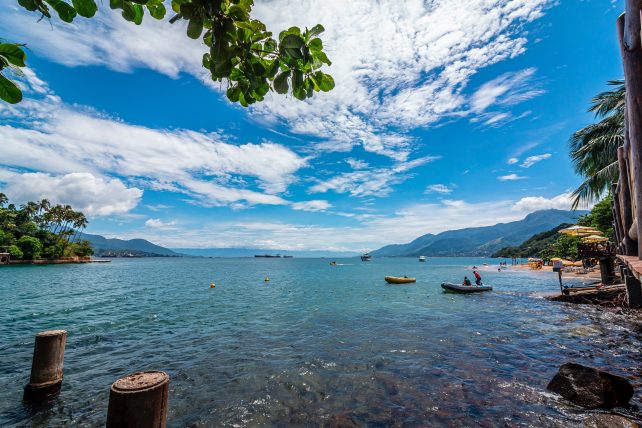
Ilhabela is a marine archipelago municipality made up of several islands and islets off the coast of São Sebastião, in the state of São Paulo. To get there, you’ll need to take a ferry from São Sebastião.
The ferry is free for pedestrians and bicycles. Cars are charged a fee that varies depending on the day of the week and season. During holidays and peak season, waiting times can get quite long because of traffic, so it’s worth booking your ferry slot in advance whenever possible.
The closest airports are in São Paulo: Congonhas Airport and São Paulo/Guarulhos International Airport. From São Paulo’s Tietê Bus Terminal, several daily buses head to São Sebastião and Ilhabela. The trip takes around five hours and is operated by Pássaro Marron.
Where to stay in Ilhabela
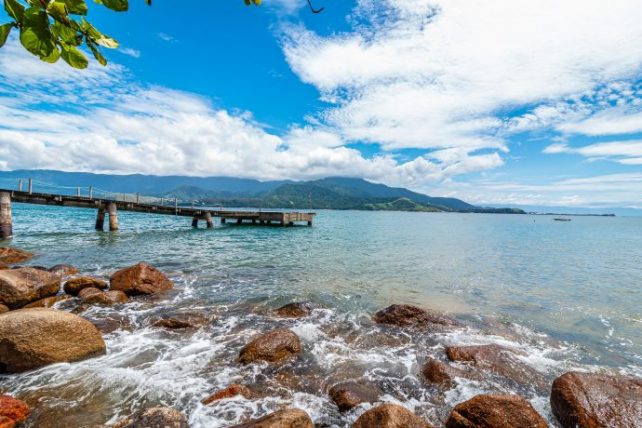
The island is divided into north and south, using the ferry pier as a reference point.
The southern side is less urbanized and has less infrastructure, but it’s also the most preserved area and home to some of the island’s most famous beaches, including Praia do Curral.
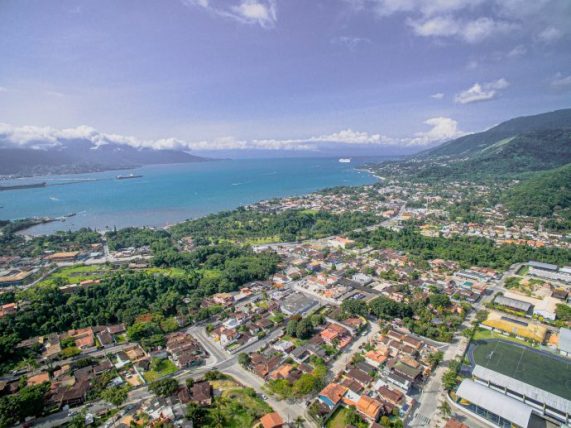
North of the ferry terminal, the island becomes more urbanized, with better infrastructure, plenty of restaurants, and a wider range of accommodations. This is also where Ilhabela’s historic center is located.
If you’re traveling without a car or simply want to avoid spending too much time getting around, it’s worth choosing your accommodation strategically based on the attractions you plan to visit.
Best areas to stay in Ilhabela
Barra Velha
Located near the ferry terminal, Barra Velha is a good option for travelers who want easy access to both sides of the island while spending a bit less. Since it’s not as touristy as other areas, accommodation tends to be more affordable.
Vila (Historic Center)
The Vila, on the northern side, is home to Ilhabela’s historic center. It’s a great place to stay if you want good tourist infrastructure, restaurants, bars, and nightlife. The nearby beaches, however, are more urbanized and not the island’s prettiest.
Praia do Curral
In the south, my favorite area to stay is Praia do Curral. You’ll find plenty of hotels, pousadas, restaurants, and easy access to beautiful beaches such as Praia da Feiticeira and Praia do Julião.
Praia do Bonete
If you’re looking for a more rustic experience immersed in nature, Praia do Bonete is the perfect choice. Isolated and incredibly beautiful, it offers a very different side of Ilhabela, ideal for travelers wanting to disconnect.
Browse through all accommodation options in Ilhabela or read our detailed guide on where to stay in Ilhabela.
Best time to visit Ilhabela
You can enjoy Ilhabela year-round, but each season comes with its own pros and cons. Understanding them can help you choose the best time for the kind of trip you’re looking for.
Before deciding when to visit, it’s also worth checking Ilhabela’s event calendar. The island hosts several great festivals throughout the year, which can make your trip even more memorable.
When people think about beach destinations, summer is usually the first choice. And honestly, with sunny days and temperatures around 30°C (86°F), it’s easy to see why. However, summer is also the rainy season there, and heavy afternoon showers can sometimes disrupt outdoor activities and boat tours.
It’s also the island’s high season, so expect crowded beaches, higher accommodation prices, and long ferry lines, especially during holidays.
Autumn and spring are generally considered the best times to visit Ilhabela. During these seasons, temperatures are still pleasant, sunny days are common, and rainfall tends to decrease. Tourist numbers only spike during long weekends and holidays, so it’s often possible to find quieter beaches and a more relaxed atmosphere.
Winter brings cooler temperatures, which may make swimming in the ocean a little less tempting. On the other hand, this is when some of the island’s biggest events take place, including the Bourbon Festival Paraty edition held in Ilhabela, the famous Ilhabela Sailing Week, and the Shrimp Festival.
Things to do in Ilhabela: best beaches and attractions
Now that you know the basics about where to stay and the best time to visit, let’s dive into the best things to do in Ilhabela.
Best beaches in Ilhabela
With more than 40 beaches, Ilhabela has no shortage of beautiful places to lay down your towel. Here are some of the island’s top beaches, with options for different travel styles.
Praia do Curral
Praia do Curral is one of the most famous beaches on the island and a great choice for travelers looking for good infrastructure and an easy beach day.
The area has restaurants, bars, beach kiosks, accommodations, boat tours, and kayak rentals. It’s a beach that appeals to almost everyone, but it can get quite crowded during high season.
Praia da Feiticeira
Another popular beach in Ilhabela is Praia da Feiticeira. There aren’t many restaurants or bars nearby, but the calm waters make it especially popular with families and travelers looking for a more peaceful atmosphere.
Praia das Pedras Miúdas and Ilha das Cabras
Ilha das Cabras is one of the small islands that form the Ilhabela archipelago. It sits just across from Praia das Pedras Miúdas, separated by a narrow 200-meter channel, and it’s one of the island’s must-see attractions.
This area is home to an underwater ecological sanctuary where you can spot colorful fish, sea turtles, starfish, and even seahorses. Because of this rich marine life, it’s a favorite spot for both beginners and experienced divers. Several diving schools on the island offer courses and guided dives there.
Praia do Bonete
Chosen by The Guardian as one of the most beautiful beaches in Brazil, Praia do Bonete has become one of the most desired destinations on São Paulo’s northern coast, and it’s easy to understand why.
Getting there isn’t exactly simple. The beach can only be reached by boat or via a 14-kilometer hiking trail. But that’s part of what makes it so special.
The long stretch of sand lined with palm trees, the deep blue sea, and the river flowing into the ocean create a truly paradise-like setting.
And Bonete is much more than just a beach. It’s the kind of place that deserves at least a few days. Along the trail, which is already an attraction in itself, you’ll pass waterfalls and breathtaking viewpoints. The rustic village of Bonete also has charming local restaurants and a few accommodation options.
Praia de Castelhanos
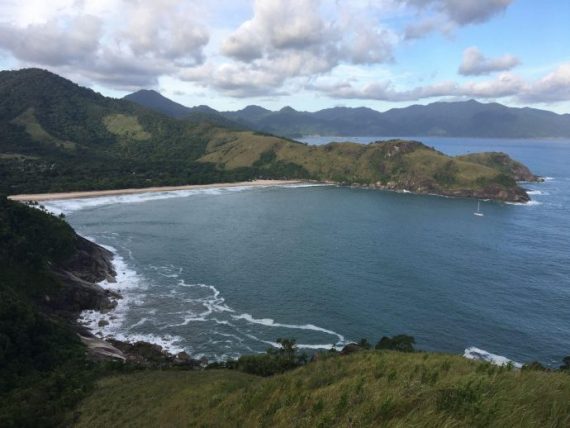
Another wild and remote beach in Ilhabela is Praia de Castelhanos, accessible only by boat or 4×4 vehicle.
Luckily, many local agencies offer day tours there. Stretching for about 1.5 kilometers, Castelhanos impresses visitors with its light-colored sand and vibrant blue sea. The famous viewpoint overlooking the heart-shaped bay is one of the island’s postcard-worthy spots.
There’s also a small traditional coast community (known as caiçara) in the area, plus restaurants, bars, and beach kiosks. Several hiking trails start from Castelhanos as well, leading to beaches like Praia Mansa and Praia Vermelha.
Praia do Perequê
For travelers who enjoy a livelier and more urban beach atmosphere, Praia do Perequê is a great option.
Located on the northern side of the island, it has a long stretch of sand lined with bars and restaurants. There’s also a bike path following the waterfront all the way to the historic center, making it perfect for a scenic bike ride.
Praia do Jabaquara
Located at the northern tip of the island, Praia do Jabaquara is one of Ilhabela’s wildest and most beautiful beaches. Surrounded by lush nature and accessed via a rough road, it’s perfect for travelers seeking adventure and immersion in nature.
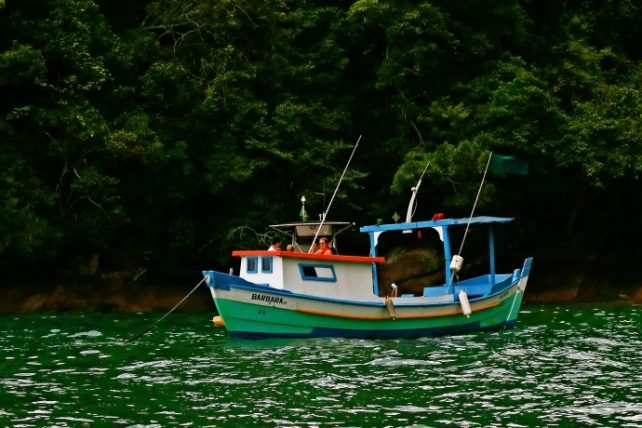
One of the island’s most popular boat tours visits Praia do Jabaquara and usually includes a stop at Praia da Fome as well. Most tours depart from Praia do Perequê.
Things to do in Ilhabela: Best waterfalls and natural pools
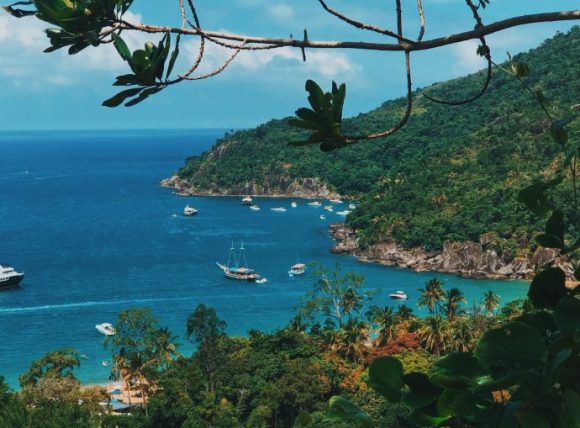
Another great addition to your list of things to do in Ilhabela is exploring its waterfalls and natural pools. The island has more than 20 waterfalls hidden within lush Atlantic rainforest, making it a paradise for nature lovers.
Cachoeira do Paquetá
Cachoeira do Paquetá is one of the island’s most impressive waterfalls. It’s made up of three natural pools, with the last one featuring an “infinity edge” overlooking the ocean, a view that has made the spot especially famous on social media. The trail is considered easy and starts in the Bexiga neighborhood, near Praia Grande.
Cachoeira do Veloso
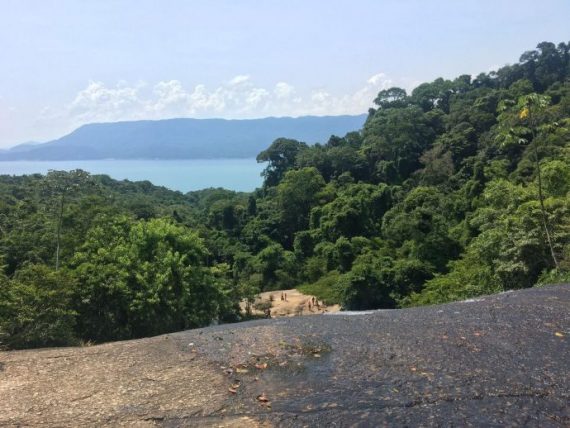
With more than 50 meters in height and three waterfalls cascading through the forest, Cachoeira do Veloso is one of the best-known waterfalls in Ilhabela.
To reach it, you’ll follow a moderate trail of about 2.3 kilometers starting near Praia do Veloso.
Laje, Lajeado, and Saquinho waterfalls
Along the trail leading to Praia do Bonete, you’ll come across three beautiful waterfalls. After around 2 kilometers of hiking, you’ll reach Cachoeira da Laje. About 4 kilometers farther is Cachoeira do Lajeado, and near Bonete village you’ll find Cachoeira do Saquinho.
The entire hike takes roughly six hours, so it’s a good idea to dedicate a full day to the trail and spend the night in Bonete village.
Secret Point Natural Pool
A hidden slice of paradise awaits on the southern side of Ilhabela at Secret Point.
This natural pool forms among the rocks along a coastal stretch without beaches. Calm, crystal-clear water creates a natural swimming pool surrounded by stones and lush scenery.
The trail to get there is short, but most of the route involves walking over rocks, so extra care is needed. The trail entrance is located along Avenida Governador Mário Covas Júnior, near number 12300, where signs indicate the access point.
Historic Center and Vila
There’s much more to Ilhabela than beaches and waterfalls. A visit to the Vila, home to the island’s Historic Center, is one of the essential things to do in Ilhabela.
The area is perfect for a cultural stroll. You can visit a cute church called Igreja Matriz Nossa Senhora D’Ajuda e Bonsucesso and explore the Centro Cultural da Vila, which houses the Waldemar Belisário Museum and regularly hosts exhibitions focused on caiçara culture and local traditions.
The neighborhood is also filled with restaurants, bars, cafés, and artisan shops. At night, this becomes the liveliest part of the island, especially along a street called Rua do Meio, where there’s usually live music.
It’s a great option for those wondering what to do in Ilhabela at night, or on rainy days when beach plans aren’t ideal.

Ilhabela itinerary ideas: from 3 to 9 days
By now, you’ve probably realized there are plenty of amazing things to do in Ilhabela. To help you plan your trip, I put together three different 3-day itineraries focused on different areas of the island.
If you only have a few days, you can choose one route. If you have more time, you can combine them and explore Ilhabela from north to south.
Itinerary 1: South Ilhabela (3 days)
Day 1: Arrive in Ilhabela, check into your accommodation, and spend the afternoon at Praia do Curral.
Day 2: Go diving at Ilha das Cabras and relax at Praia da Feiticeira.
Day 3: Visit Cachoeira do Paquetá before leaving the island.
Itinerary 2: North Ilhabela (3 days)
Day 1: Arrive in Ilhabela, check into your accommodation, and go for a bike ride along Praia do Perequê.
Day 2: Take a boat tour to Praia do Jabaquara and Praia da Fome, then enjoy the nightlife in the Vila.
Day 3: Explore Ilhabela’s Historic Center before heading home.
Itinerary 3: Bonete (3 days)
Day 1: Arrive in Ilhabela and either hike to Praia do Bonete, passing the three waterfalls along the way, or take a boat there.
Day 2: Spend the day enjoying Bonete Beach and the peaceful caiçara village atmosphere.
Day 3: Leave Bonete and return from the island.
Did you enjoy these tips on what to do in Ilhabela? Let me know in the comments!
Written by Rafaela Beatriz, passionate traveler and freelance writer.
Photo credits: Unsplash (Creative Commons) and Rafaela Beatriz (shared with permission for publication on Janelas Abertas).
If you book your accommodation through the links in this post, Janelas Abertas earns a small commission that helps me keep creating more content, at no extra cost to you. Transparency is a core value around here.














0 Comentários