
Things to Do in Aracaju, Brazil: Best Attractions and Itinerary
Aracaju, one of Brazil’s lesser-known state capitals, really surprised me. Most people visit the capital of Sergipe because of its beaches. After all, the city boasts around 35 km (22 miles) of coastline and is generally more affordable than many other beach destinations in Brazil. But there’s much more to do in Aracaju and the surrounding area than simply enjoying the sun and the sea.
Known as the country’s “capital of quality of life,” this friendly city has a laid-back, small-town feel despite being a state capital. It’s a great choice if you’re looking for a relaxing vacation, away from the crowds that flock to more famous destinations during the high season, while still enjoying excellent restaurants, live music, and the welcoming atmosphere that makes Brazil’s Northeast so special.
Another thing I loved is that most of Aracaju’s main attractions are concentrated within a relatively small area, making it a very easy city to explore independently. And with the tips I’ll share in this guide—based on my own experience traveling solo there—it becomes even easier.
At the end of this article, you’ll also find recommendations on where to eat, where to stay, and a suggested day-by-day itinerary.
You might also like to read:
Brazil travel tips: Insider advice from a local nomad
Learn Portuguese in Brazil: Immersion, Classes, and Practical Tips
How to Learn Berimbau: A Beginner’s Guide to Brazil’s Most Fascinating Instrument
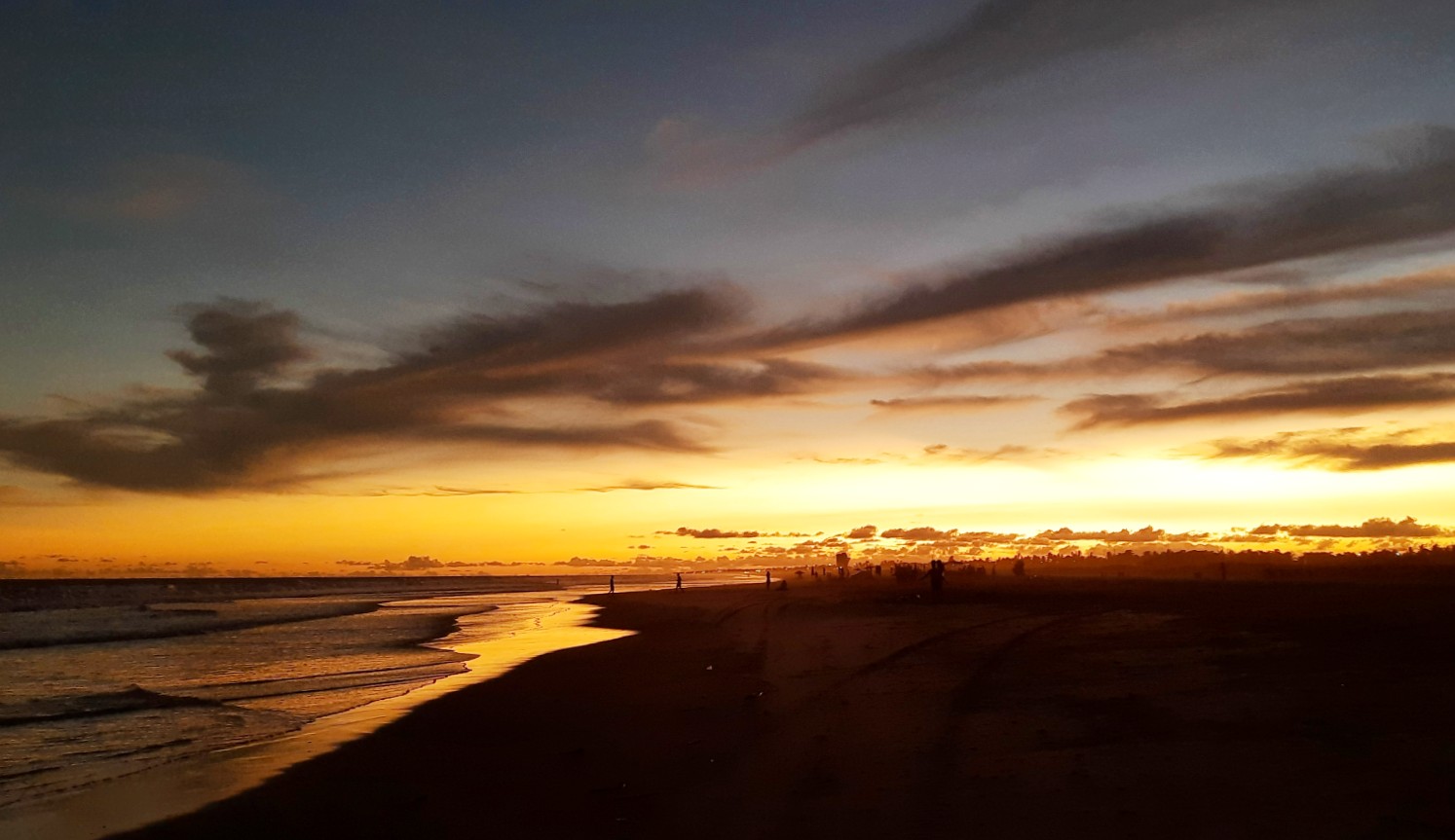
Best Things to Do in Aracaju
Museu da Gente Sergipana (Museum of the People of Sergipe)
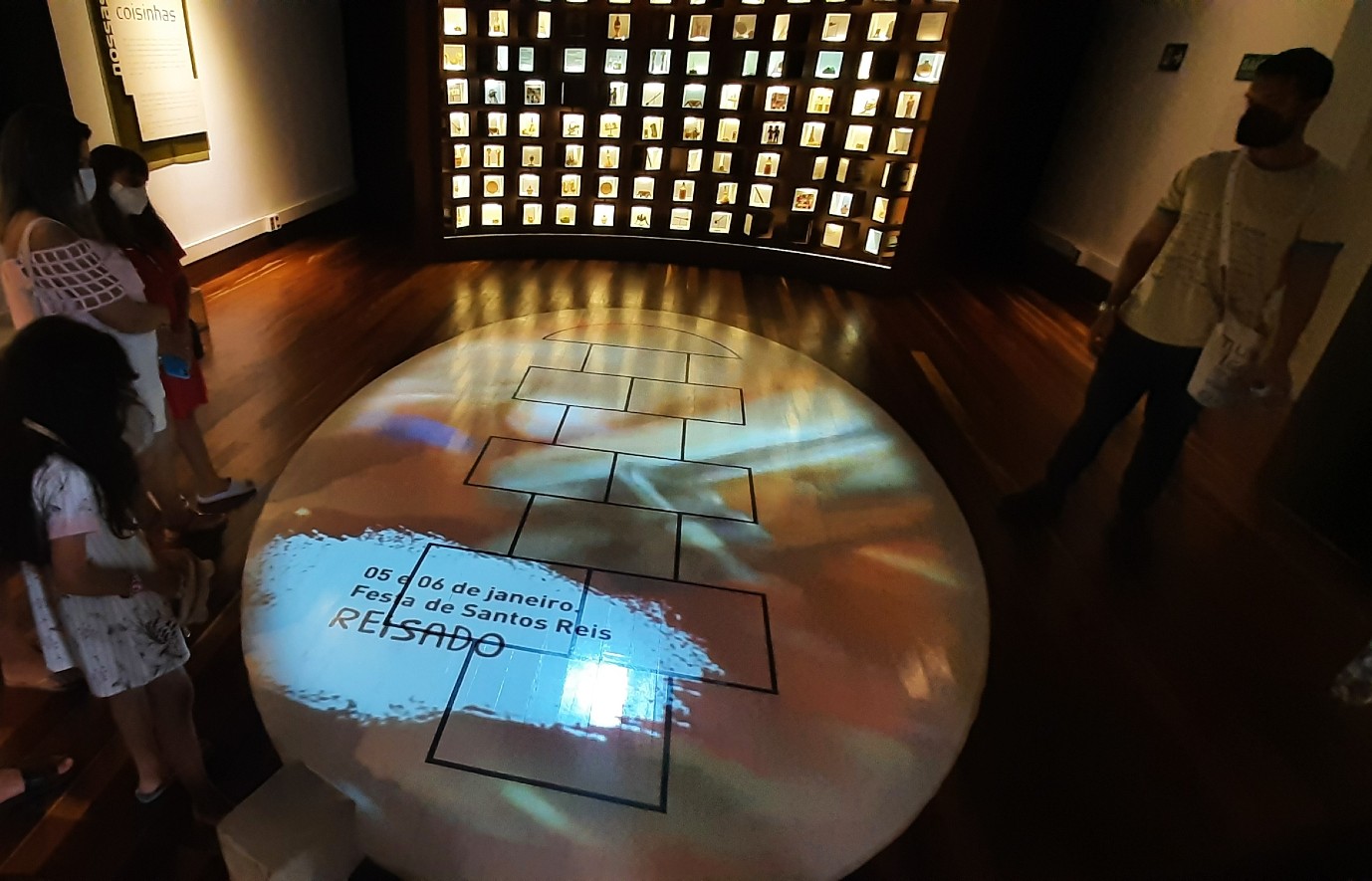
To show that there are plenty of great things to do in Aracaju whether it’s sunny or raining, I’ll start with one of my favorite attractions in the city. The Museu da Gente Sergipana is a multimedia museum, much like the Museum of the Portuguese Language in São Paulo and Cais do Sertão in Recife. I’m a huge fan of all three.
As the name suggests, it’s dedicated to the culture of Sergipe, which is Brazil’s smallest state, but it also explores traditions and cultural expressions that are shared across much of northeastern Brazil. Opened in 2011, the museum is free to visit, although you do need to book your ticket online in advance.
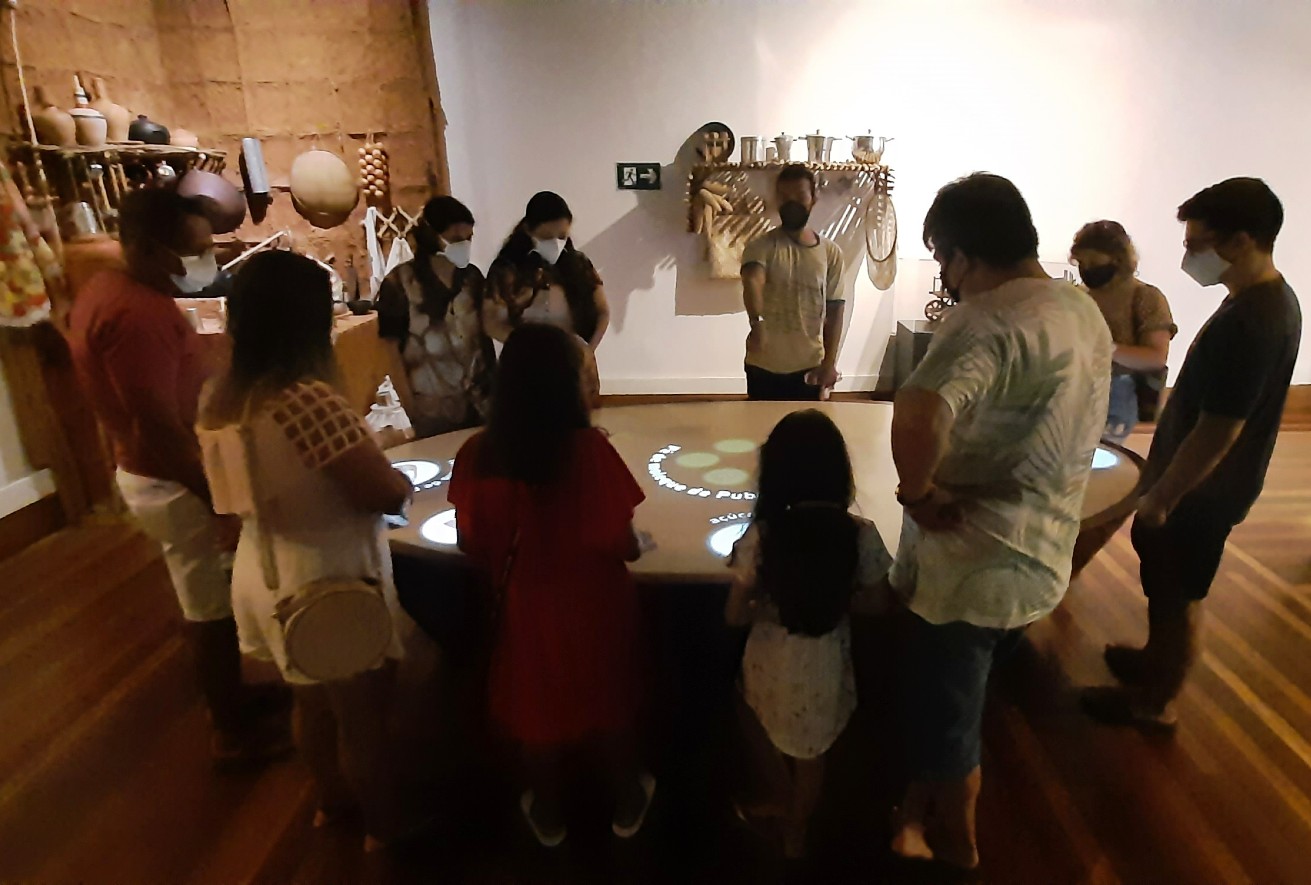
When I was there, all visits were taking place in guided groups, and the guide who led mine was excellent. I really appreciated the stories and explanations he shared, as well as the museum’s interactive exhibits.
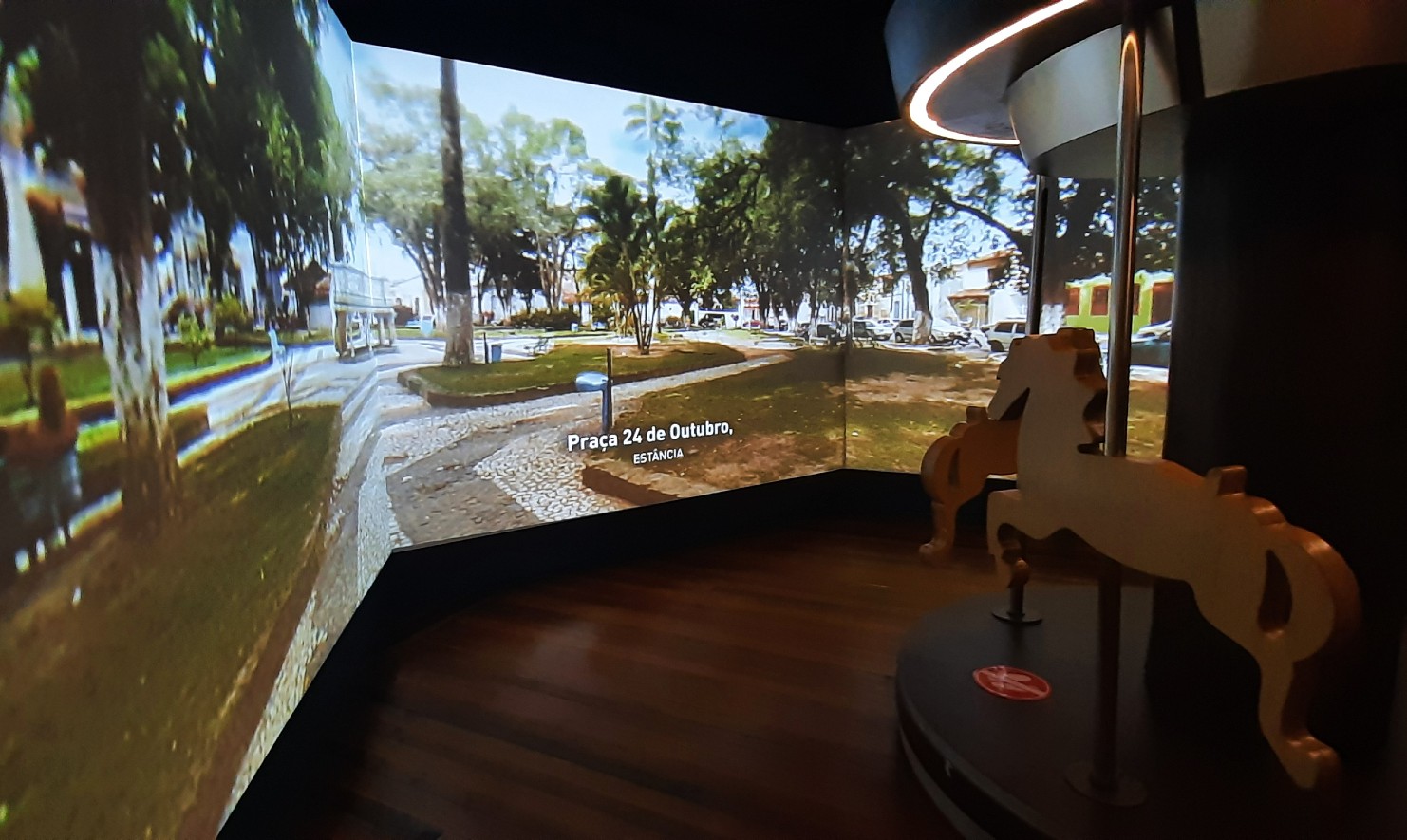
One of my favorite parts was a tunnel with immersive projections covering the walls. Visitors sit on benches shaped like small boats, creating the feeling of sailing through Sergipe’s landscapes while scenes from the state’s different ecosystems unfold around you: the sertão (semi-arid backlands), the caatinga (Brazil’s unique dry thorn forest), the agreste (the transitional zone between the coast and the backlands), the Atlantic Forest, mangroves, and the coastline.
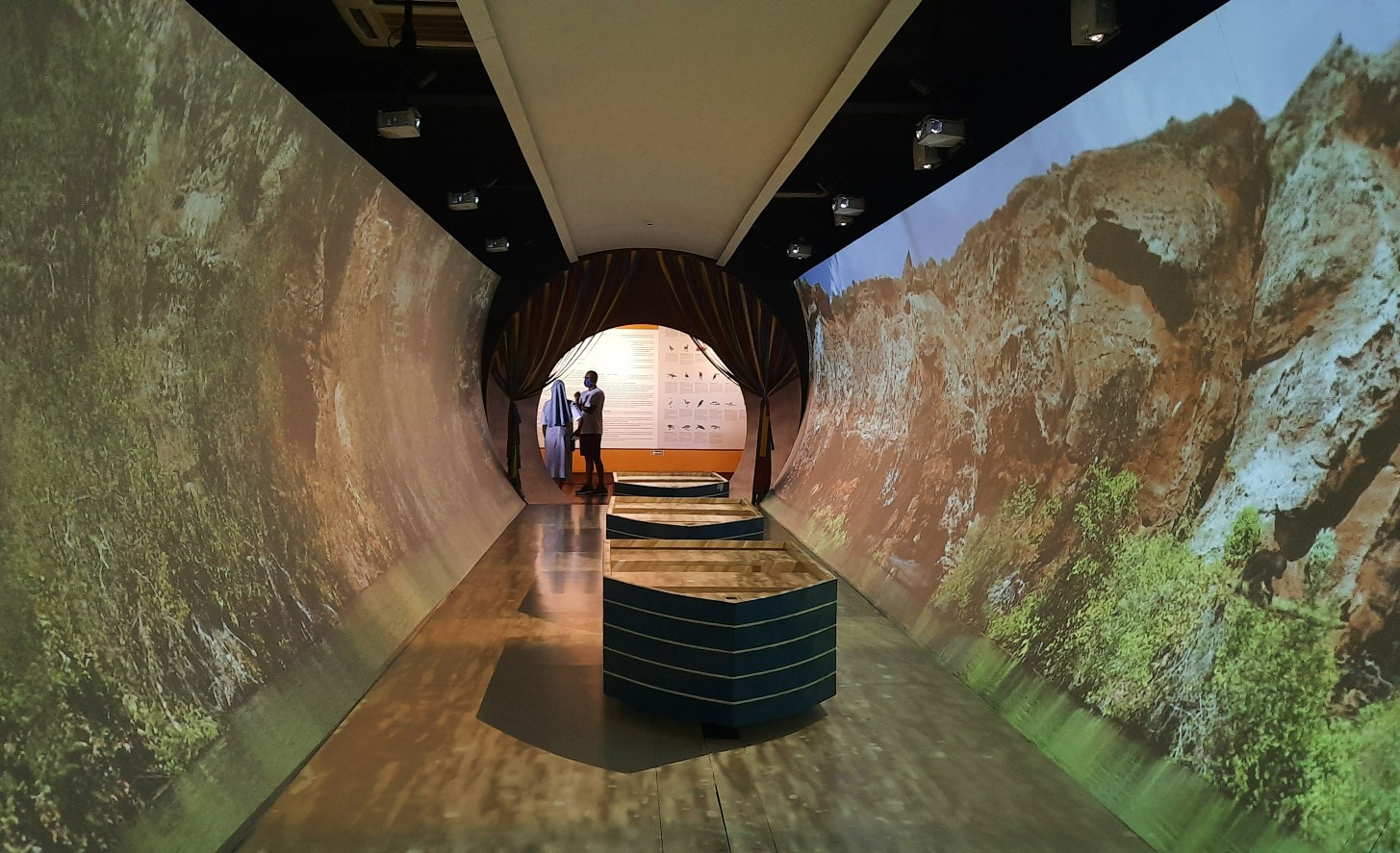
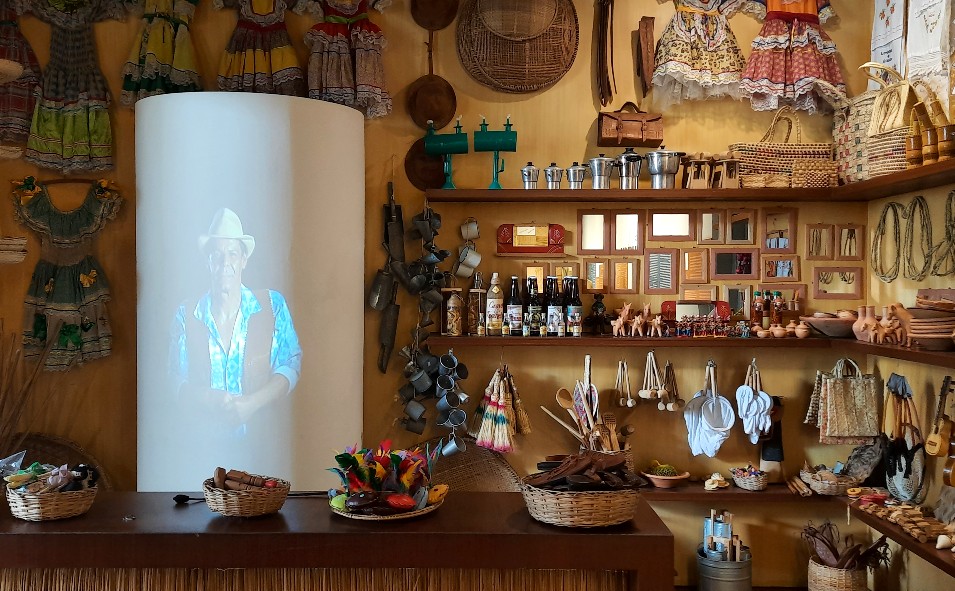
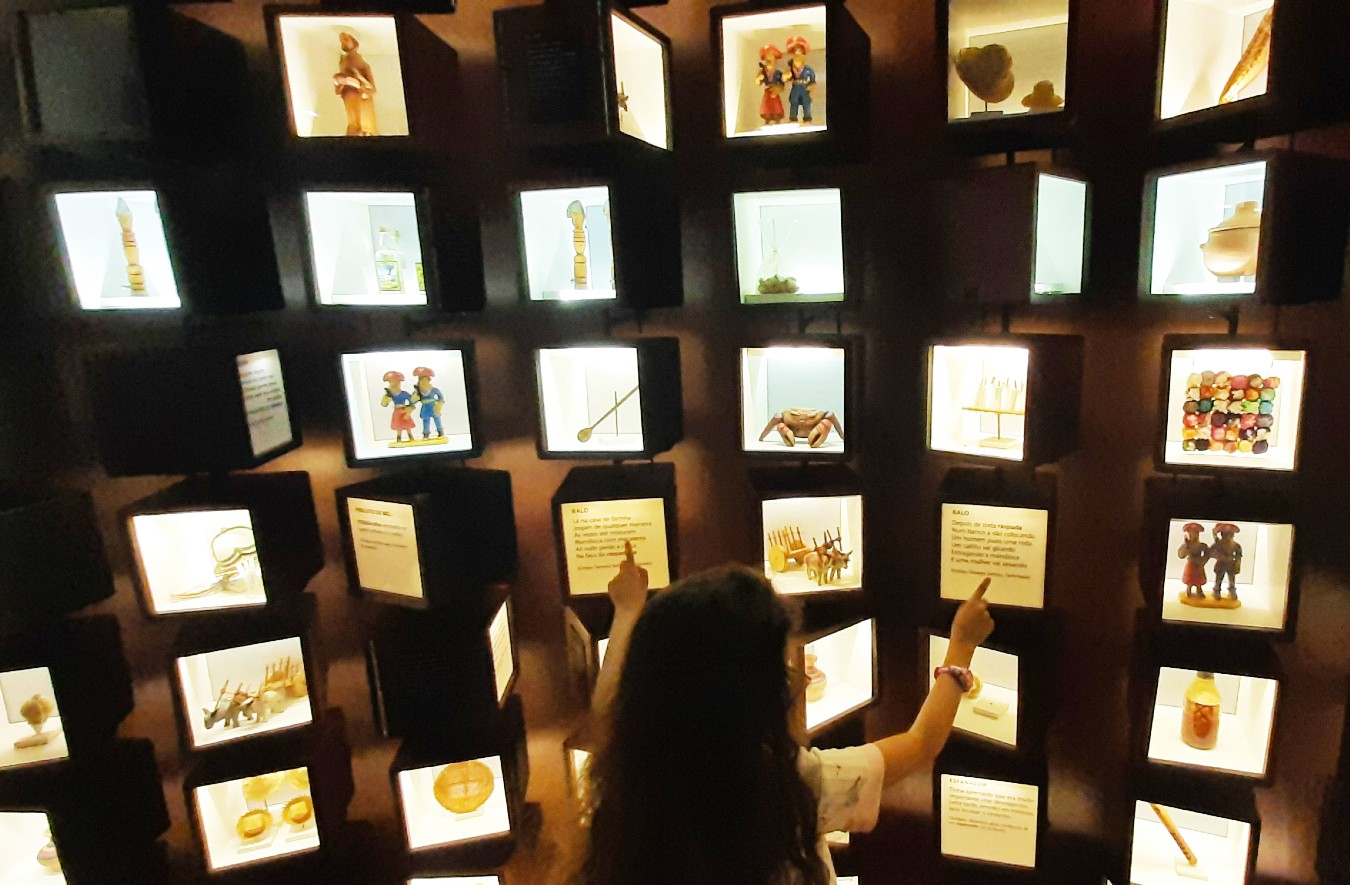
The museum also features exhibits on local cuisine, handicrafts, public markets, town squares, history, notable people, cordel literature (traditional illustrated folk booklets), repente (a form of improvised sung poetry), and much more. Throughout the exhibits, you’ll also learn about the Indigenous, African, Portuguese, Jewish, and other cultural influences that have shaped the region.
As a Portuguese teacher, I especially enjoyed the section dedicated to local vocabulary. I also loved an interactive game that triggers projections of the state’s traditional festivals and folk celebrations every time someone jumps on it. It’s one of those museums that’s both genuinely educational and fun. To borrow a cliché, I’d recommend it for the whole family.
Largo da Gente Sergipana
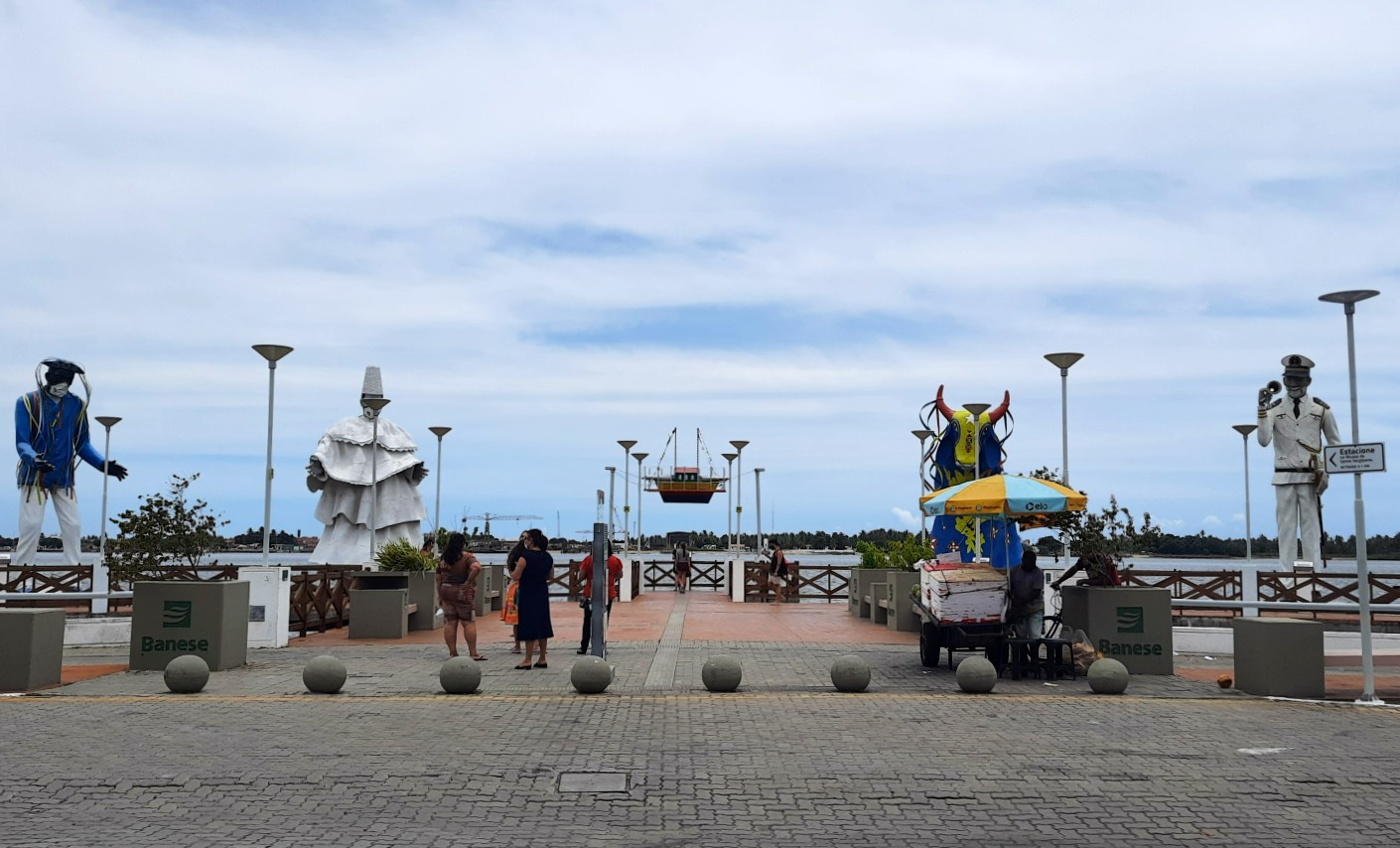
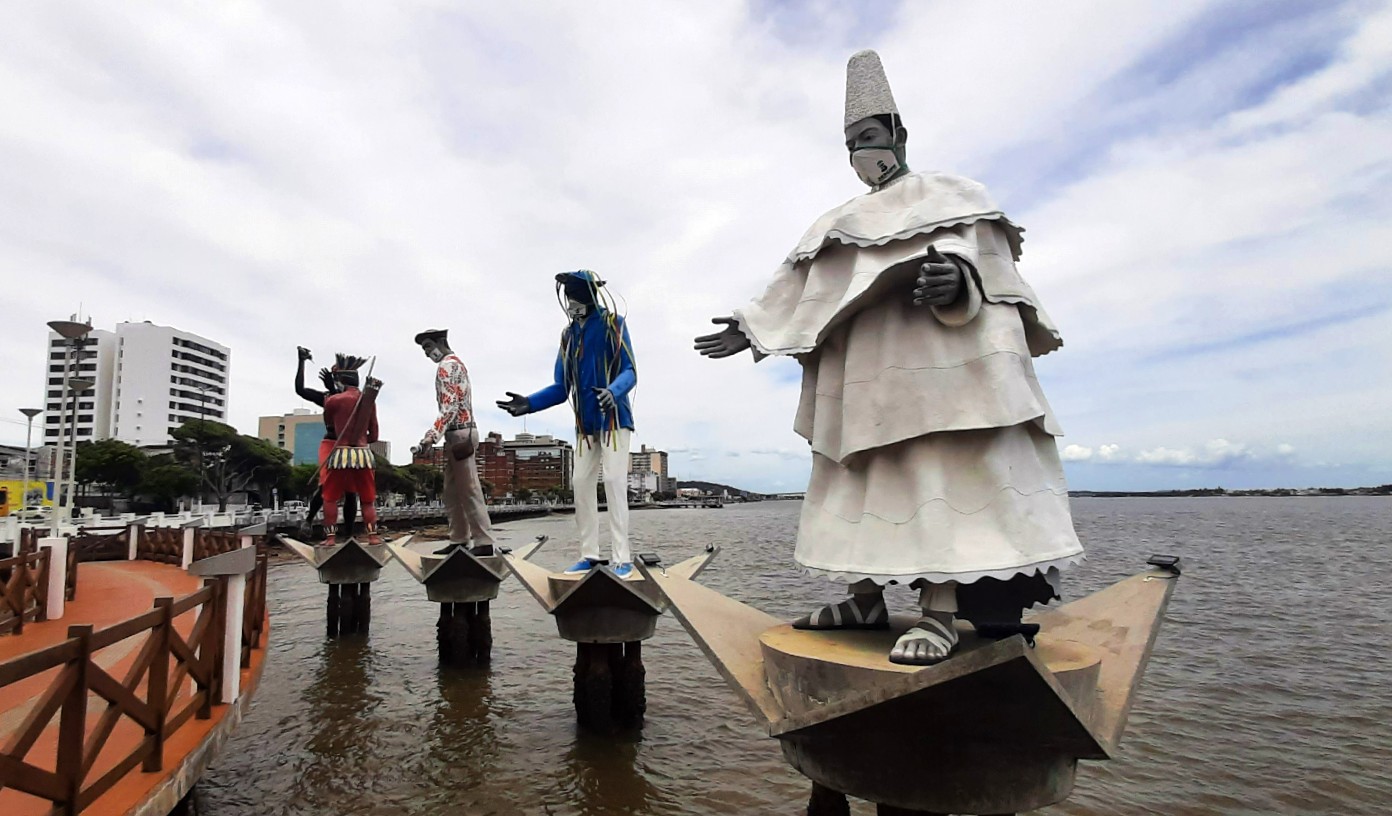
Right across Avenida Ivo do Prado, in front of the museum, you’ll find the Largo da Gente Sergipana, a public square featuring eight large sculptures representing some of Sergipe’s most important folk traditions.
Unveiled in 2018, the monument includes information panels (in print, Braille, and via QR codes) explaining each of the cultural expressions portrayed: Caboclinhos, Lambe-Sujos and Caboclinhos, Chegança, Cacumbi, Taieira, Bacamarteiros, Reisado, São Gonçalo, and Parafuso. I really enjoyed stopping to read about them, especially because several of these traditions were completely new to me, even though I’m from the Northeast of Brazil.
Metropolitan Cathedral and the Sergipe Handicrafts Museum
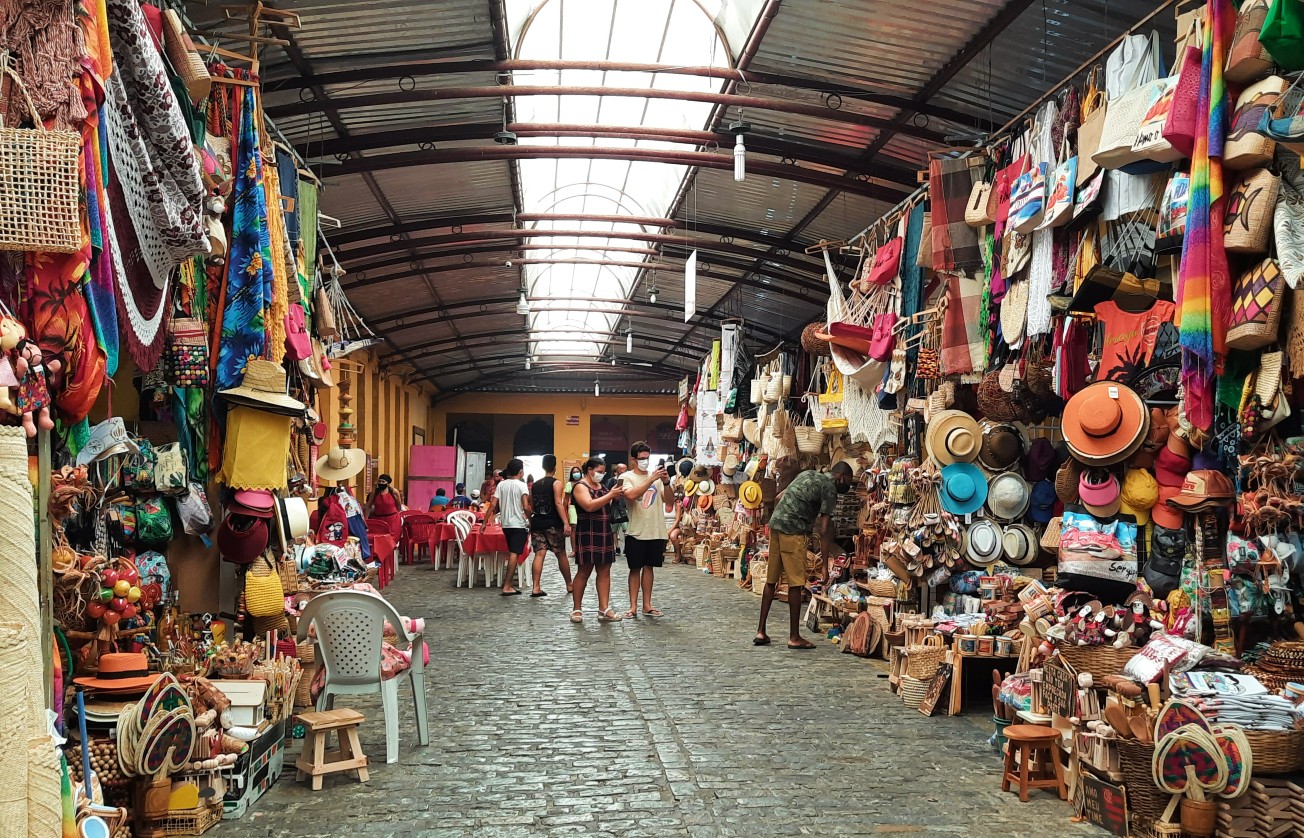
Just a short walk away is another worthwhile stop: the Metropolitan Cathedral, which dates back to 1862. It stands on Praça Olímpio Campos, where you’ll also find the Palácio Museu Olímpio Campos (the former state government headquarters) and the Sergipe Handicrafts Museum, home to dozens of stalls selling handmade crafts from across the state.
As you’ll see throughout this guide, Aracaju offers plenty of great places to shop for local souvenirs.
Antônio Franco, Thales Ferraz, and Albano Franco Markets
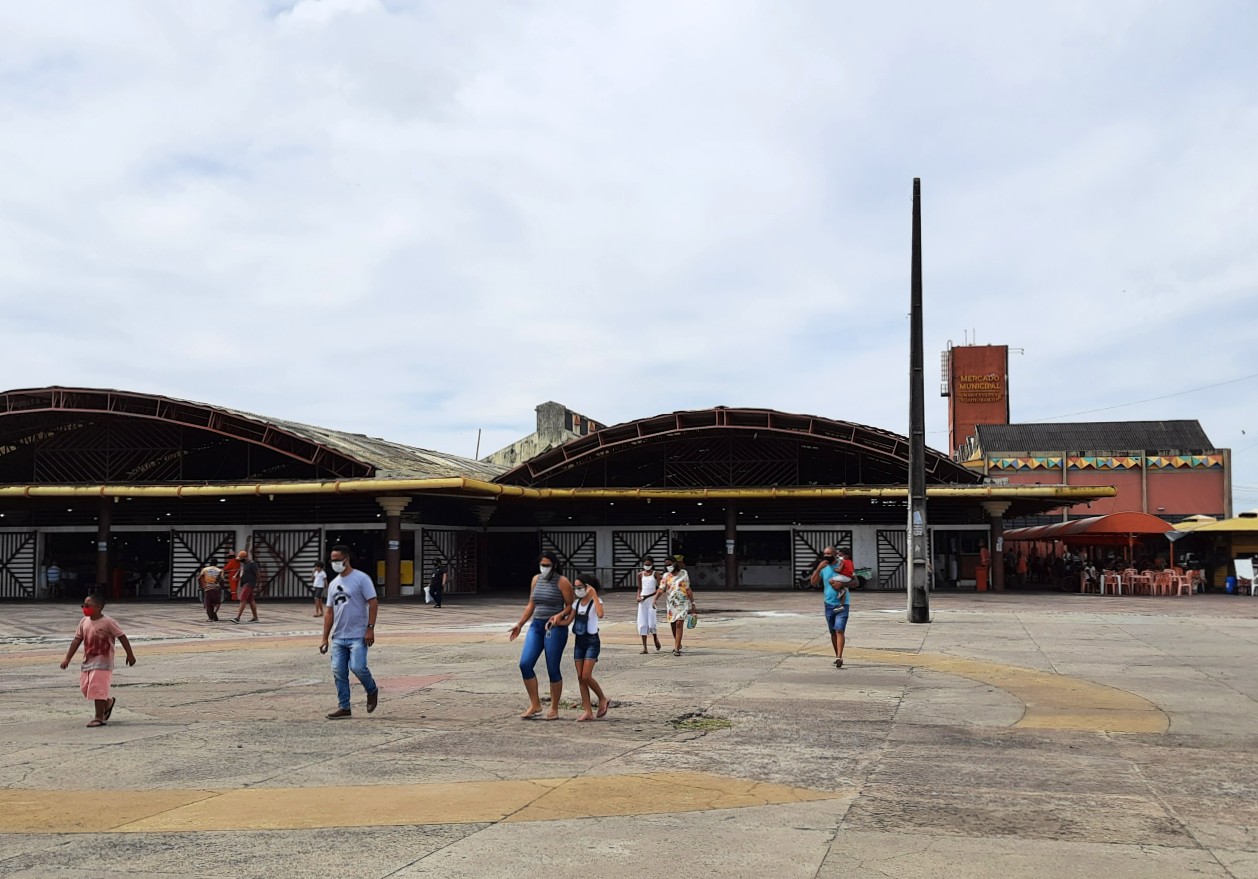
If you’re looking for things to do in Aracaju beyond the beaches, exploring the city’s public markets is another great option. If, like me, you enjoy experiences that feel a little more “real life” than touristy, you’ll love this small cluster of markets, all located right next to one another.
Start at Mercado Antônio Franco, just over 1 km (0.6 miles) from the Museu da Gente Sergipana. I walked there, and it has exactly the atmosphere I love in a public market: lively, authentic, and full of character. Alongside everyday goods, you’ll also find handicrafts and plenty of food stalls.
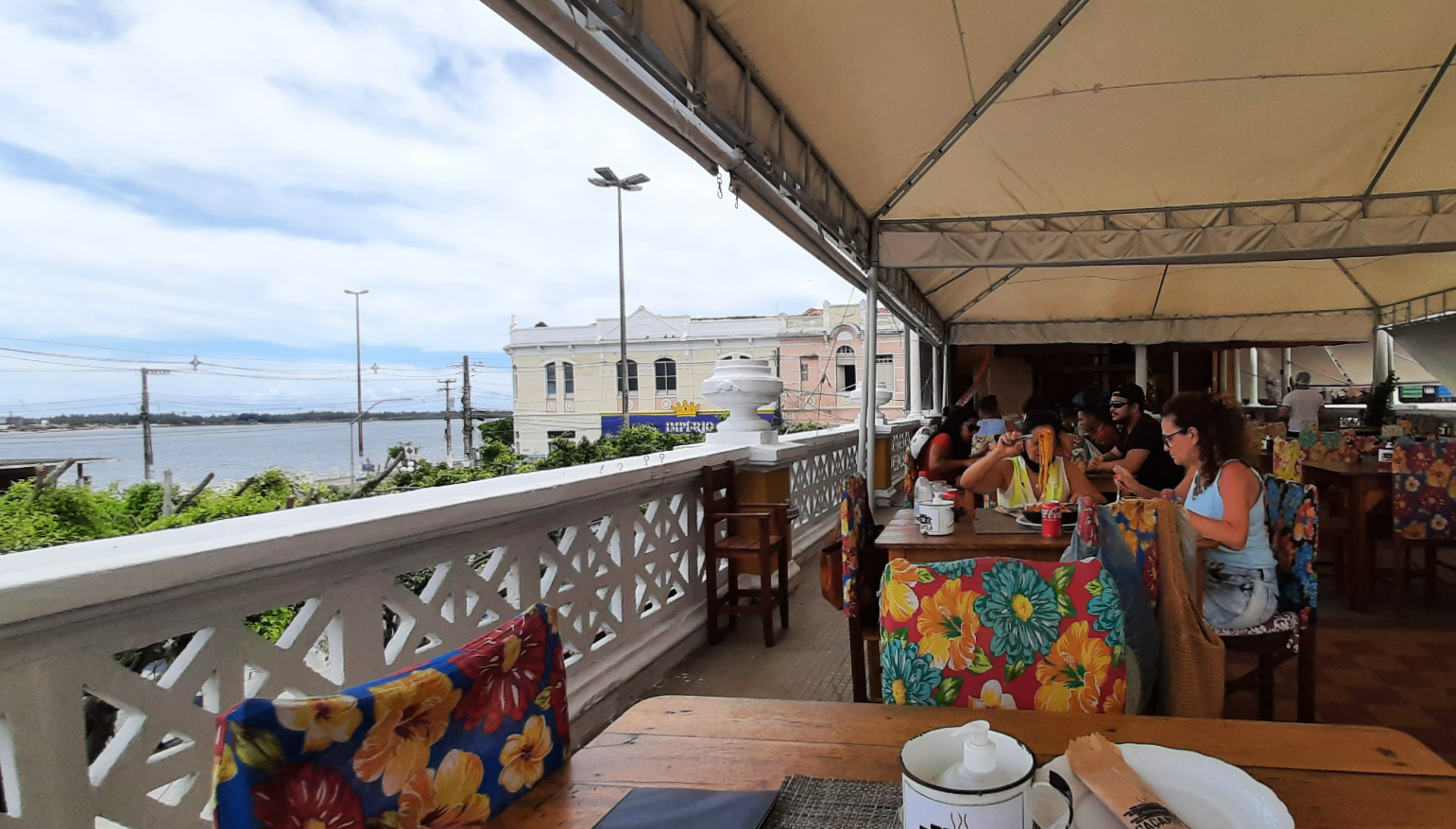
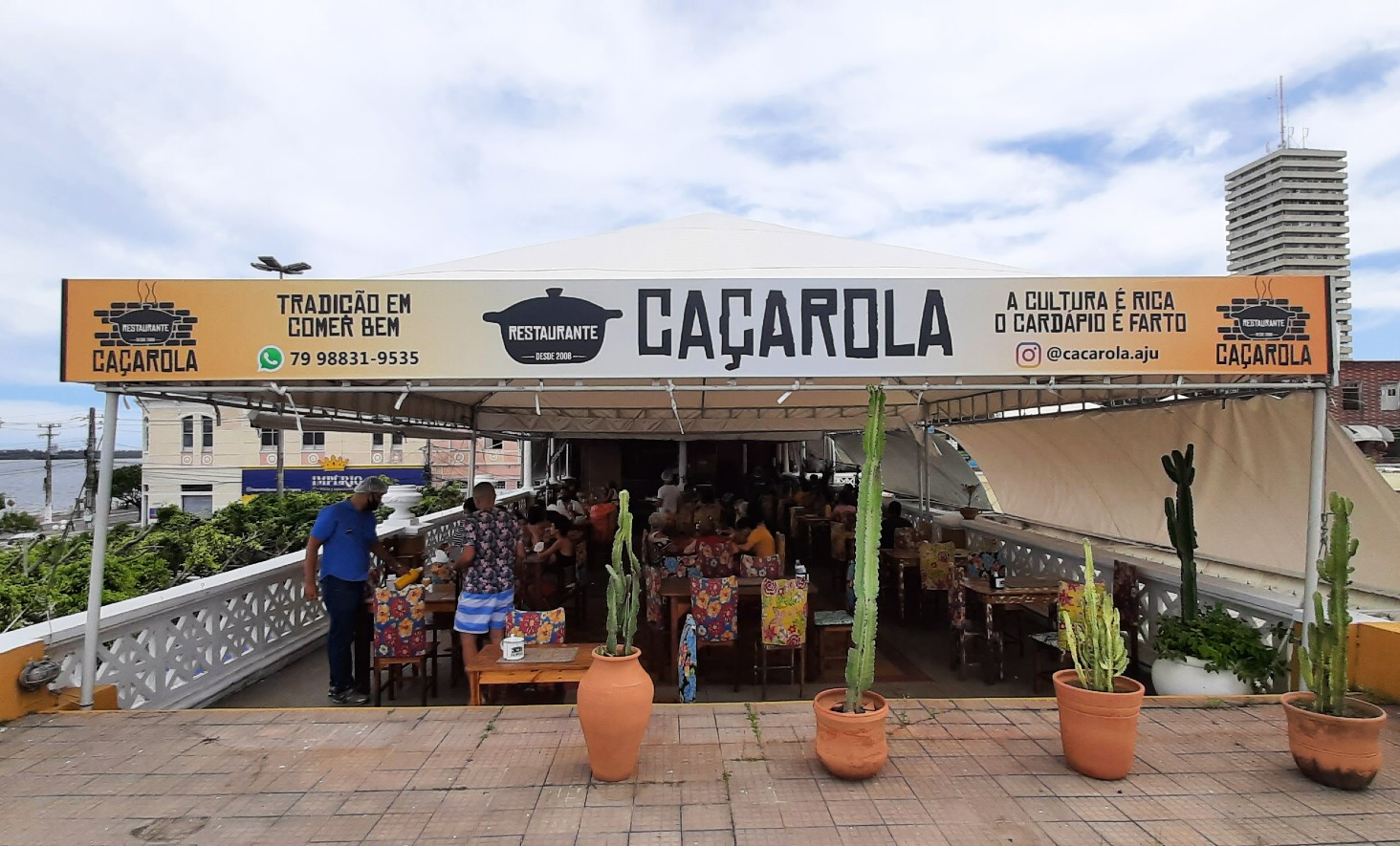
On the ground floor there are several simple, traditional restaurants that looked very tempting (by the way, eating was one of my favorite things to do in Aracaju). But I was repeatedly told to try Caçarola, located on the rooftop, and I’m glad I did. The service was exceptionally friendly and efficient, the open-air setting was lovely—with a refreshing breeze and nice views—and the food was delicious.
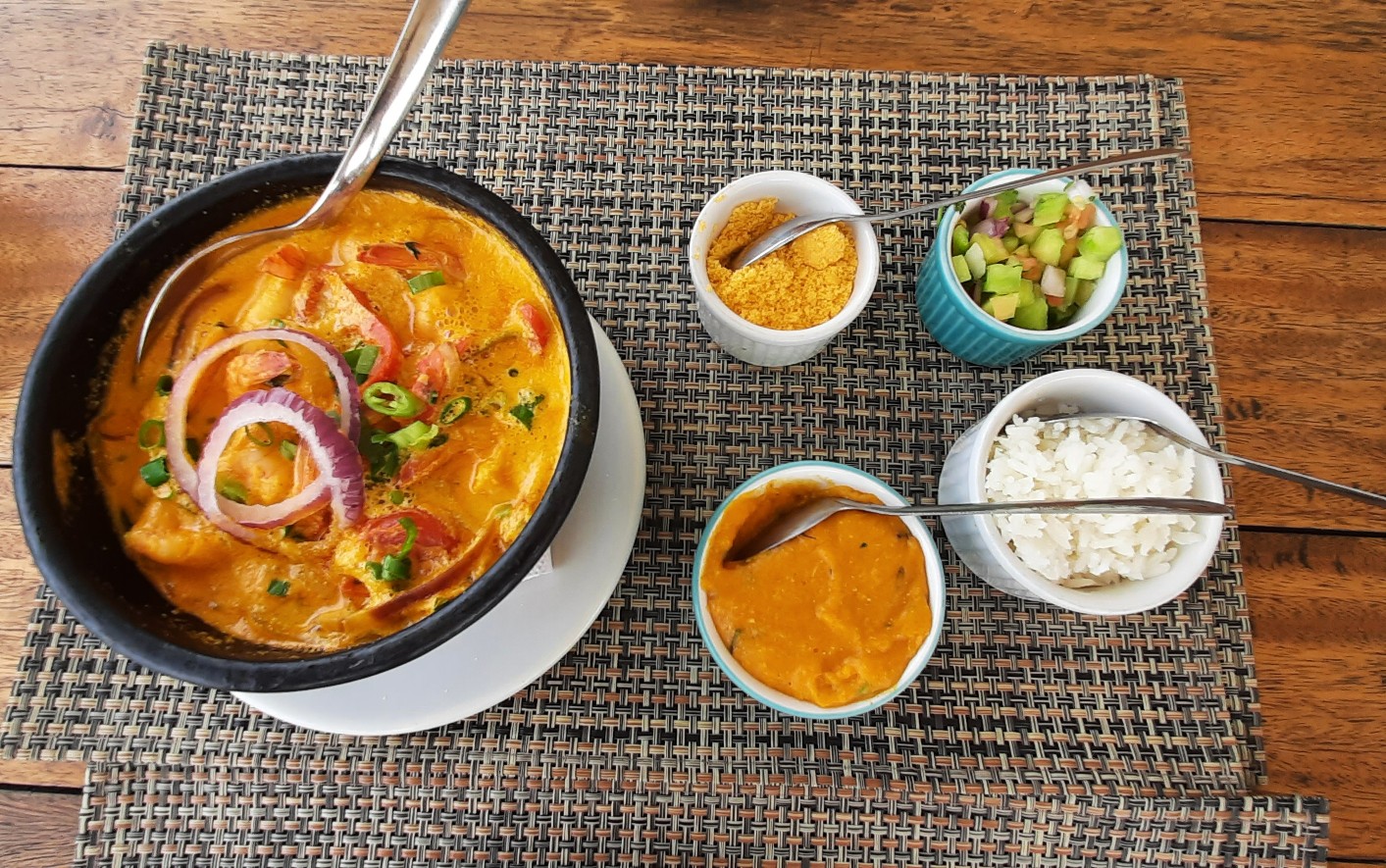
I ordered the “camarão de cueca” (“shrimp in underwear”), a local shrimp dish served with crispy cassava flour wrapped around the shrimp. The portion was very generous: officially for one person, but I think two people could easily share it if they also ordered a starter. For dessert, I had the excellent Mocinha—tapioca ice cream topped with flambéed bananas and cinnamon. They also have a surprisingly good selection of vegan dishes.
Right next door is the Thales Ferraz Handicrafts Market, which can be your next stop. I’ll admit I expected a bit more, but there are still some beautiful pieces made from clay, straw, and lace.
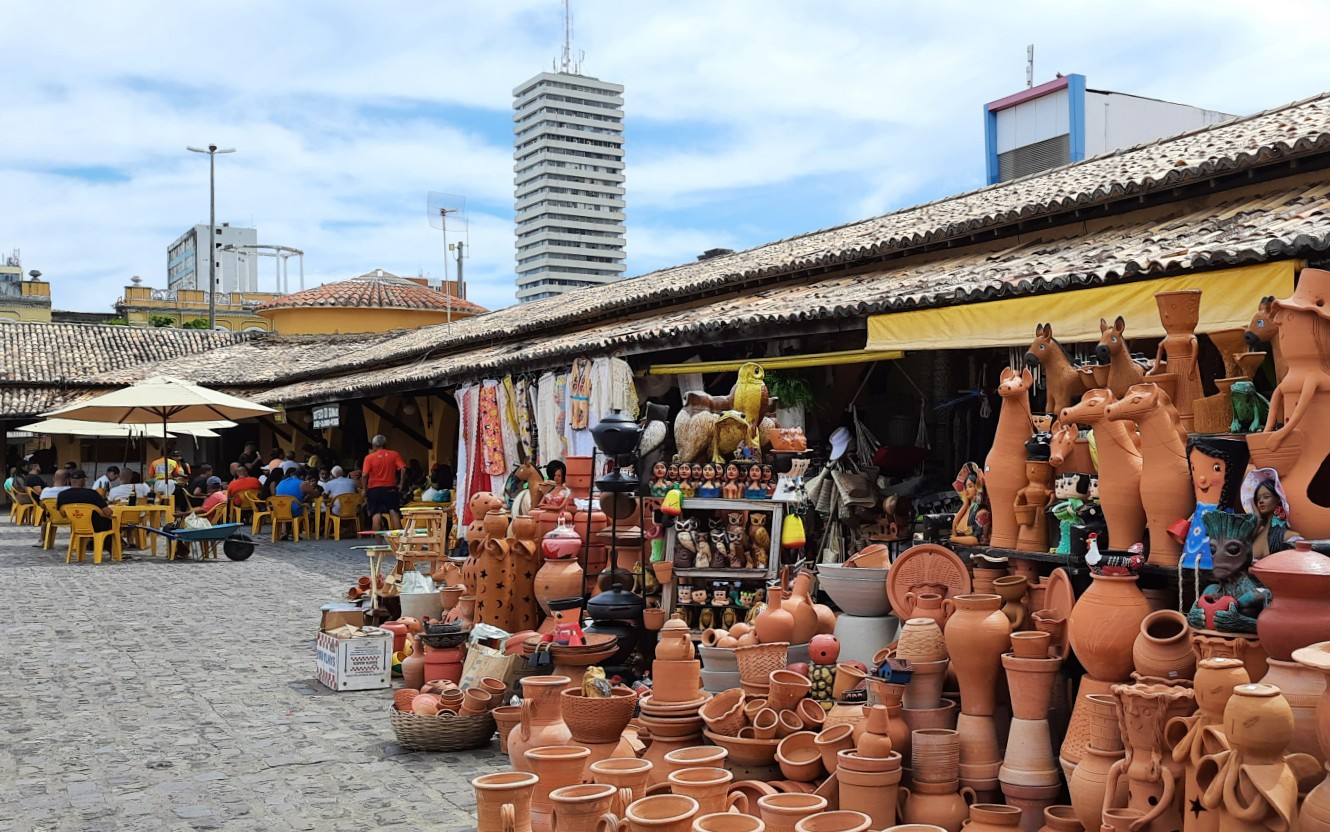
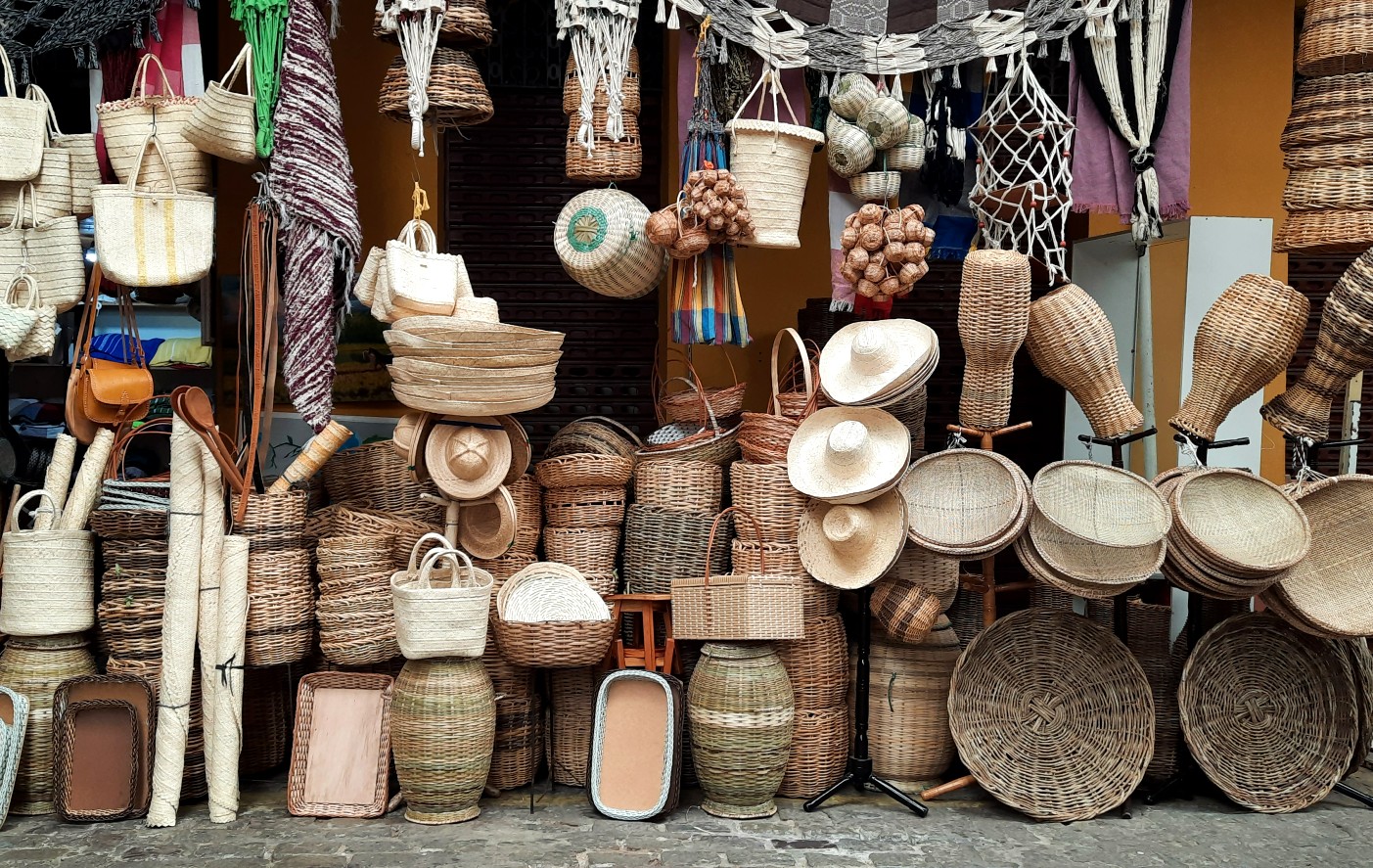
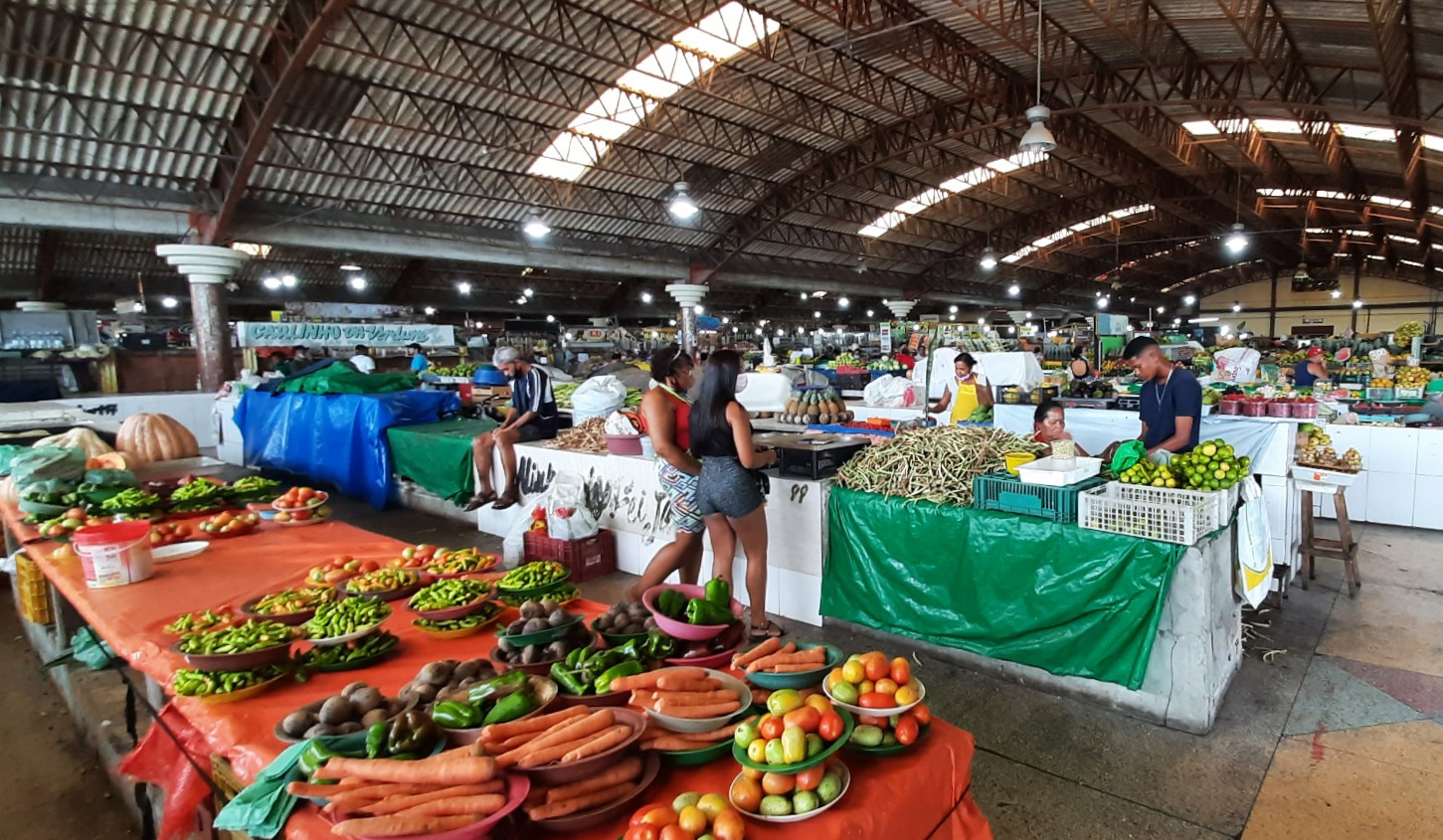
Continue your market-hopping adventure with the Albano Franco Municipal Market, a remarkably well-organized produce market filled with fresh fruit, vegetables, grains, and other regional products. Everything looked so good that I briefly considered stocking up for an entire month! Thankfully, I came to my senses and limited myself to buying some nuts, banana chips, and Aracaju’s famous roasted peanuts, which you’ll find sold all over the city.
If you’re visiting from outside northeastern Brazil, you’ll probably also enjoy browsing the regional fruits and other local products that are common in this region but harder to find elsewhere in the country or abroad.
Orlinha do Bairro Industrial
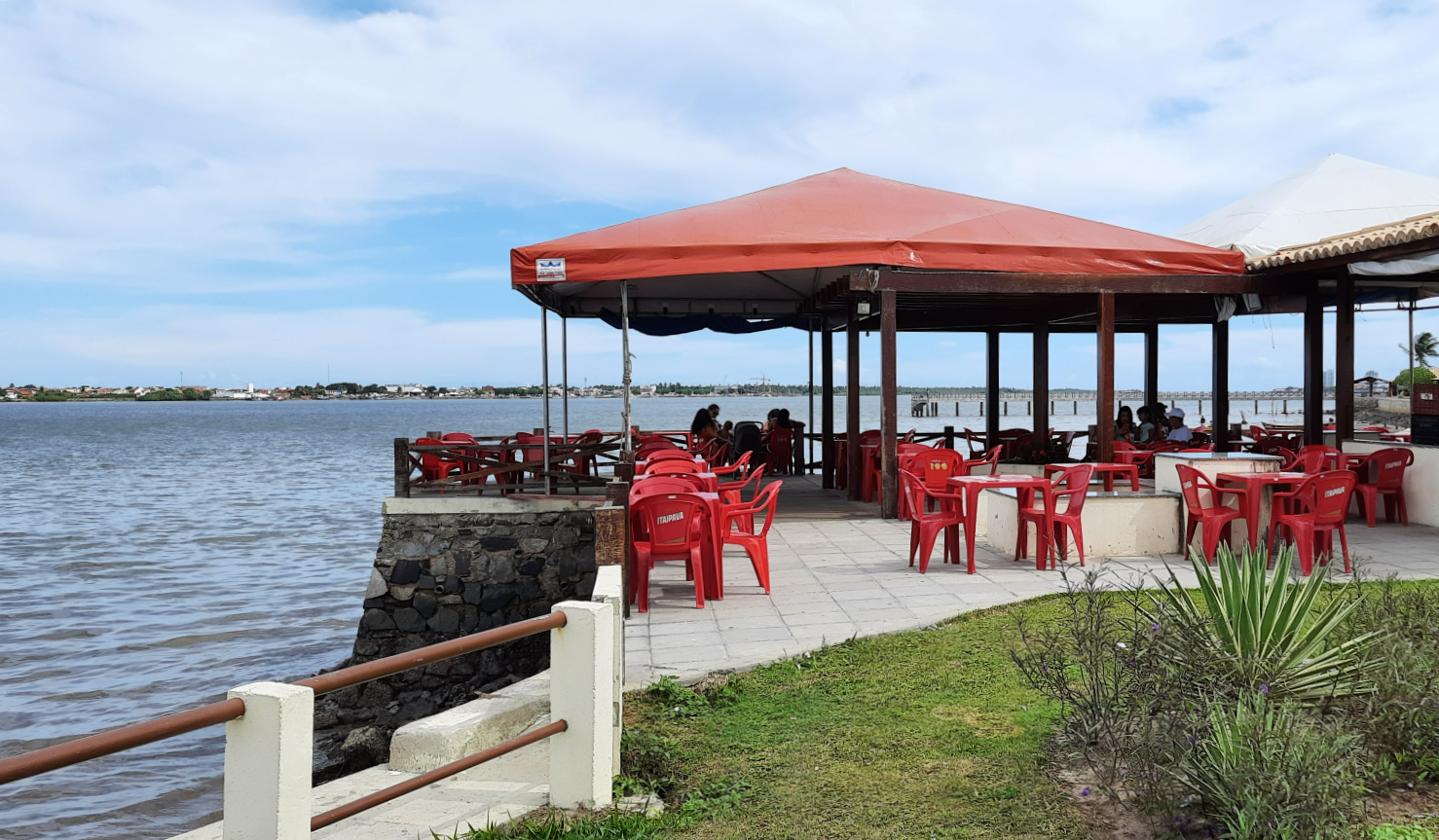
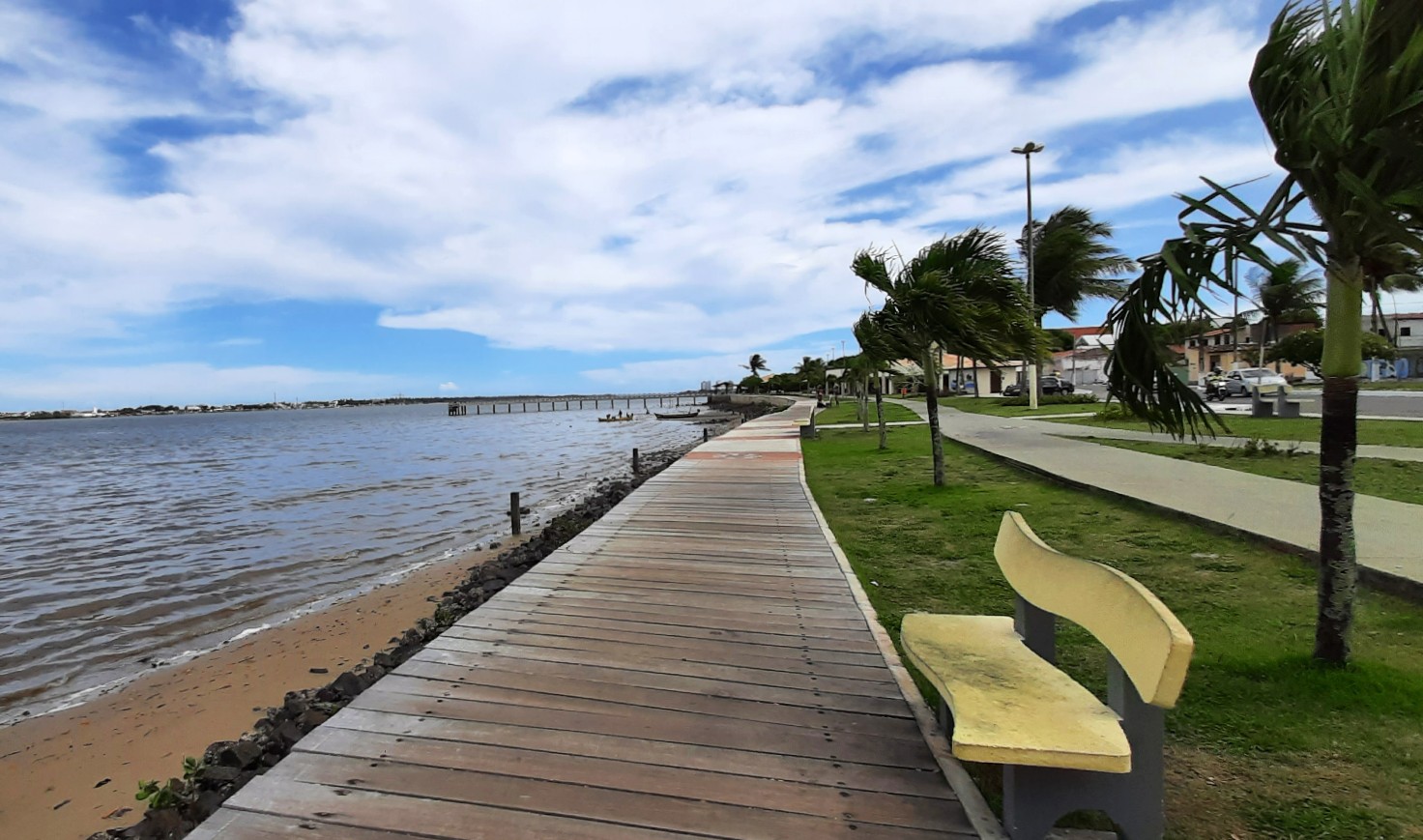
About 1 km (0.6 miles) from the markets you’ll find the Orlinha do Bairro Industrial. Orlinha is a cute diminutive of orla (waterfront). I arrived there in the middle of the afternoon, and it was still pretty quiet, since it really comes alive around happy hour.
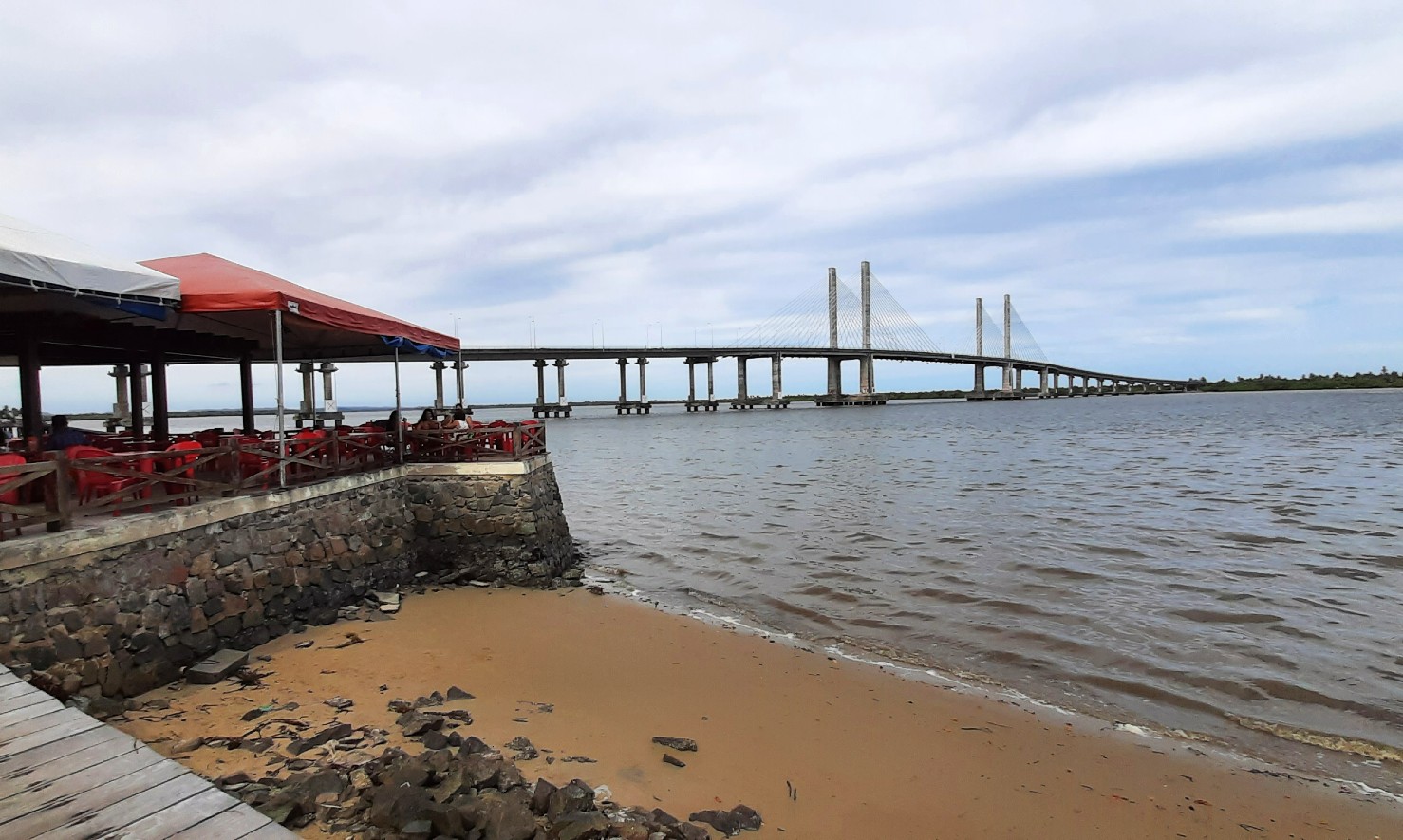
The waterfront features a small pier, rustic bars and kiosks serving food, drinks, and live music, as well as a children’s playground and a small handicrafts center.
I liked the setting along the Sergipe River, right next to the bridge connecting Aracaju to the neighboring town of Barra dos Coqueiros. Since it was still early and I wasn’t particularly enjoying the music playing at the bars, I didn’t stay long, but it struck me as a great place to grab dinner or drinks after sunset.
Santo Antônio Hill
Less than 2 km (1.2 miles) from the waterfront is Santo Antônio Hill, the highest point in Aracaju. This is also where the city’s first urban settlement was established, making it the birthplace of modern Aracaju.
At the top you’ll find the Church of Saint Anthony—the Catholic saint we traditionally associate with matchmaking and marriage, who also gave the neighborhood its name—as well as a viewpoint overlooking the city and the Sergipe River.
Atalaia Beach and Waterfront
Now, let’s finally talk about Aracaju’s beaches! The city’s most famous and liveliest is Atalaia Beach, located in Aracaju’s main tourist district.
Start by stopping at the Arcos da Atalaia (Atalaia Arches), one of the city’s best-known landmarks, that you see below.
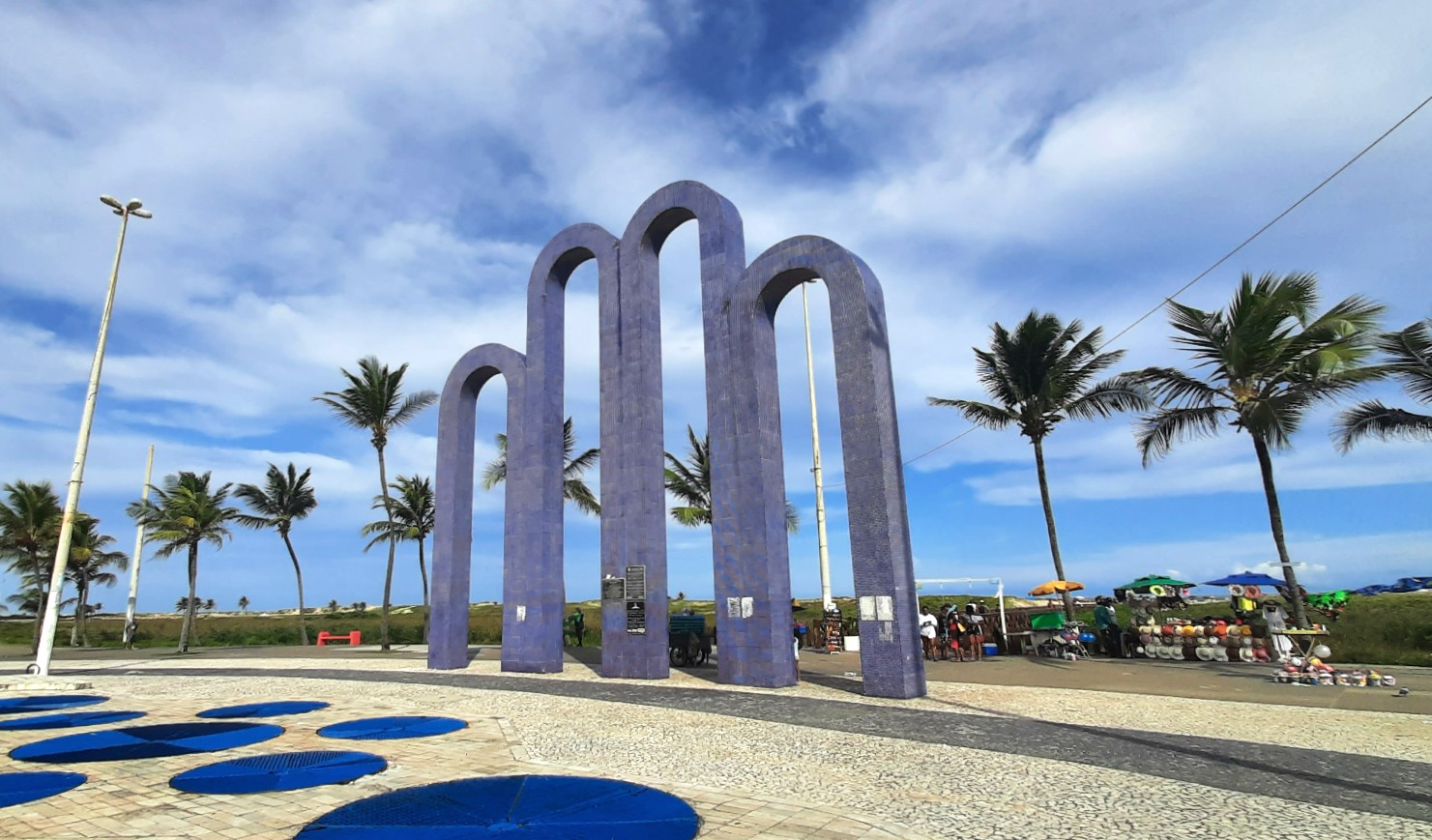
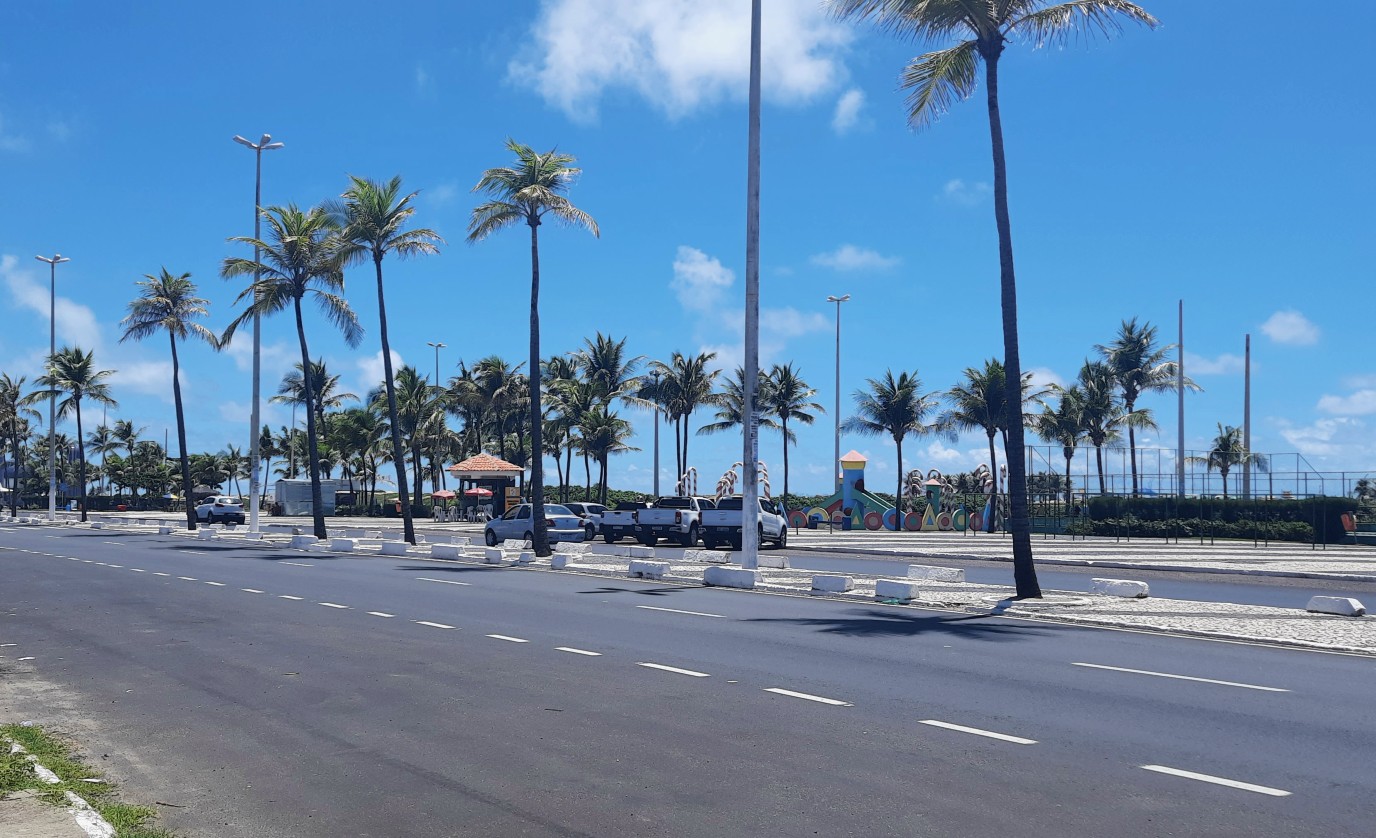
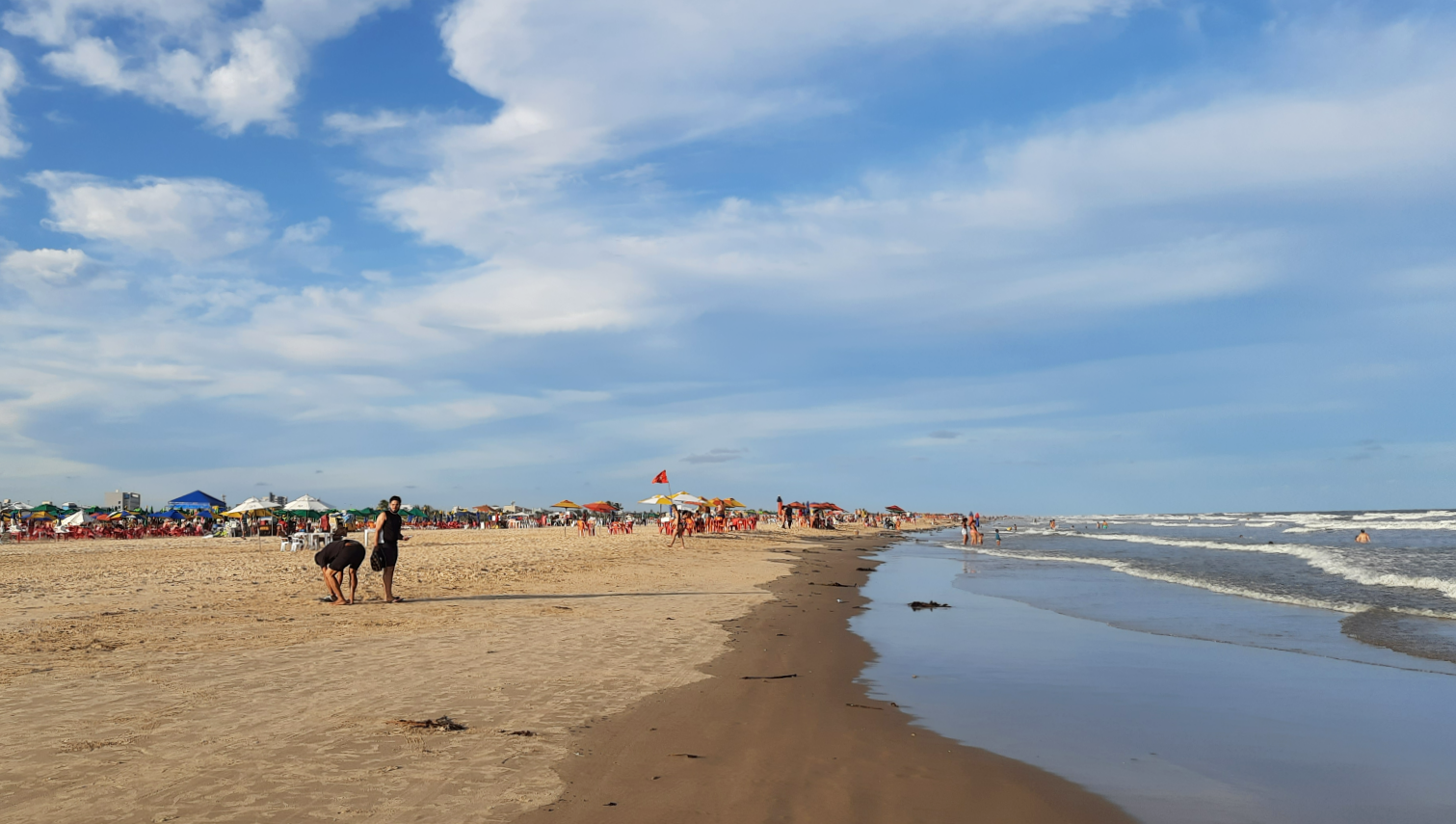
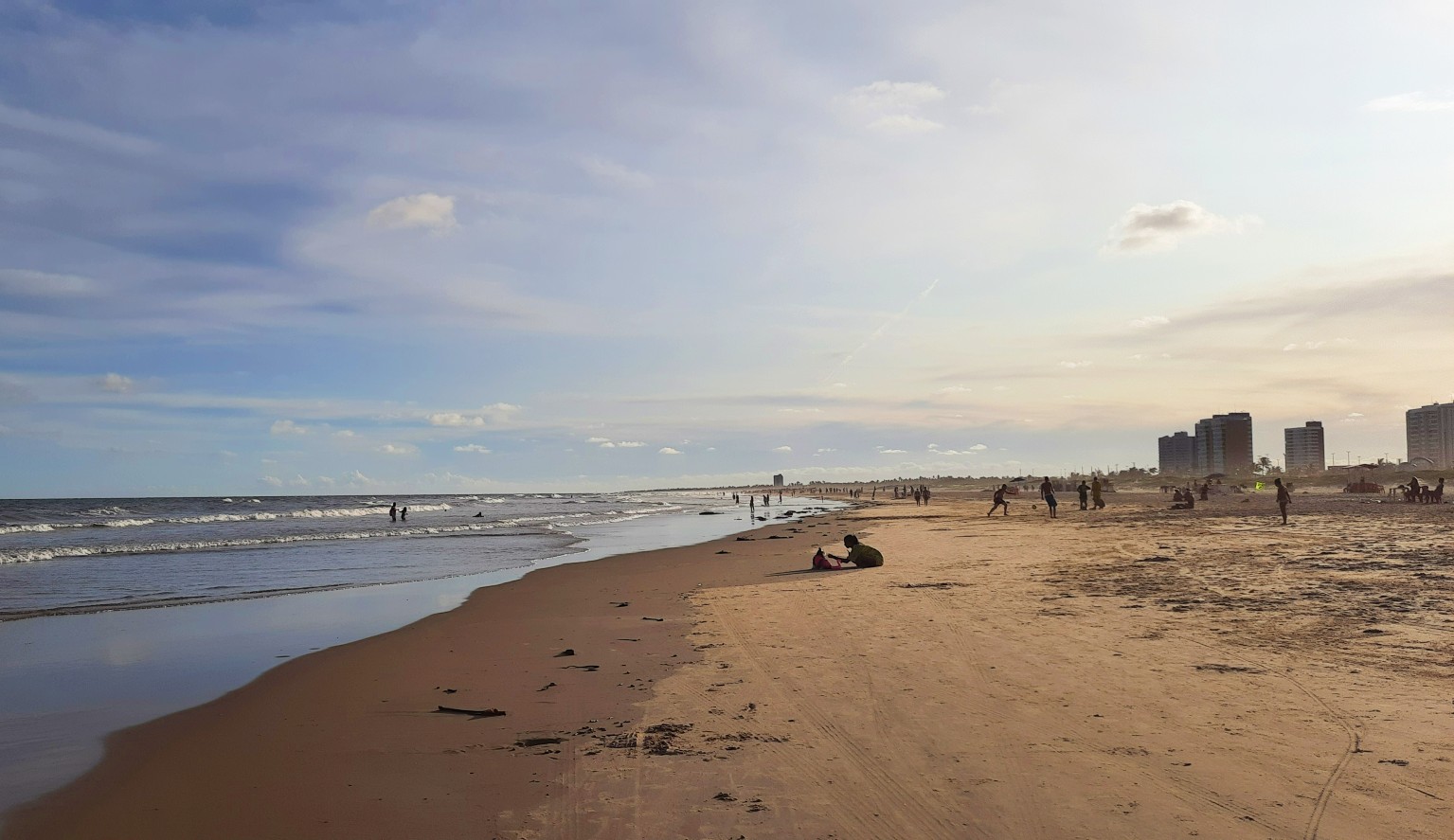
Then cross the enormous stretch of sand to reach the ocean. I don’t know about you, but I’d never seen an urban beach where you have to walk quite so far before reaching the water! I also loved seeing so many people exercising, both on the beach itself and along the waterfront.
The Atalaia Waterfront bills itself as “the most beautiful in Brazil”—at least according to the signs I saw there. I have to admit I didn’t find it quite that beautiful, mostly because it’s packed with infrastructure. On the other hand, it’s incredibly well equipped, with playgrounds, bars, restaurants, outdoor gyms, a lake with pedal boats, a go-kart track, a surf school, and much more.
Passarela do Caranguejo (Crab Walk)
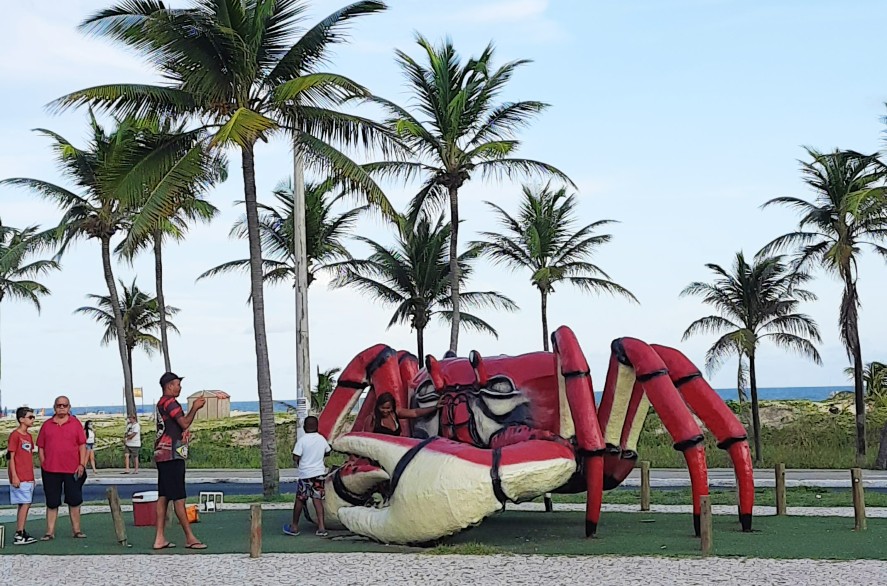
One of the most famous sections of the Atalaia waterfront is the Passarela do Caranguejo, which appears on just about every list of things to do in Aracaju at night.
Centered around a giant crab sculpture, this lively stretch is lined with bars and restaurants, many specializing in regional cuisine and fresh seafood. The crab has become such an iconic photo spot that it’s common to see visitors lining up to take a picture with it.
Explore Aracaju by Bike
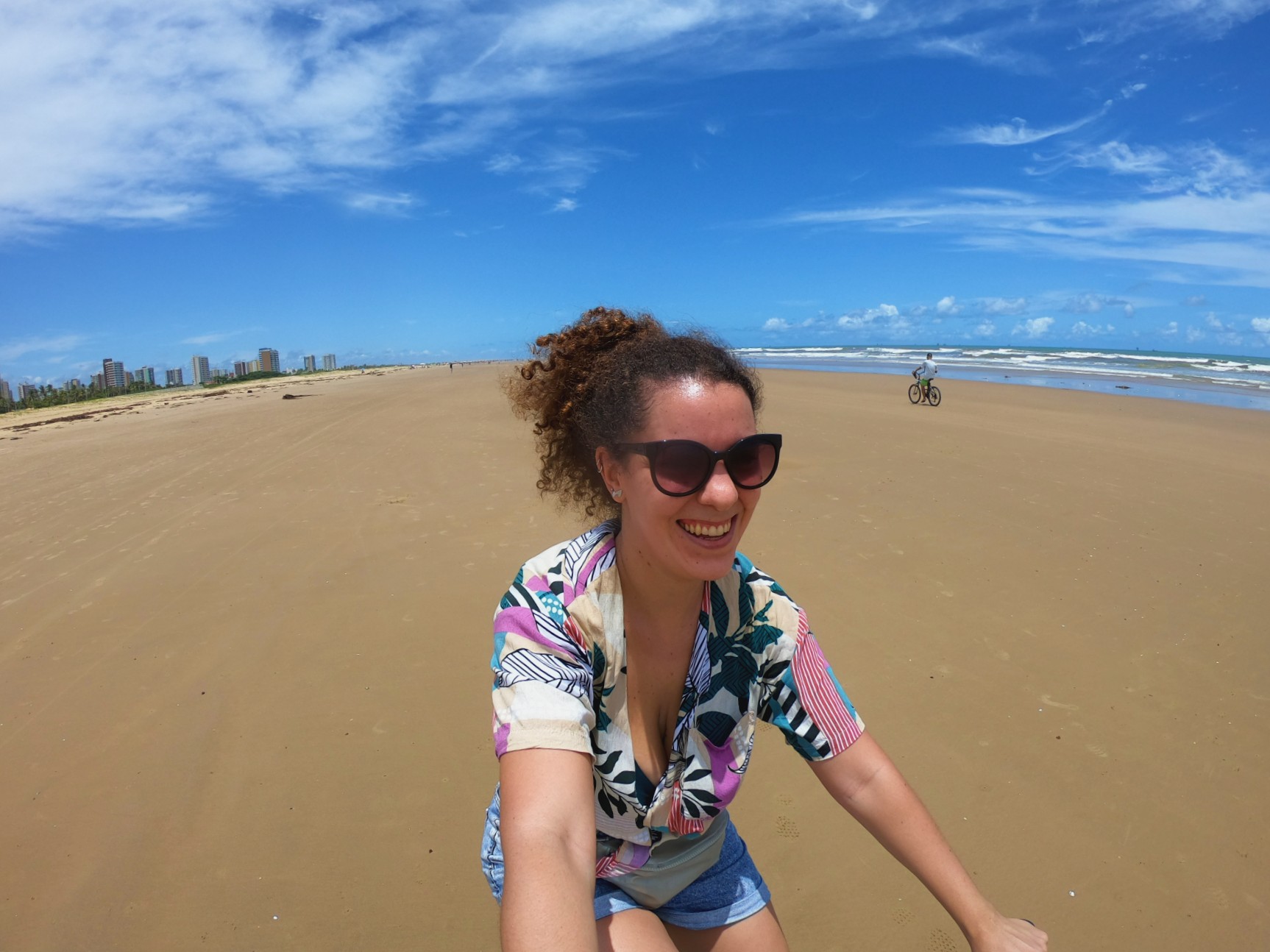
If you’re looking for something a little different to do in Aracaju, consider renting a bicycle. The city has an excellent network of bike lanes, making it easy to explore on two wheels.
Because of some medical restrictions, I couldn’t cycle for very long, so I mostly stayed along the waterfront—but I still had a great time.
I rented my bike from a place called Bike Beach, right across from the giant crab sculpture. From there, I first cycled toward downtown along the seaside bike path, then turned around and rode in the opposite direction all the way to Aruana Beach.
Keep reading:
Rio de Janeiro for digital nomads: insider’s tips
Where to stay in Rio de Janeiro: a complete guide
The best cities for digital nomads in Brazil
Projeto Tamar
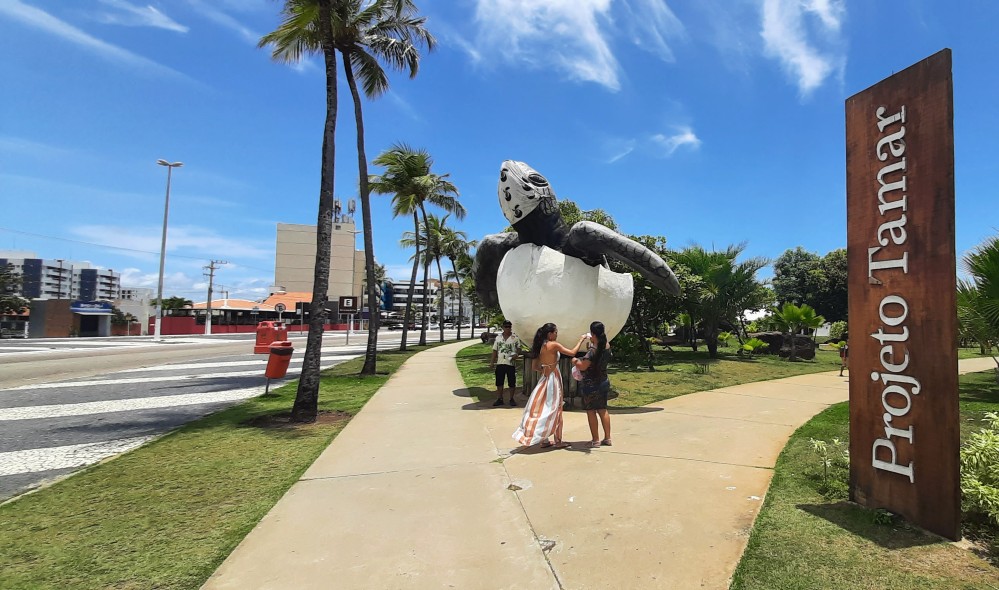
Heading from the Passarela do Caranguejo toward downtown, you’ll pass the Projeto Tamar Visitor Center, one of Aracaju’s main tourist attractions. Projeto Tamar is one of Brazil’s best-known sea turtle conservation programs, combining scientific research, environmental education, and the protection of nesting beaches along the country’s coastline.
As I learned at the Museu da Gente Sergipana, Sergipe’s coastline has the highest concentration of olive ridley sea turtle nesting sites in Brazil. Today, the state is home to three Projeto Tamar research and conservation bases—located in Ponta dos Mangues, Pirambu, and Abaís—as well as this visitor center in Aracaju. Together, they monitor around 150 km (93 miles) of coastline and protect approximately 8,000 turtle nests and 600,000 hatchlings every nesting season.
Opened in 2002, the visitor center features aquariums and tanks housing more than 50 species of marine animals. I chose not to visit because these days I prefer to avoid attractions that keep animals in captivity, even when they’re part of conservation programs. That said, the conservation work carried out by Projeto Tamar seems genuinely important.
Feira do Turista (Tourist Market)
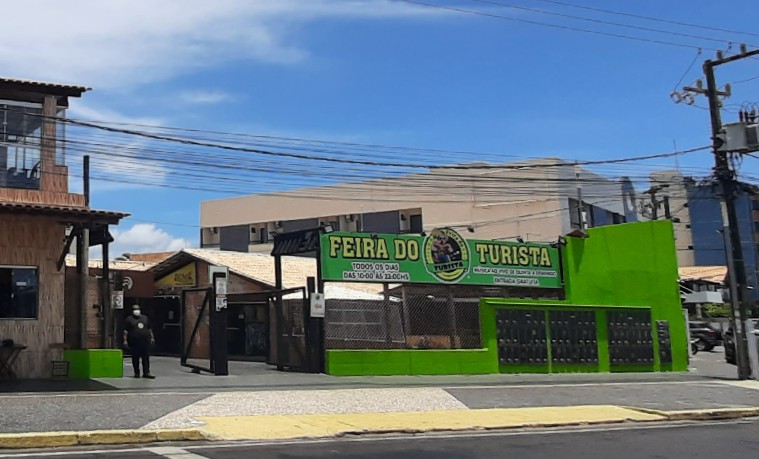
A little farther along, on the opposite side of the waterfront, you’ll come across the Feira do Turista (Tourist Market).
It’s essentially a collection of small shops selling beachwear, handicrafts, and local treats such as nuts, preserves, cachaça, cookies, and other regional products. I didn’t find it particularly memorable, but it’s worth stopping by if you’re looking for souvenirs from Aracaju.
Aruana Beach
If you continue along the Atalaia waterfront in the direction opposite downtown, you’ll eventually reach Aruana Beach, which is usually much quieter than its popular neighbor.
This area hasn’t been developed for tourism to the same extent, so it feels a little less urban and more relaxed than Atalaia.
I biked there during my ride and was happy to find wooden boardwalks leading almost all the way to the beach. That meant I didn’t have to push my bike across endless stretches of soft sand, which was a huge plus! Riding along the shoreline was an absolute delight.
More Beaches in Aracaju
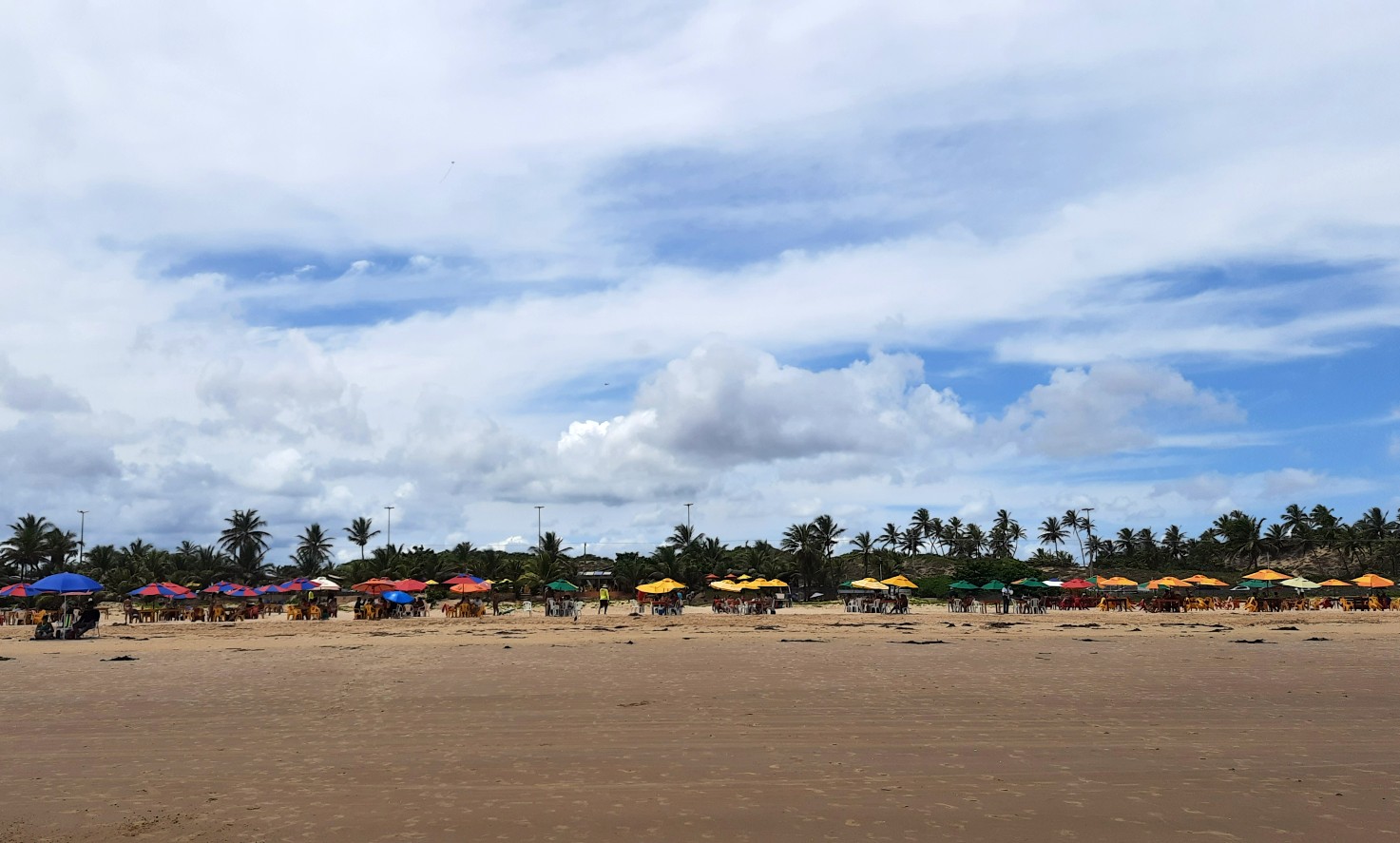
Besides Atalaia and Aruana, the most popular beaches in Aracaju are Praia dos Náufragos, Praia do Refúgio, Praia do Robalo, and Praia do Mosqueiro. They’re essentially different stretches of the same coastline—the main difference is the level of infrastructure you’ll find at each one.
I didn’t have time to visit these beaches myself, but from what locals told me, Robalo and Mosqueiro have the best selection of bars and restaurants, while Refúgio is known for having the most comfortable beach huts and facilities.
Croa do Goré and Ilha dos Namorados
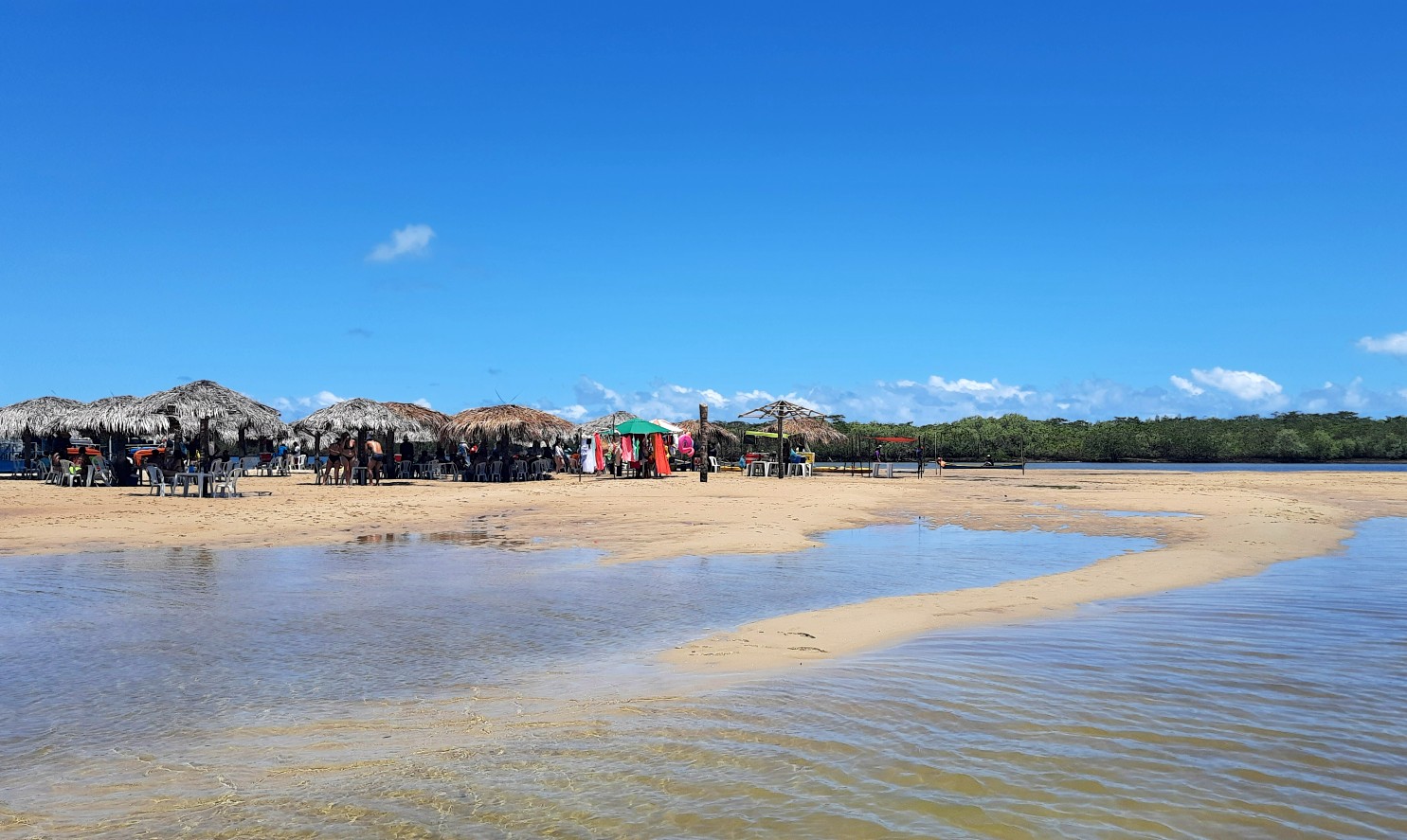
I enjoyed Aracaju’s beaches, but my favorite place to swim was actually Croa do Goré, a sandbank in the Vaza-Barris River that only emerges at low tide.
The setting is wonderful: thatched umbrellas with tables and chairs are set up around a floating bar, so you can enjoy drinks and snacks while soaking in the shallow water—with your feet (and, depending on the tide, maybe a bit more than your feet!) submerged.
Boat trips depart from the Orla Pôr do Sol (Sunset Waterfront), on Mosqueiro Beach, along the banks of the Vaza-Barris River.
There are usually two options. The first is to take a small speedboat to Croa do Goré and spend the day there (roughly from 9 a.m. to 3 p.m.), which is what I chose. The second is a catamaran tour that stops at the sandbank before continuing to Ilha dos Namorados (Lovers’ Island).
The catamaran seemed to be more of a party cruise, with live music and a lively atmosphere, which isn’t really my thing, so I happily went with the speedboat instead.
As far as I know, you can simply take an Uber to the Sunset Waterfront and hire a boat when you arrive. However, a friend I met at my hostel and I decided to book through a local agency that included round-trip transportation.
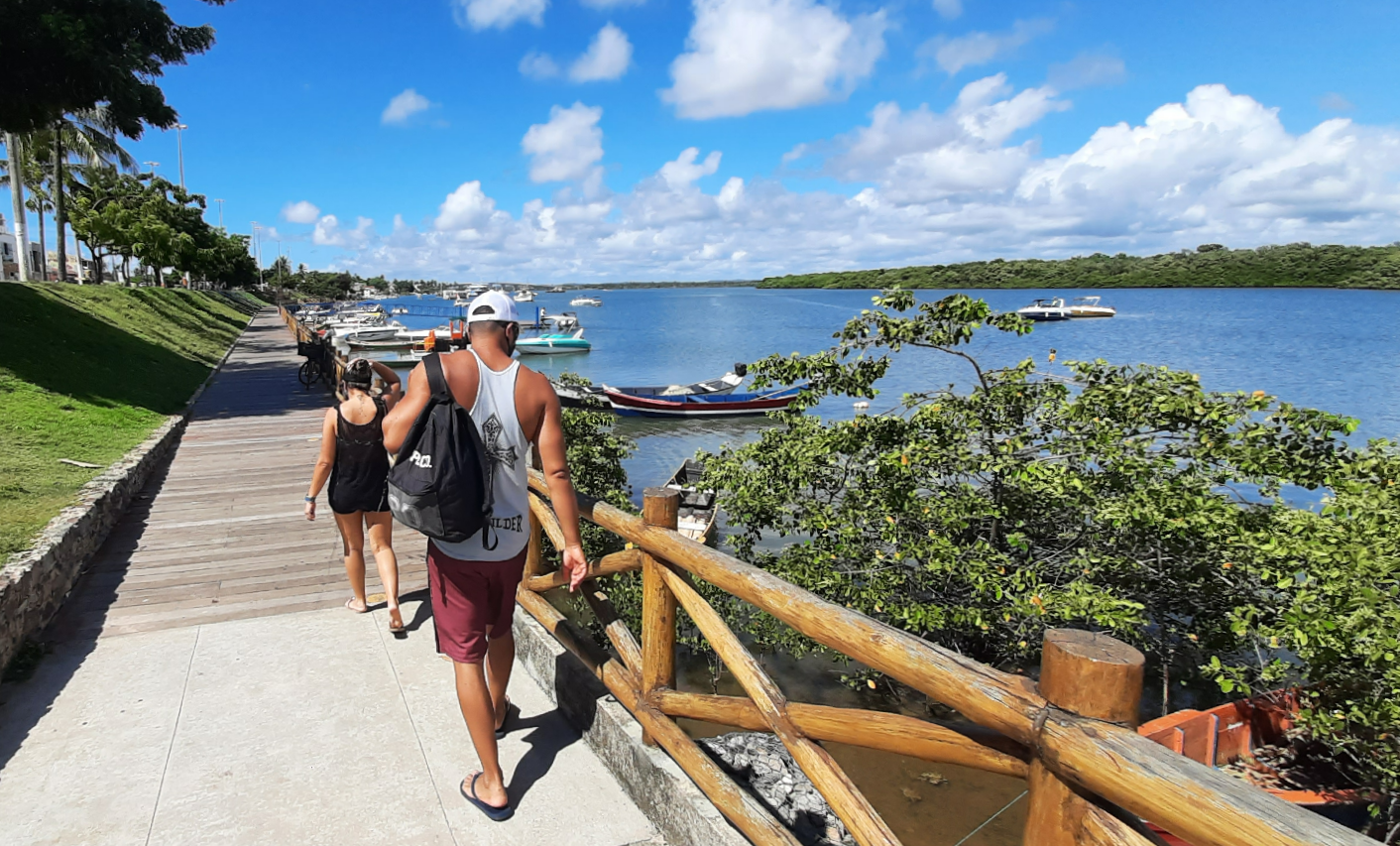
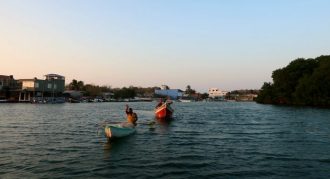
The boat ride itself takes only about 15 minutes, passing beautiful mangroves and endless views across the river. Once you arrive… just relax.
We spent hours chatting over cold beers while partially submerged in the water and it was one definitely of my favorite things to do in Aracaju. As the tide continued to fall, dozens and dozens of tiny gorés began to appear. These little fiddler crabs, which give the sandbank its name, have one oversized claw and are super cute. According to our boatman, the adults measure only about 3 cm (1.2 inches) across. You can also rent kayaks and stand-up paddleboards there.
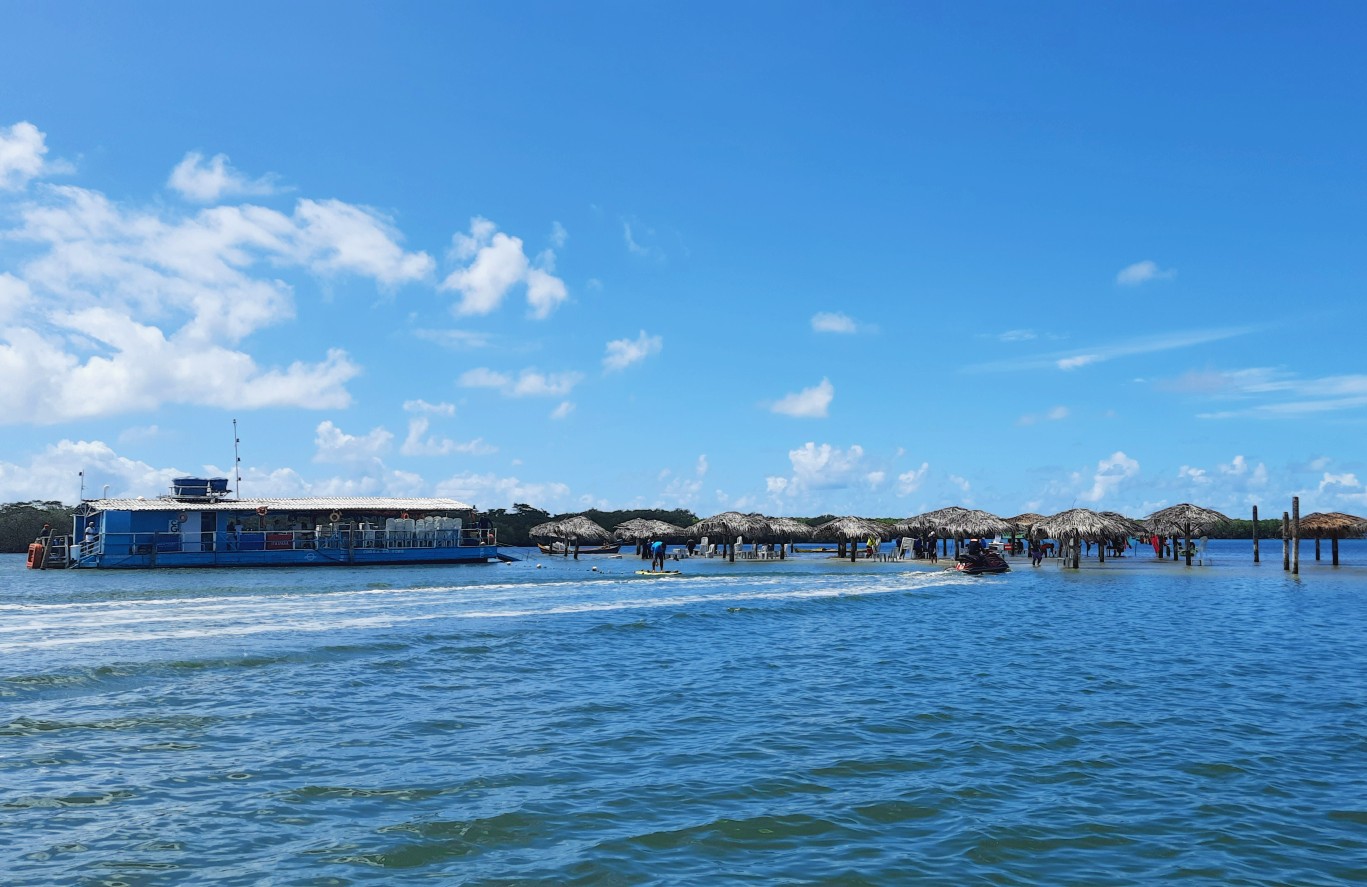
A couple of things are worth mentioning. When I visited (in February), there were some jellyfish in the water. They were small, and everyone who got stung said the burning sensation faded quickly, but it’s something to keep in mind if you’re traveling with children.
Also, I was told that weekends can get very crowded. If possible, I’d recommend visiting on a weekday, as I did. I was there during the Brazilian summer, which is our highest season, but the atmosphere felt peaceful and relaxed.
Orla Pôr do Sol (Sunset Waterfront)
The Sunset Waterfront, where the boats depart for Croa do Goré, is worth visiting even if you don’t take the boat trip.
I didn’t end up spending any time there myself, but it seems like the perfect place to watch the sunset after returning from the river.
The waterfront is lined with bars and restaurants overlooking the mangroves and the point where the river meets the sea.
The friend I mentioned earlier stayed there after I headed back and absolutely loved it, although she warned me that the prices were on the expensive side.
Best Day Trips from Aracaju
If you have extra time, I’d definitely recommend exploring some of the areas around Aracaju.
Barra dos Coqueiros
A great place to start is Barra dos Coqueiros, part of the city’s metropolitan area, just across the bridge you can see from the Orlinha do Bairro Industrial.
Its main attraction is Praia da Costa, a quiet beach that’s said to be perfect for a relaxing day by the sea. There aren’t many permanent beach bars or restaurants, but you’ll usually find temporary stalls and street vendors.
If you’re looking for a resort stay, this is also where you’ll find the Makai Resort All Inclusive Convention Aracaju, which has extensive leisure facilities.
Praia do Saco
Willing to venture a little farther? About 70 km (43 miles) south of Aracaju lies Praia do Saco, one of Sergipe’s most famous beaches, known for its white sand, coconut palms, and buggy rides over the dunes.
Many visitors combine the trip with a stop at Lagoa dos Tambaquis, about 15 km (9 miles) away on the drive back toward Aracaju.
I didn’t visit myself, but I was told that one of the popular activities there is buying fish food to attract the tambaqui fish for close-up encounters. Personally, I prefer to avoid attractions that encourage wildlife to change their natural behavior, so it didn’t appeal to me.
If you’ve been there, feel free to share your experience in the comments!
Mangue Seco
Close to Praia do Saco—but across the river that separates the states of Sergipe and Bahia—lies another popular destination: Mangue Seco.
This small seaside village in Bahia became famous as the filming location for the Brazilian soap opera Tieta, which was based on the novel by celebrated Brazilian author Jorge Amado.
Since Mangue Seco is only about 80 km (50 miles) from Aracaju (compared with around 240 km / 150 miles from Salvador, the capital of Bahia), it’s much easier to visit from Aracaju.
To get there, drive or join a tour to the village of Pontal, where boats cross the Real River. Once in Mangue Seco, you can either walk to the beach or take a buggy ride across the dunes.
São Cristóvão
Aracaju wasn’t Sergipe’s first capital. That title belonged to São Cristóvão, located just 23 km (14 miles) from today’s capital.
Founded in 1590, it’s the fourth-oldest city in Brazil and a wonderful destination if you enjoy history, colonial architecture, and peaceful small towns. You can visit on a guided tour, by car, or by public bus.
Expect elegant colonial mansions, historic churches, museums, charming squares, and excellent regional food.
Don’t leave without trying two local specialties: bricelet (a delicate wafer cookie introduced by Swiss immigrants) and the city’s famous queijadas, sweet cheese pastries that have become one of São Cristóvão’s culinary icons.
Xingó Canyons
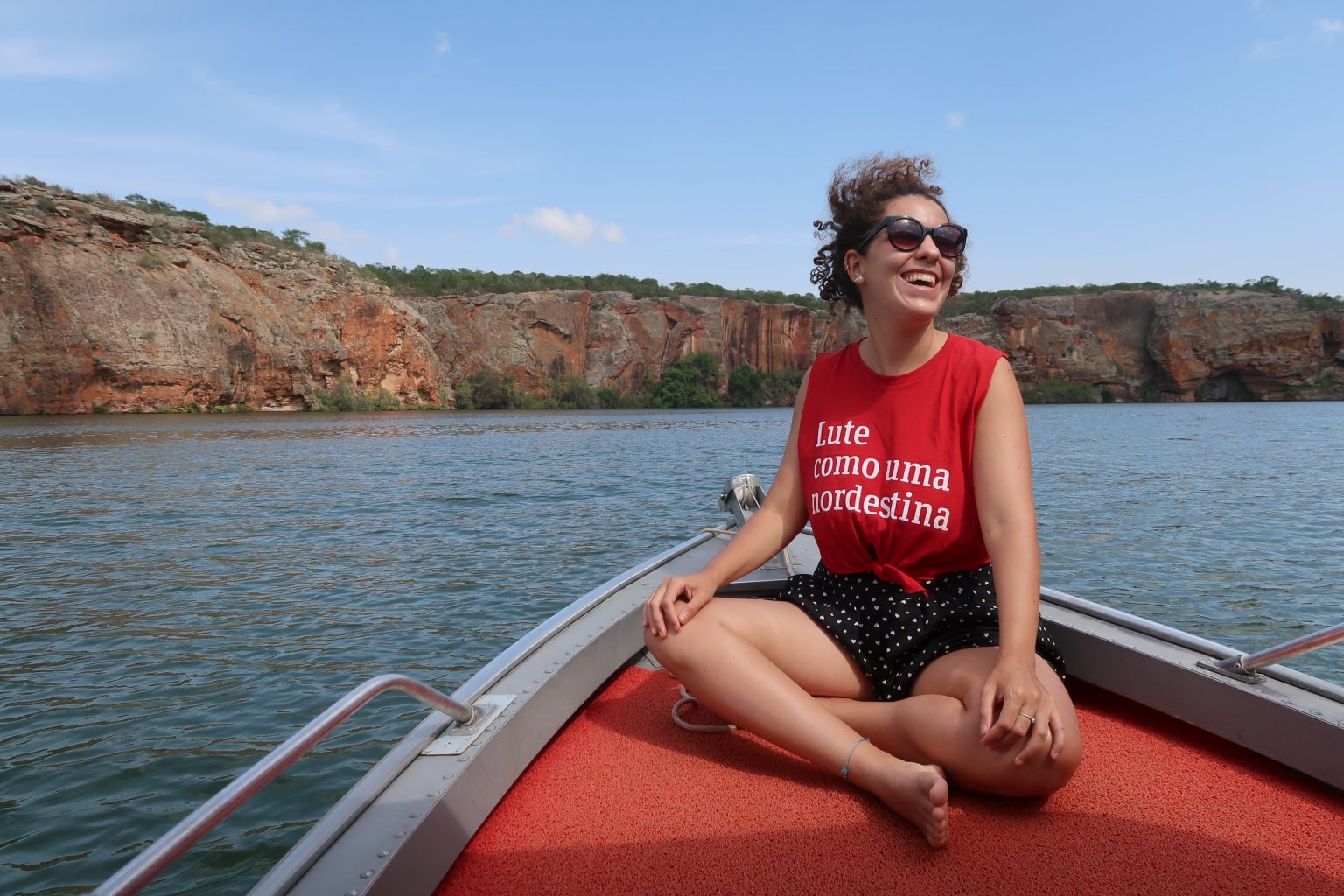
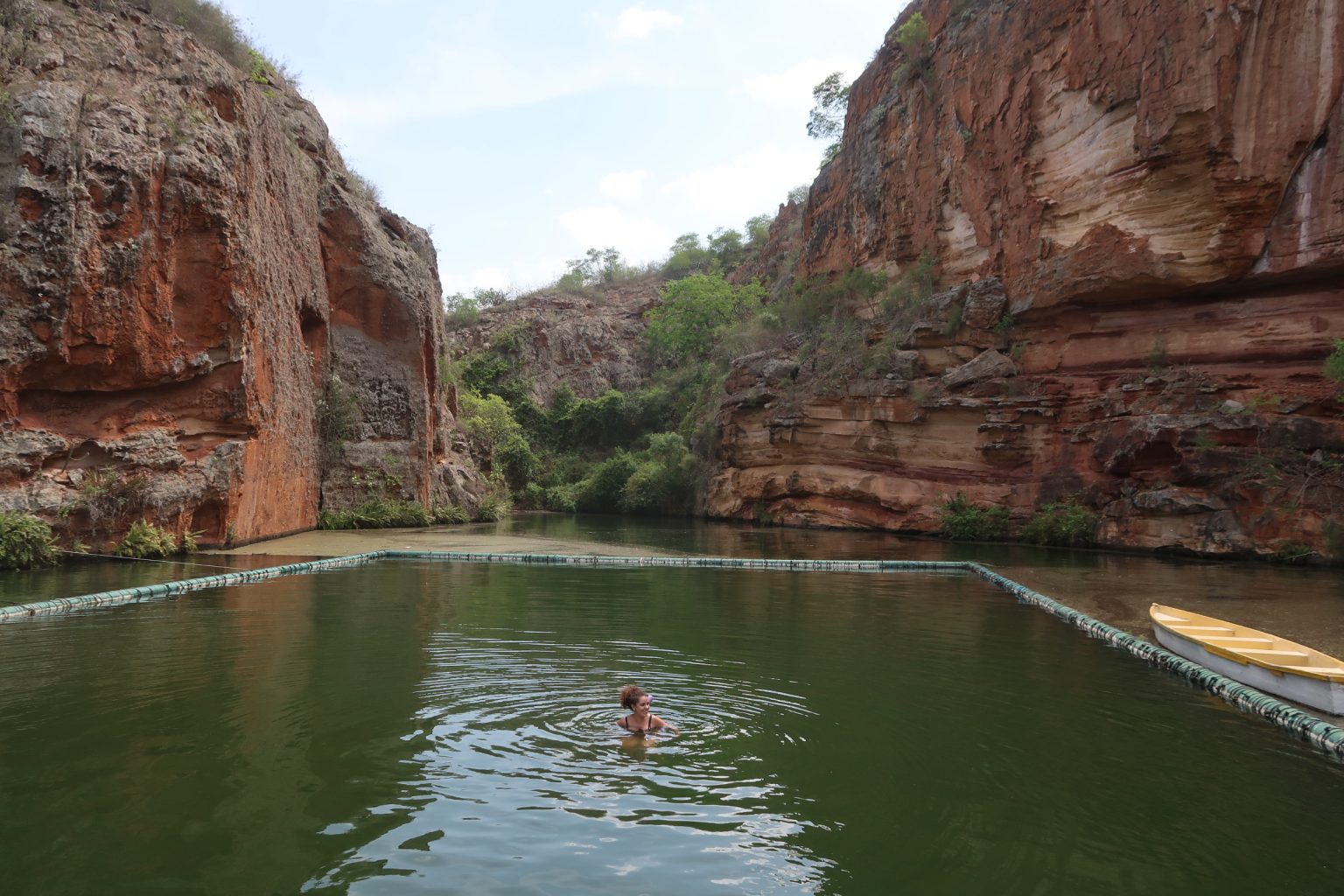
Many tour companies offer day trips from Aracaju to the spectacular Xingó Canyons. The boat tour departs from Canindé de São Francisco, at the western edge of Sergipe on the border with Alagoas, and is usually done by either speedboat or catamaran. Personally, though, I think it’s too exhausting as a day trip.
I’d recommend either focusing on attractions closer to Aracaju or doing what I did: travel onward to Piranhas (Alagoas) and spend at least two nights there. That way you’ll have plenty of time not only for the canyons but also for several other attractions in the region, which I actually enjoyed even more.
Most Xingó Canyon tours include about 40 minutes by boat before reaching the canyon itself, a short ride on a smaller boat into the stunning Gruta do Talhado, time to swim in the São Francisco River from a floating platform with a protected swimming area, and a lunch stop at one of the riverside restaurants, where you’ll usually find a few optional activities as well.
Where to Eat in Aracaju
Sweet potato candy, pé de moleque de puba, mangaba… As I mentioned before, one of my favorite things to do in Aracaju turned out to be eating.
Even though I’m from northeastern Brazil myself, I discovered plenty of regional specialties that were completely new to me, or at least quite different from the versions I grew up with.
The mangaba juice and ice cream, for example, were even better than the ones I’m used to in Recife—which makes sense, considering Sergipe is Brazil’s largest producer of this native fruit.
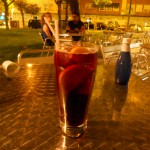
Besides Restaurante Caçarola, which I mentioned earlier, another place that came highly recommended was Terra Tupi, on the Passarela do Caranguejo. There I ordered the Camarão Alagoano. It was good, although some of the dishes served to neighboring tables looked even more tempting. The strawberry-and-orange juice, on the other hand, was excellent.
I also really enjoyed Casa Aho Pizzas e Hambúrgueres. The vegetarian pizza I ordered was delicious, and the restaurant itself is airy, cozy, and full of charm.
And if, like me, you have a weakness for bakeries, don’t miss Padaria União, where I found regional treats such as beiju molhado, a soft, moist cassava flatbread that’s popular in northeastern Brazil.
Other places locals recommended include Carrara Food Park, Il Sordo Gelato, TAS Burguer, Marmizen (vegetarian and vegan meal boxes), Mi Piace Pizzeria, Pointts Burgers, Cariri (a regional restaurant with live forró music), Carne de Sol do Ramiro, and Mangará, another excellent restaurant specializing in northeastern cuisine.
Where to Stay in Aracaju
Choosing where to stay in Aracaju is fairly straightforward. Most hotels are concentrated in Atalaia, which is the most convenient area for most visitors. Besides the beach, you’ll find plenty of restaurants and bars, easy access to the airport, and good connections to the city’s main attractions.
Another good option is Coroa do Meio, where you’ll generally find more affordable guesthouses while still staying close to Atalaia Beach and a little closer to downtown.
Aruana Beach also has some excellent accommodation options, while the upscale neighborhoods of Jardins and Grageru are home to several business hotels.
For a more detailed comparison of these areas, plus my hotel and guesthouse recommendations, check out my complete guide on where to stay in Aracaju.
Suggested 4-Day Aracaju Itinerary
Not sure how to organize your trip? Here’s the itinerary I followed, which I think works really well.
Day 1
- Museu da Gente Sergipana
- Largo da Gente Sergipana
- Metropolitan Cathedral
- Sergipe Handicrafts Museum
- Antônio Franco Market
- Lunch at Caçarola
- Thales Ferraz Handicrafts Market
- Albano Franco Market
- Santo Antônio Hill
- Orlinha do Bairro Industrial
Day 2
- Relax at Atalaia Beach
- Projeto Tamar
- Tourist Market
- Bike ride to Aruana Beach
- Dinner at Passarela do Caranguejo
Day 3
- Boat trip to Croa do Goré
- Sunset and dinner at Orla Pôr do Sol
Day 4
- Beach day at Barra dos Coqueiros
- Dinner at Casa Aho
Have More Time?
If you’re staying longer, consider adding one or more of these day trips:
- Praia do Saco
- Mangue Seco
- São Cristóvão
I hope you liked this article on the best things to do in Aracaju, Sergipe, an underrated Brazilian destination. I truly found it to be a hidden gem, and would love to go back.











0 Comentários