
Things to Do in Paraty, Brazil: Beaches, Waterfalls & More
Beaches, waterfalls, hiking trails. Great food, drinks and music. Now add a charming colonial town that seems to have practically stopped in time, and there you have it: Paraty.
This beautiful town about 250 km (155 miles) from Rio de Janeiro is one of my favorite places in Brazil, precisely because it offers such a wide variety of attractions while still maintaining a fairly laid-back atmosphere. It’s easy to get there from both Rio and São Paulo, so if you’re planning a trip around Southeast Brazil, you should definitely consider adding it to your itinerary.
You might also like to read:
Where to stay in Paraty: Top picks for every budget
41 free things to do in Rio de Janeiro
Where to stay in Rio de Janeiro: Tips from a local
I’ve been there a few times, and in one of them I spent two weeks volunteering in a guest house in exchange for free accommodation through Worldpackers. I had lots of free time to explore the town and its surroundings, and now it’s time for me to share my recommendations. If you’re looking for the best things to do in Paraty and the surrounding area, here are my tips.
But before we get to all the attractions, let’s talk about some practicalities: when is the best time to visit Paraty, and where should you stay?
When to visit Paraty
Paraty is worth visiting all year round. Even if the weather isn’t good enough for the beach, the town itself is lovely. But of course, some times of year are better than others. Summers in this region tend to be hot but rainy, while winter can get a little chilly.
Rainfall is usually lower from June to September. You might get lucky and enjoy warm days and pleasantly cool nights, but a cold front can also bring temperatures below 15°C (59°F). I spent the second and third weeks of June there and the weather was perfect. I also went in November and caught a lot of rain.
Besides the whims of the weather gods, though, it’s also worth paying attention to the human calendar. Like any tourist destination, Paraty is more enjoyable outside Brazilian school holidays (which happen in July, late December and January) and long holiday weekends.
The town also hosts several events throughout the year, which make its streets busier and accommodation harder to find. If any of them appeal to you, plan your trip well in advance. If you’d rather enjoy Paraty at its quietest, avoid those dates.
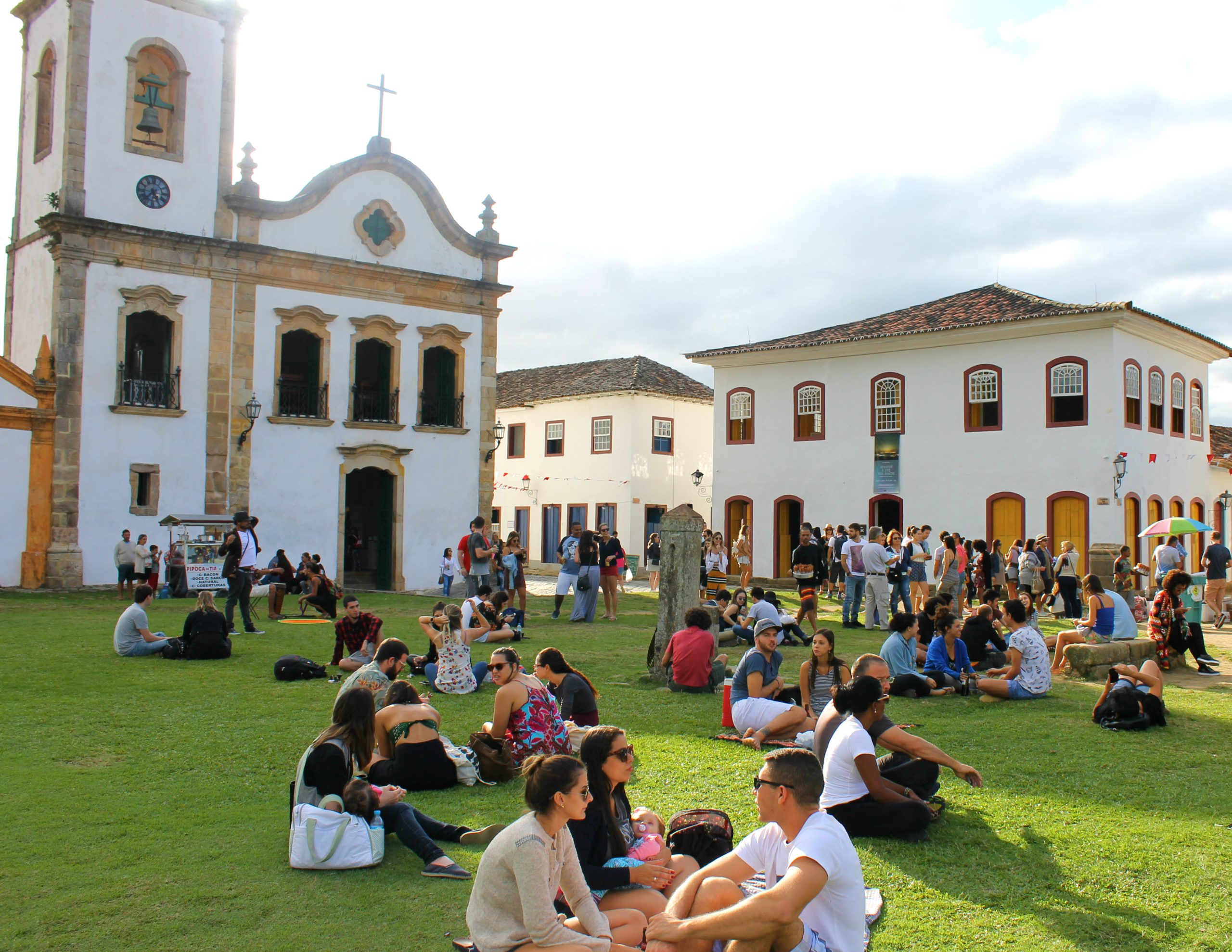
Some examples include Catholic celebrations such as Holy Week (Semana Santa), the Feast of the Divine Holy Spirit (Festa do Divino Espírito Santo) and Corpus Christi; the excellent Bourbon jazz and blues festival; the famous Paraty International Literary Festival (Flip); the Cachaça Festival; the Paraty em Foco photography festival; and the Mimo music festival. I’ve been to both Bourbon (photo below) and Flip and highly recommend it.
How long to stay in Paraty
For most travelers, I’d recommend around five full days: one to explore the Historic Center without rushing, another for a schooner boat tour, one to visit the beaches around the village of Trindade, another to explore nearby waterfalls and cachaça distilleries, and one more to visit Praia do Sono.
If you need to cut the trip down by a day, you can combine the schooner tour—which usually ends at around 4 pm—with a shorter walk around the Historic Center.
If you have more time, you certainly won’t run out of things to do in Paraty: there are activities like treetop adventure courses, ziplining, rappelling, rafting, scuba diving, trekking, speedboat and kayak tours, and visits to Quilombola communities (traditional Afro-Brazilian communities founded by the descendants of formerly enslaved people).
And if you enjoy hiking, quiet beaches and a more rustic atmosphere, it’s also worth spending one or two nights in Trindade or Praia do Sono.
Of course, if you don’t have much time, you can see the main highlights of Paraty in two or three days, but chances are you’ll leave wishing you could come back.
Where to stay in Paraty
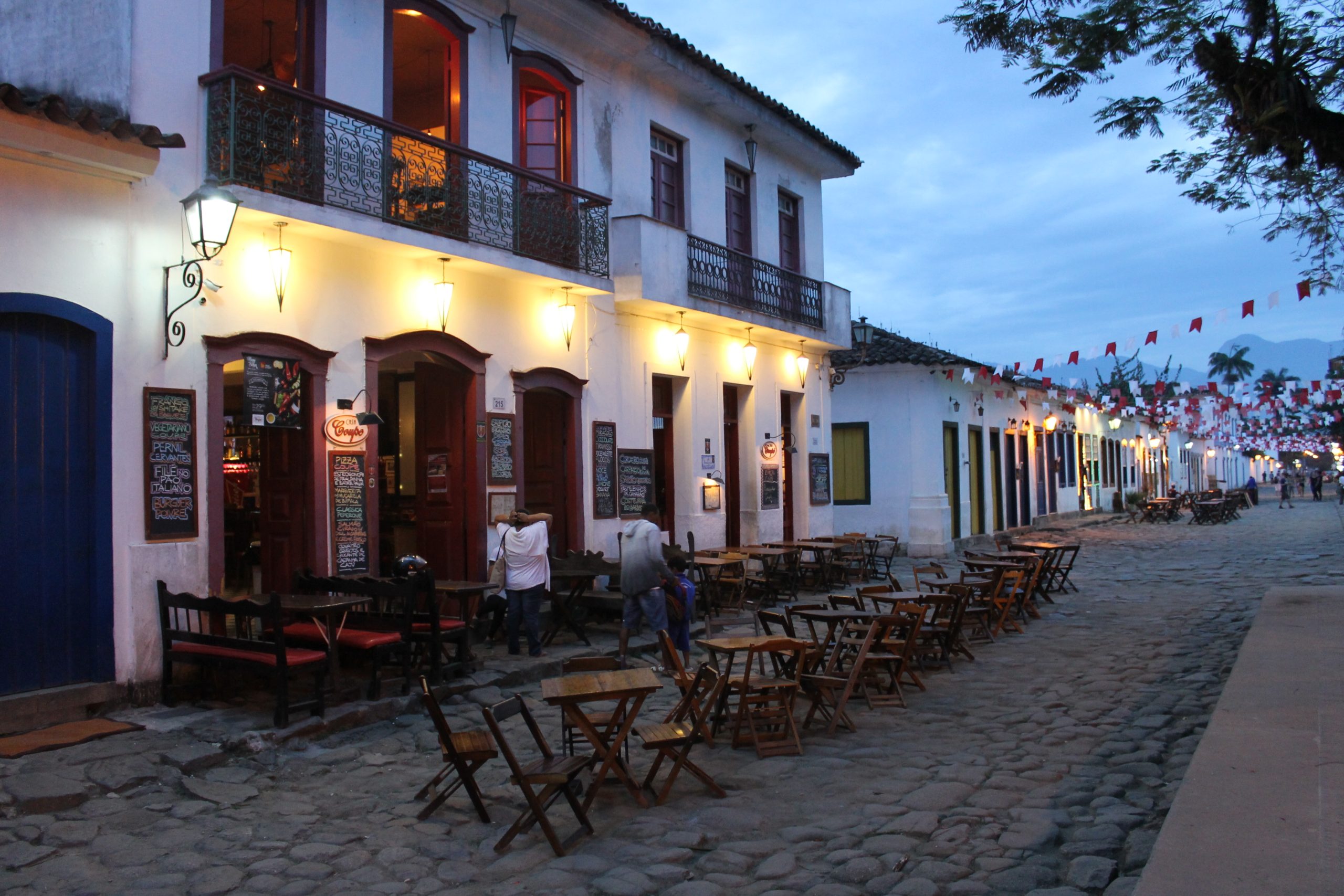
Paraty has pousadas (Brazilian-style guesthouses) and hostels for all budgets, with many of them located in the Historic Center. Staying there is convenient because you’ll be just a few minutes away from plenty of great bars and restaurants, as well as tour agencies, the bus station and the harbor, where schooner tours depart.
As you might expect, prices tend to be higher in this more touristy area, especially during major events. But there are also good accommodation options in other parts of town, including the areas just outside the Historic Center and around Pontal and Jabaquara beaches.
For more information on the best locations and recommendations for every budget, check out my detailed guide on where to stay in Paraty.
Best things to do in Paraty and around
Paraty’s main attraction is its Historic Center, one of the best-preserved colonial towns I’ve seen in Brazil. The town played an important role in the country’s history, serving as an entry point for goods and enslaved Africans and as a port for shipping gold from Minas Gerais and coffee from the Paraíba Valley. But after new routes were established, Paraty was practically abandoned and, in a way, frozen in time.
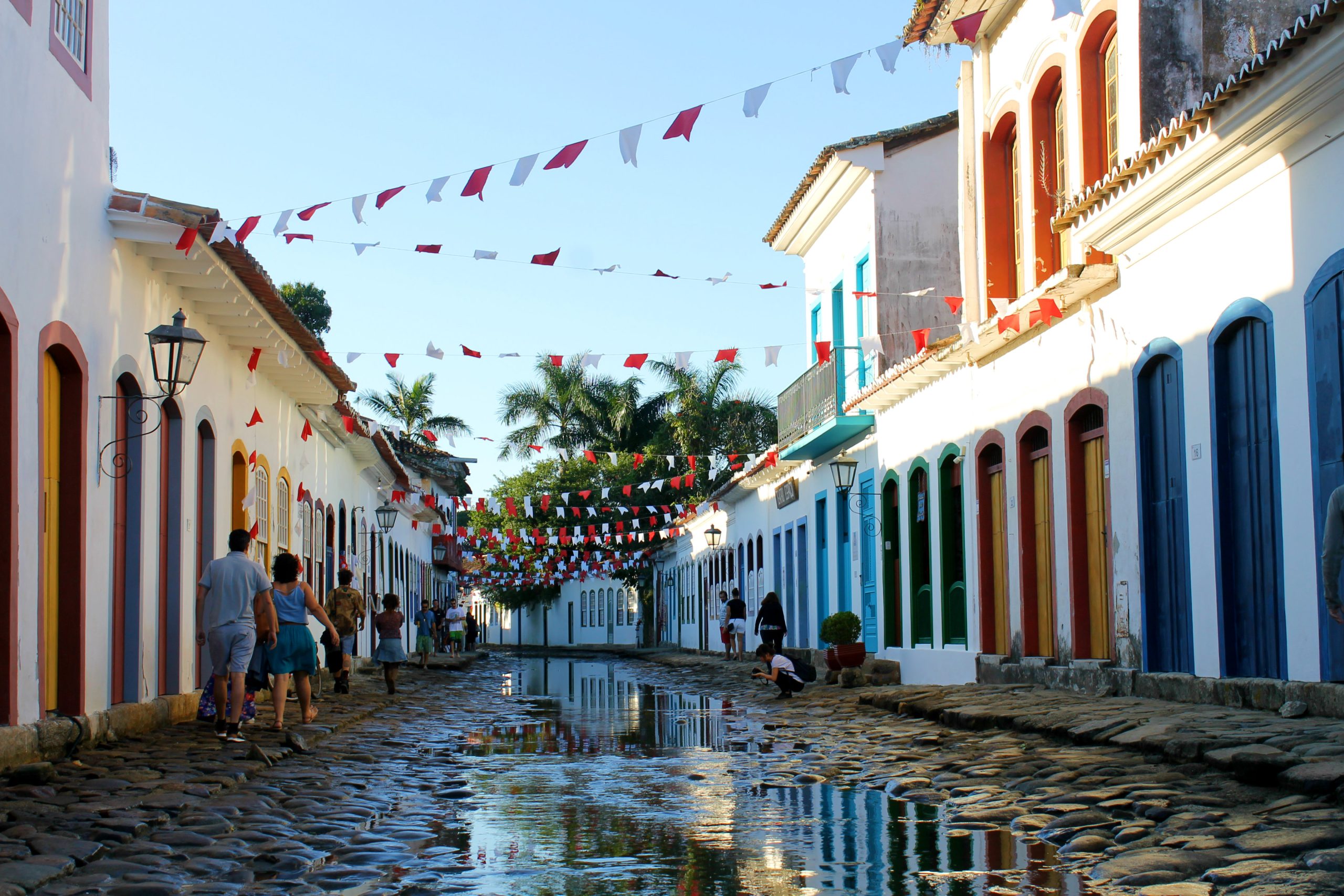
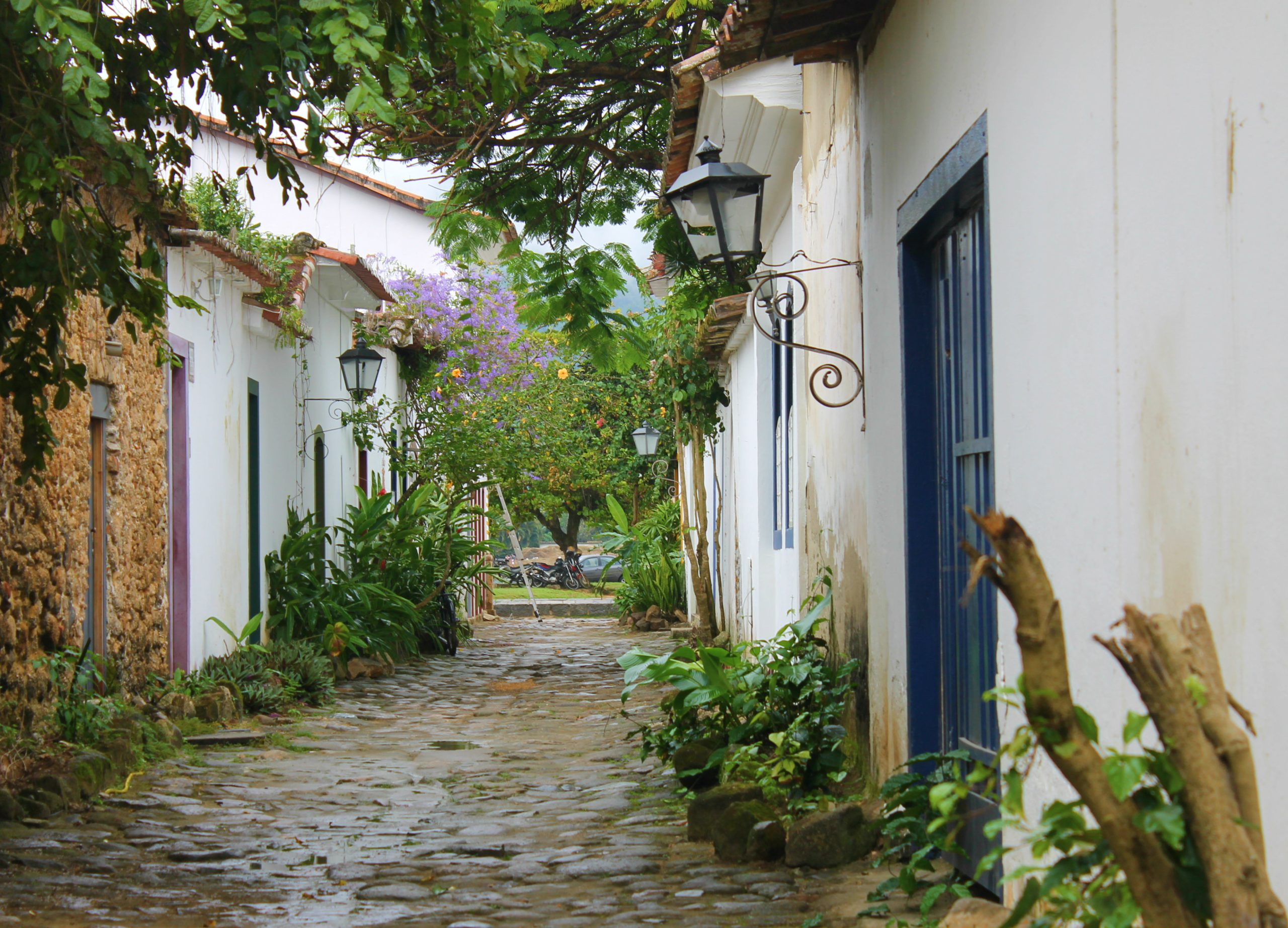
Thanks to that, and to the efforts to preserve its cultural heritage, we can now wander through streets lined with beautiful colonial houses with colorful windows, streetlights designed to look like old lanterns, cute little shops and cafés, and cute (but not so practical) uneven cobblestones.
Those streets are as charming as they are treacherous, but this feature that has become an icon of Paraty is actually relatively recent. In the 1950s, the original stones—which were level—were removed to install sewage, water and electricity infrastructure. You’ll notice there are no visible power lines in the Historic Center, which adds to its beauty.
After being removed, the original stones “disappeared” (were likely stolen) and were replaced by random ones, laid down rather haphazardly. So, walking around without tripping requires a certain amount of balance. Needless to say, high heels are probably the worst possible choice for walking around here. The upside is that you’re practically forced to slow down and enjoy the atmosphere.
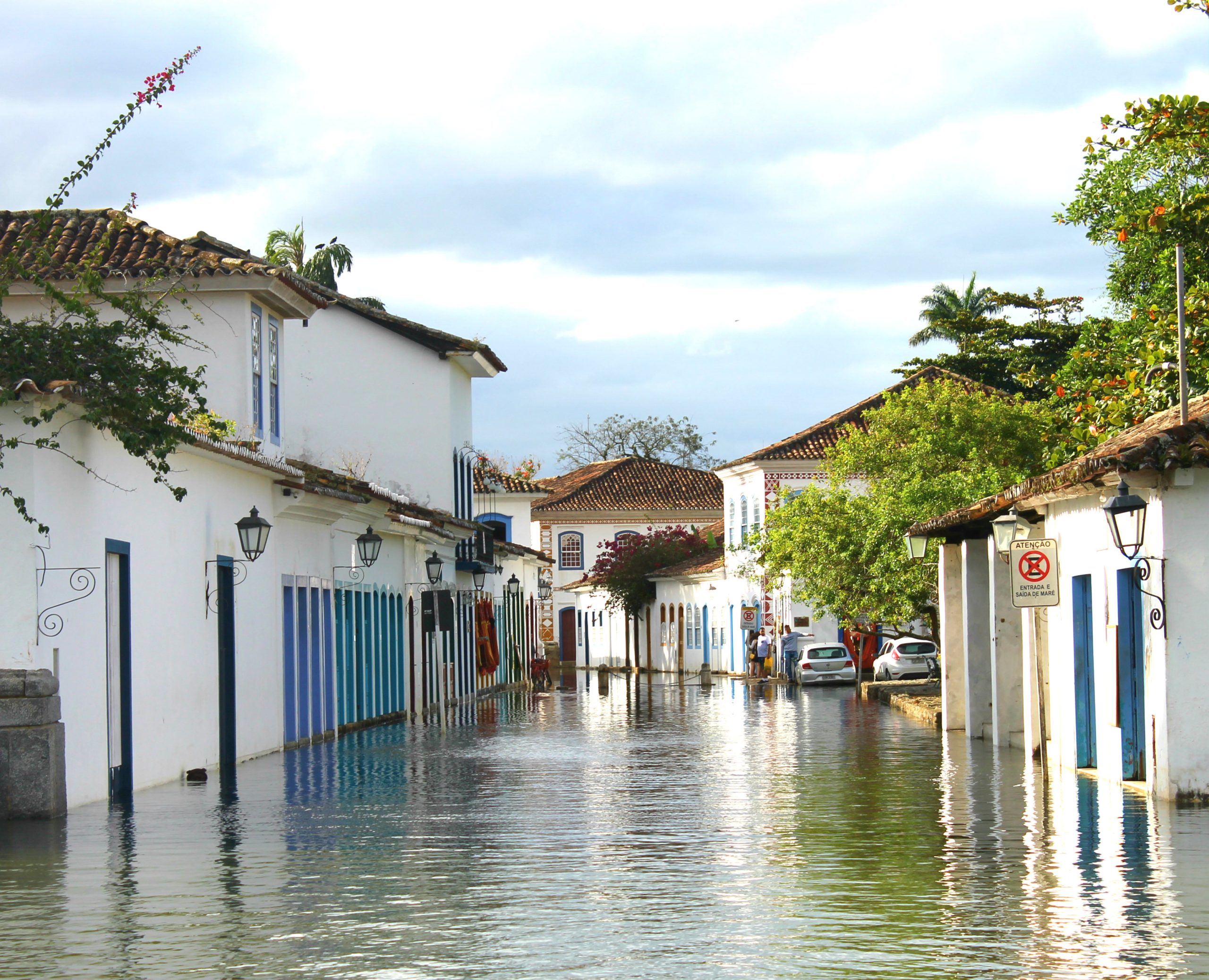
Then there’s the curious phenomenon of seawater flooding the streets at high tide. The Portuguese colonizers designed the streets with a lower section in the middle so that seawater could flow in and out, washing the town at a time when garbage and waste were simply thrown onto the streets. It’s funny to see traffic signs showing where parking is prohibited because your car might end up “drowning” when the tide comes in.
Things to do in Paraty’s Historic Center
Besides simply wandering around the compact Historic Center, there are a few buildings worth paying attention to. First—as you might expect in a town colonized by the Portuguese—there are the churches.
The largest is Igreja Matriz de Nossa Senhora dos Remédios (Our Lady of the Remedies Church), which was never completed because it started sinking. Built beside the river on mangrove terrain, the structure became too heavy and construction was eventually stopped. If you look carefully at the base, you can see that the building is slightly tilted.
There’s also Nossa Senhora das Dores Church, known locally as the Capelinha (“little chapel”), which was built for women; Nossa Senhora do Rosário e São Benedito Church, built for the Black population; and Santa Rita de Cássia Church, built for mixed-race residents.
Another noteworthy building is the Prince’s House (Casa do Príncipe), a colonial townhouse belonging to Prince João Henrique de Orleans e Bragança, a great-great-grandson of Dom Pedro I, Brazil’s first emperor. He also owns Pousada do Príncipe, near the bus station.
It’s also worth checking out local artists’ studios and stopping by Casa da Cultura, a cultural center with free admission that hosts exhibitions, events and workshops.
Another “attraction” is Rua do Fogo (“Fire Street”), which didn’t get its name from a fire or anything like that, as you might be thinking. In fact, the area used to be associated with prostitution and nightlife—what Brazilians once called an inferninho, literally a “little hell.” Today, it’s one of the prettiest streets in town.
Boat tours in Paraty
You can go to the beach in Paraty without even leaving town: close to the Historic Center you’ll find Pontal Beach, and a little farther away, Jabaquara Beach. But these two are better suited to anyone who wants to sit at a beach bar, relax and enjoy the sea views. If you’re looking for more idyllic beaches and want to go for a proper swim, your best bet is to venture a little farther out.
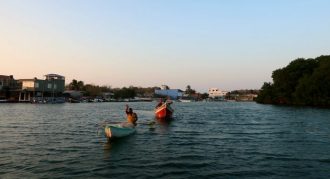
One great way to do that is by boat, since Paraty Bay is dotted with small islands and beaches that can only be reached by sea. You have a few options: join a schooner tour, which usually carries up to 60 people and lasts between five and six hours, with stops for swimming and lunch; hire one of the traditional wooden fishing boats (traineiras) docked at the harbor, which take only your group and charge by the hour; or charter a speedboat, which is obviously more expensive.
Since I was traveling alone, I went on a schooner tour called “Lagoa Azul” with Paraty Tours, the largest agency in town. We left the harbor in central Paraty at 10 am and spent five hours visiting two beaches and two islands. The boat had a restroom, life jackets, padded seats and cushions. Pool noodles were also available, and you could rent a mask and snorkel.
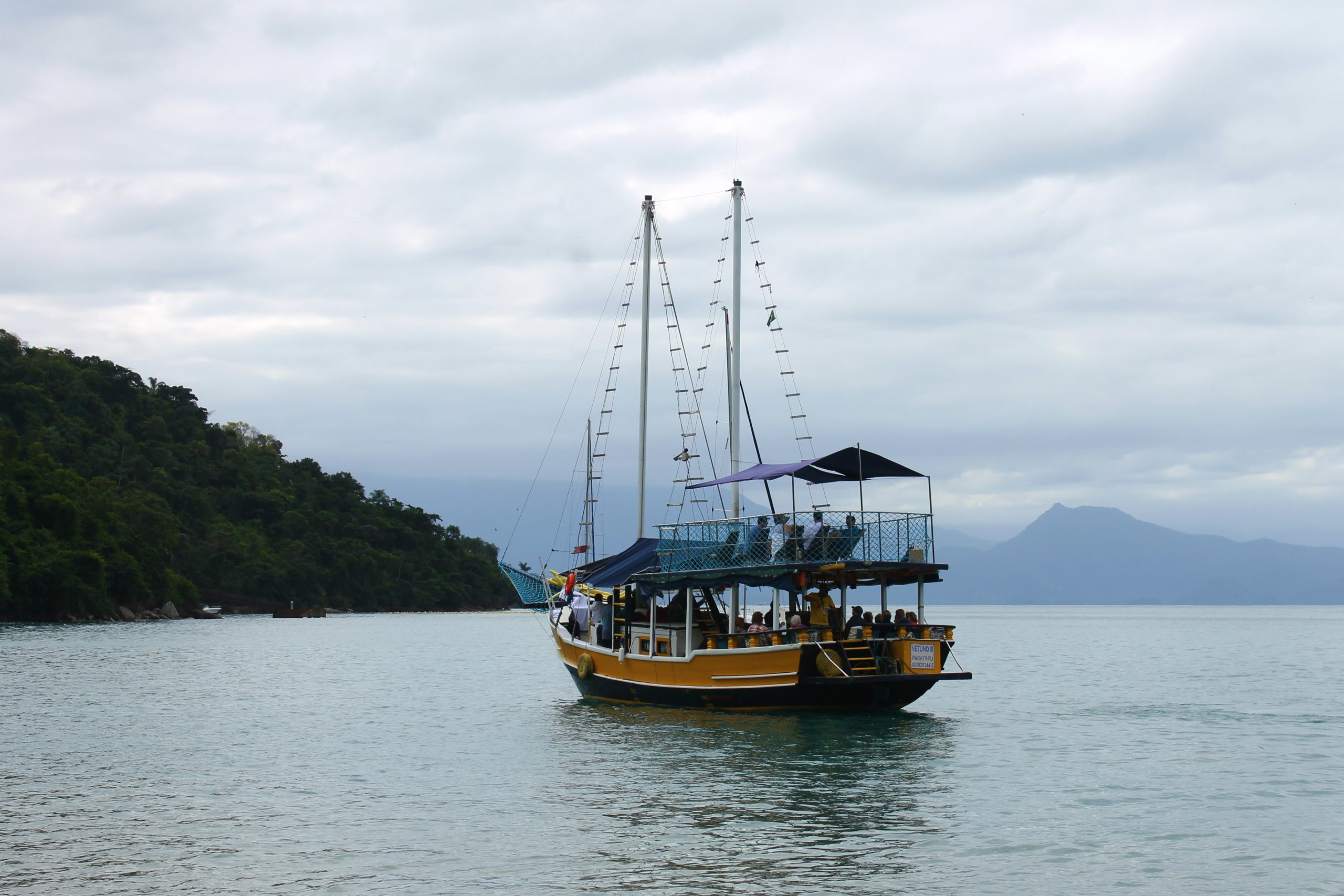
For me, the stops were a bonus, because the boat ride itself was already beautiful. Since Paraty sits on a bay, the sea is usually quite calm and the boats tend not to rock too much, which is great if you’re prone to seasickness.
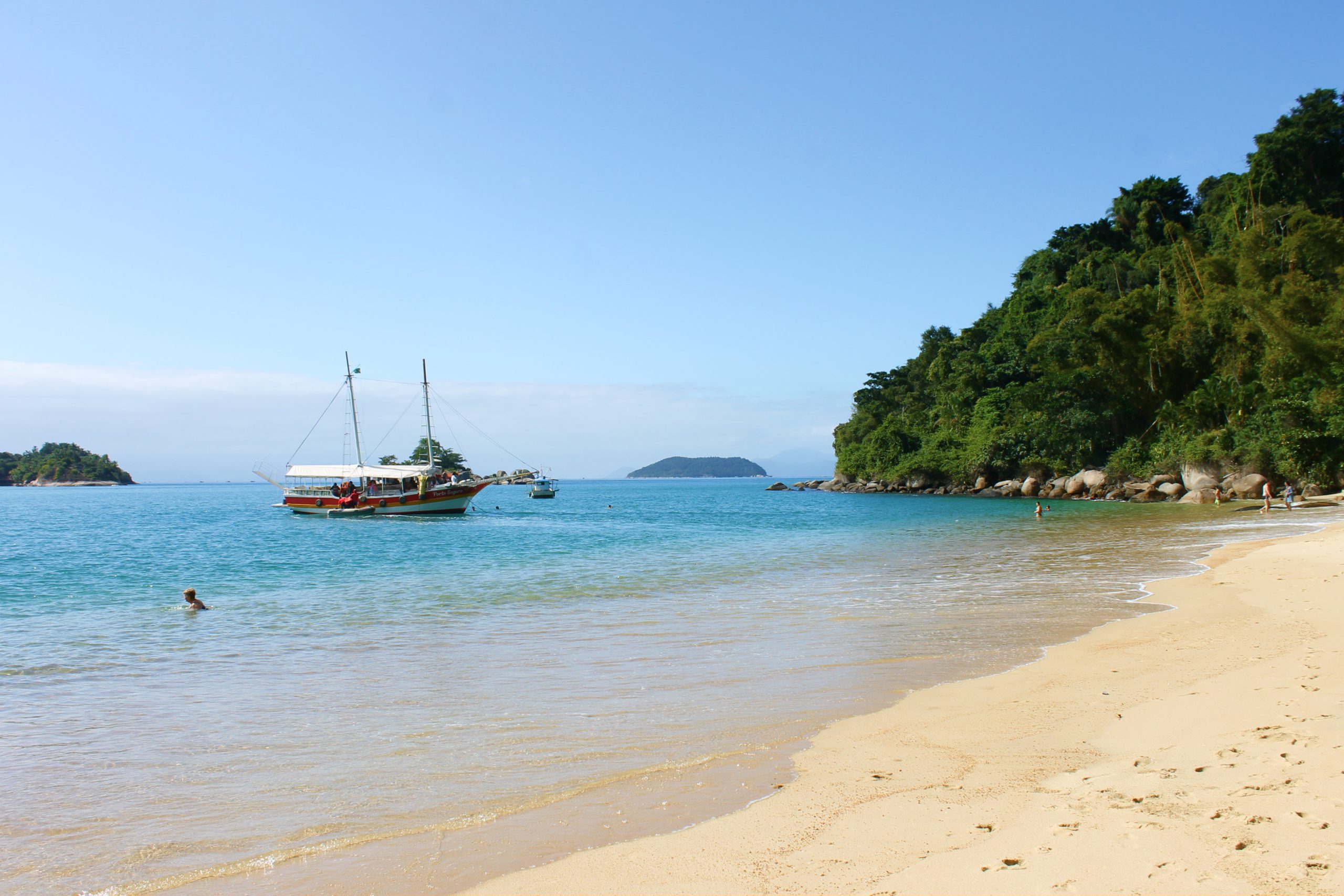
The first stop on the tour was Ilha Comprida, where we stayed for 30 minutes so people could swim and snorkel. The next stop was Praia da Lula, where we took a small tender boat to reach the shore. We spent 40 minutes there enjoying the beach, which has a small stretch of sand and is really lovely. This was my favorite stop. The water was beautifully blue and incredibly calm, and the surrounding vegetation made the scenery even prettier.
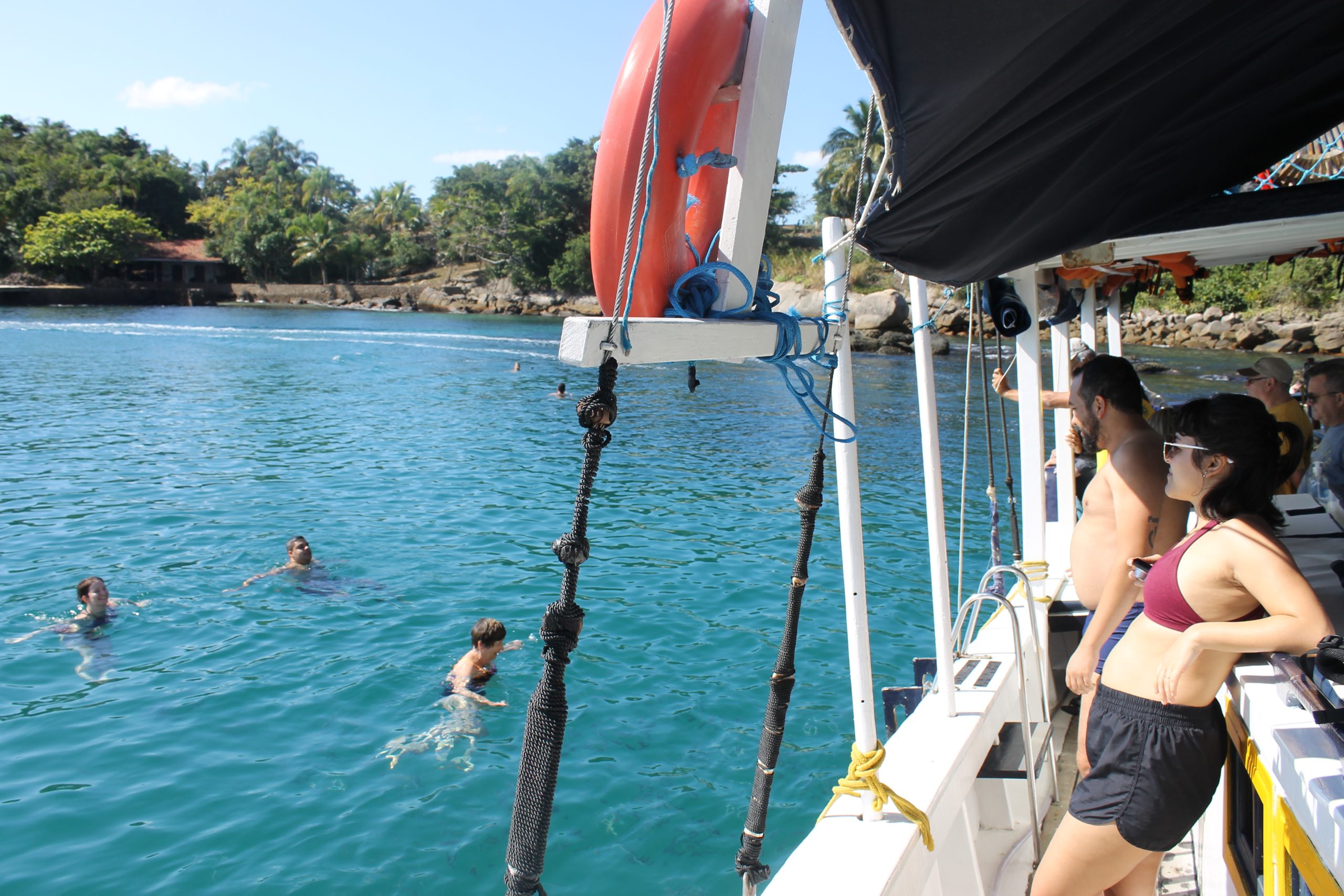
Back on the boat, we headed to nearby Lagoa Azul. We anchored in the cove for lunch, which was served on board at around 1 pm. On this excursion, lunch was optional and charged separately. A menu was passed around when passengers boarded so everyone could order in advance and the food would be ready by the time we reached this stop.
Our last stop was Praia Vermelha, where we also took a small boat to shore, although it was close enough to swim. Many people stayed on the schooner because the weather had turned cloudy and the tide was high. I went ashore but stayed on the sand; even so, I thought the beach was beautiful and the sea looked great for swimming.
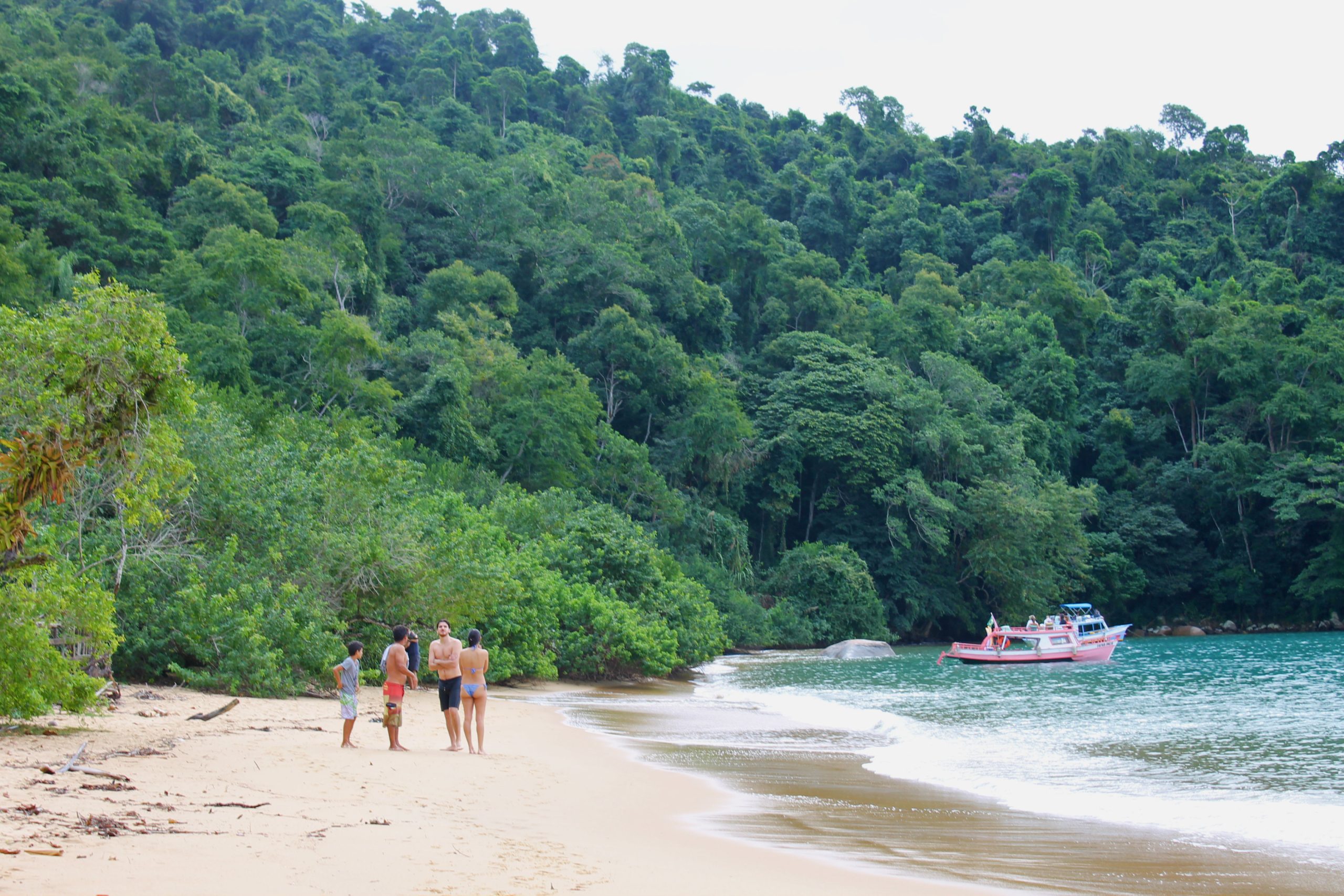
Paraty Tours and other local agencies also offer other schooner itineraries, stopping at places such as Ilha do Algodão, Ilha da Cotia, Saco da Velha and Praia da Conceição. For up-to-date information on departure times, boat facilities and current itineraries, check the agency’s website, or visit their shop in central Paraty.
Food and drinks in Paraty
Eating is one of the best things to do in Paraty, but since I was always there on a tight budget, I didn’t get to try most of the city’s trendy restaurants. Despite my financial limitations, I made sure to try some local cachaças, since Paraty has a strong tradition of producing Brazil’s famous sugarcane spirit and is home to several historic distilleries.
One traditional local variety is Gabriela, a cachaça flavored with cloves and cinnamon. Better still is a cocktail called Jorge Amado, made with Gabriela cachaça, lime and passion fruit and served in almost every bar and restaurant in town. I tried it at a few places around Praça da Matriz, one of the liveliest parts of Paraty.
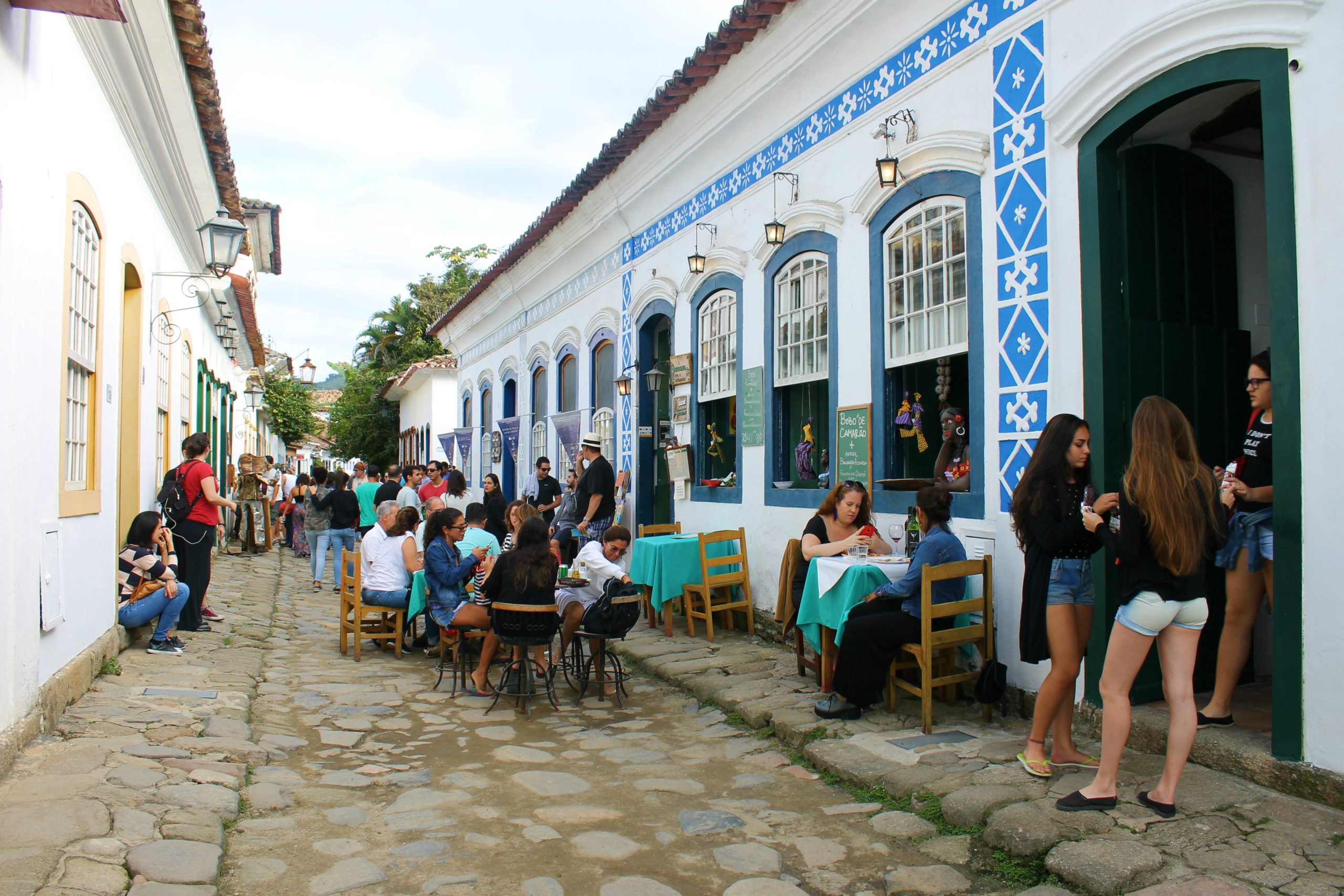
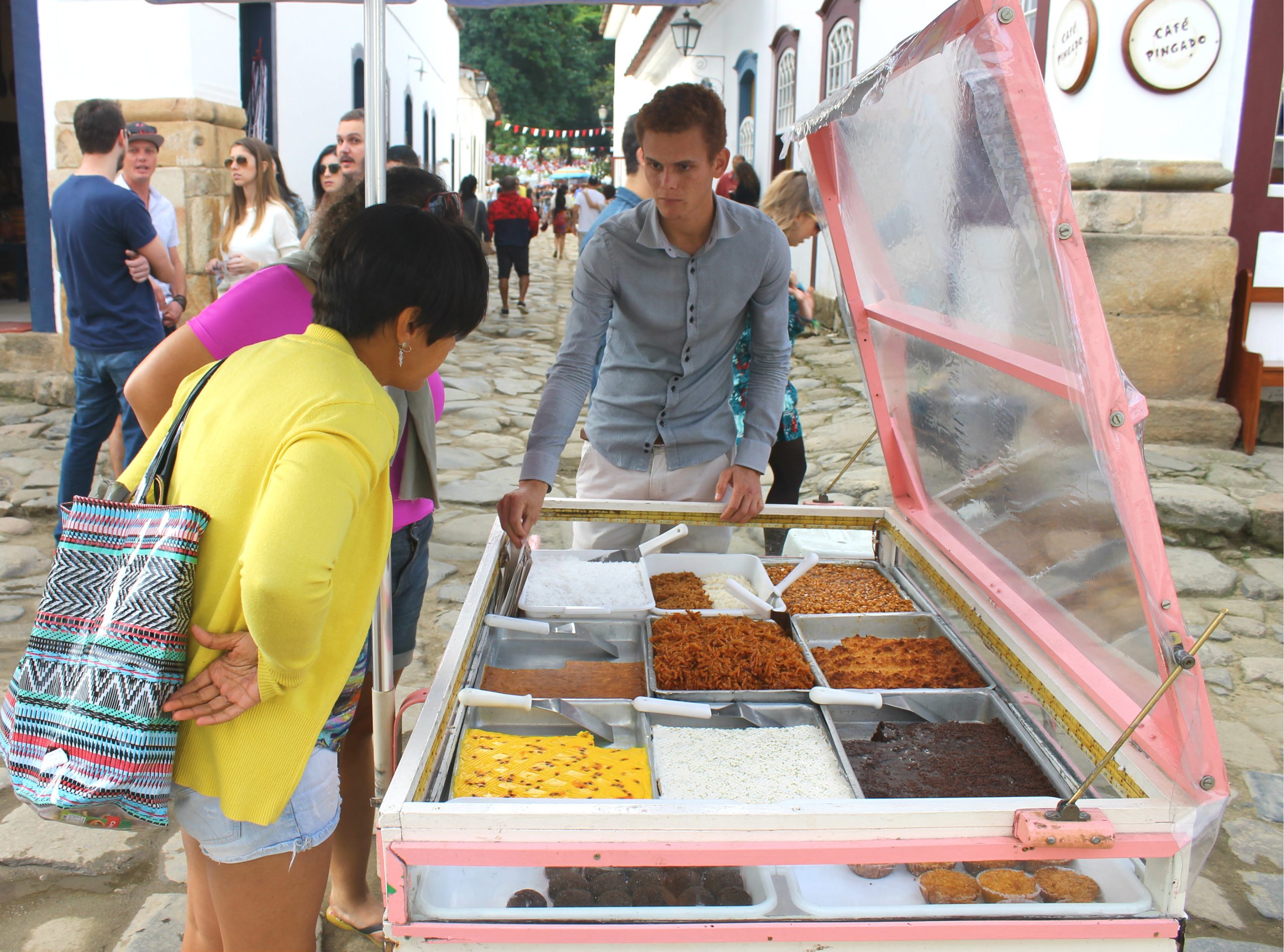
Also, make sure you try some of the sweets sold from street carts around town. You’ll spot them on several corners, tempting passersby with treats in flavors such as lime, chocolate, passion fruit and coconut, as well as queijadinha, a traditional coconut-and-cheese sweet. For dessert, another place with a great reputation is Bombom da Maga, known for its filled chocolate truffles.
Things to do in Trindade Village, near Paraty
There are also plenty of things to do around Paraty, and if you want to explore more beaches at your own pace you can head to Trindade, a traditional caiçara village about 25 km (15.5 miles) from Paraty’s Historic Center. Known for its laid-back, somewhat hippie vibe, Trindade has beautiful beaches, a lovely natural pool, hiking trails and a small, simple village center with a decent tourist infrastructure.
How to get to Trindade
You can drive there via the Rio-Santos highway (BR-101), taking the exit around Km 6. During high season, be prepared for traffic jams, as the area gets very busy. It’s also easy to get to Trindade by bus from Paraty’s bus station. When I visited, there were several departures throughout the day, and the journey took about an hour.
There’s another option too, which is what I chose because I had limited time and wanted to visit several beaches: taking an organized tour, also with Paraty Tours. The service was excellent, including an air-conditioned van and a friendly guide.
Things to do in Trindade
The van from Paraty Tours picked me up at the pousada where I was staying, and a little over half an hour later we arrived in Trindade.
Our first stop was Praia do Cepilho, a beach popular with surfers. We stopped to take some photos and then moved on, since the rough sea there wasn’t particularly inviting for swimming.
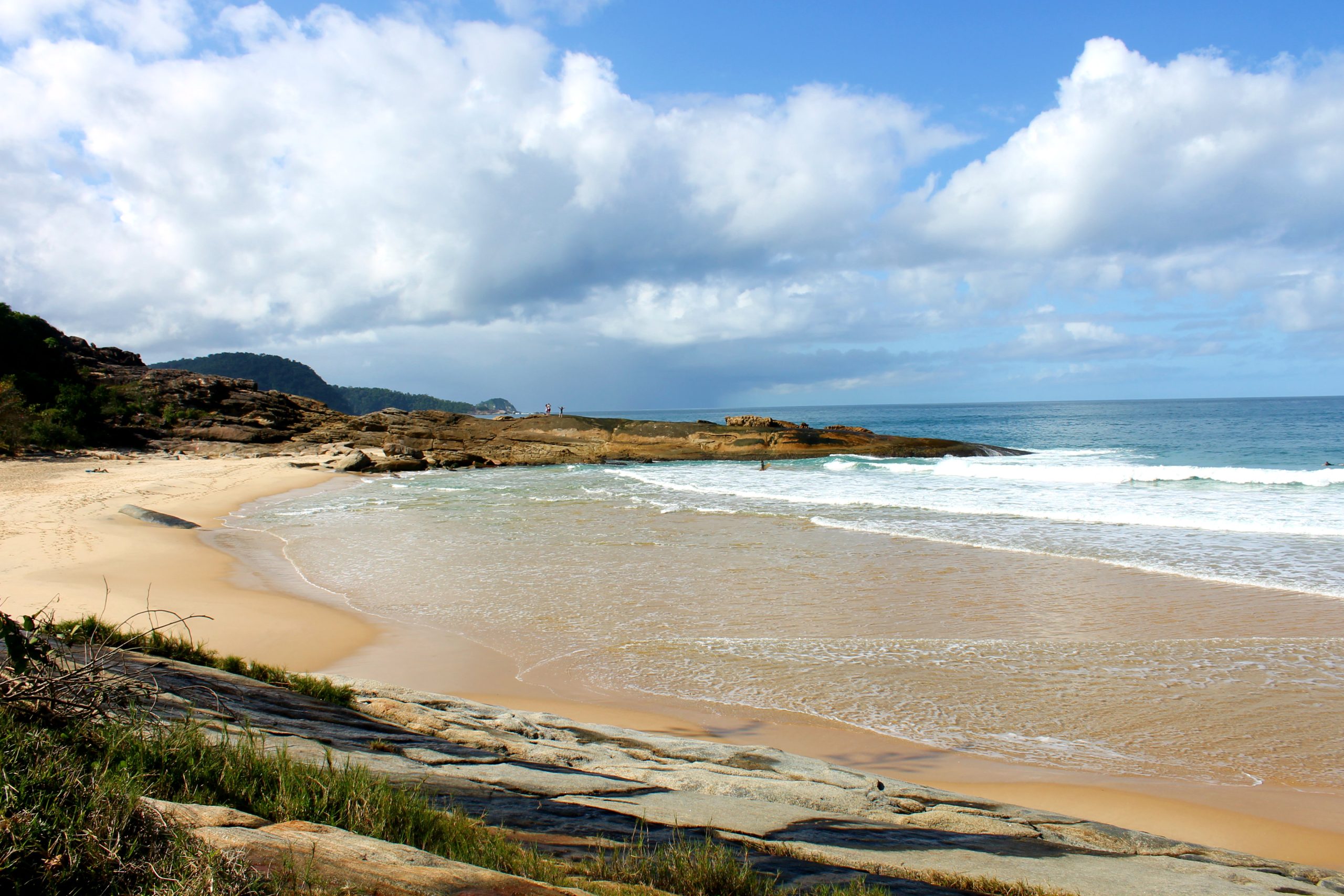
From there, we went to Praia dos Ranchos, where the van parked and where you’ll find several beachfront restaurants. From what I saw, this is the part of Trindade with the most tourist infrastructure. It was quiet when I visited during low season, but I was told it gets very crowded during high season.
We continued walking along the sand to Praia do Meio, which I thought was the prettiest beach. It also has some infrastructure, with stalls selling snacks and drinks, tables and chairs, and vendors selling things like frozen fruit treats and oysters.
A good tip is to climb onto the cluster of rocks on the beach known as Ilhota, which offers a beautiful view (photo below).
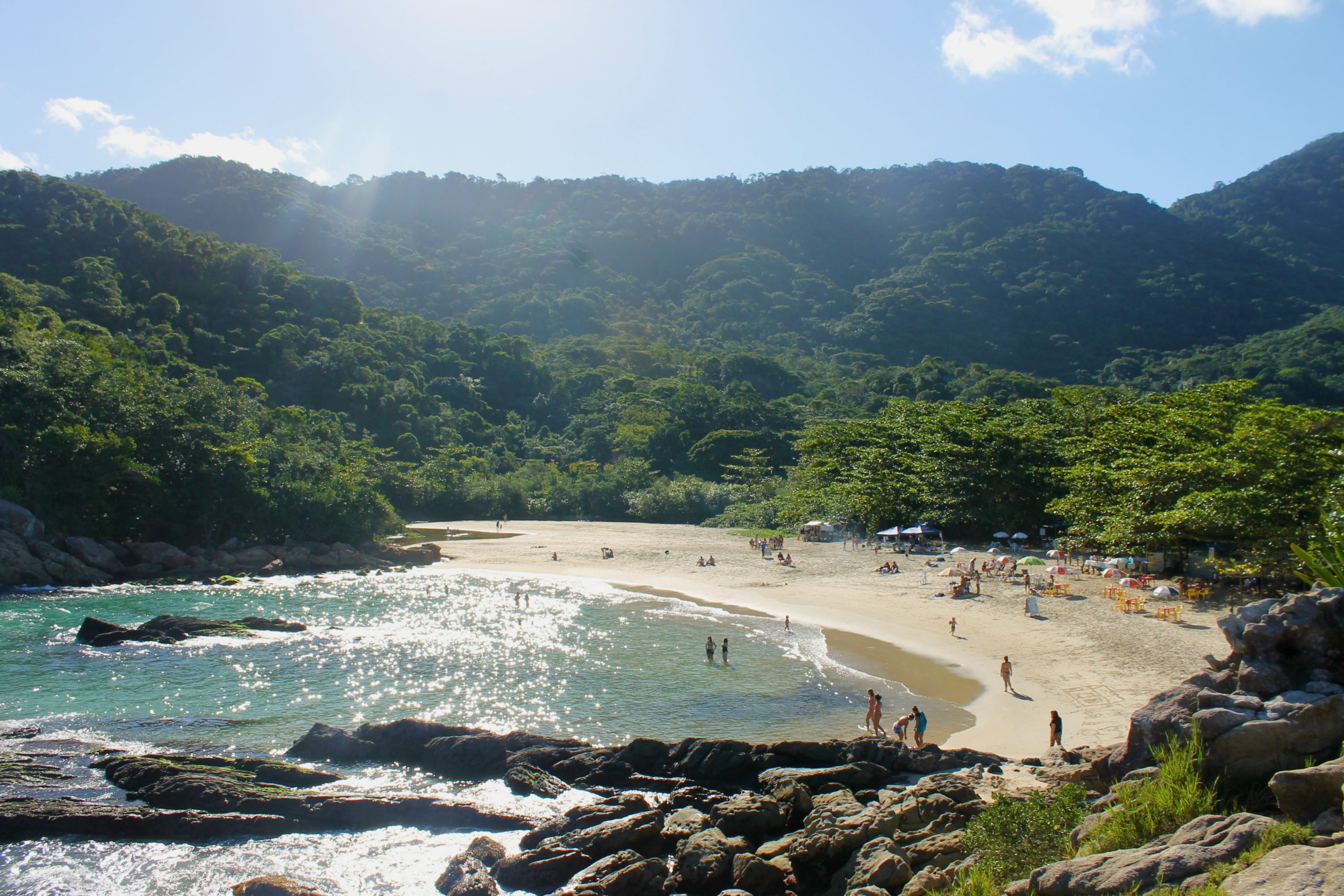
Praia do Meio is also where small boats depart for the Cachadaço Natural Pool, one of the main attractions in Trindade.
The group I was with chose to reach the natural pool via the trail, which starts on the right-hand side of the beach when you’re facing the sea. I found the hike quite easy, and since it runs through the forest, you’re relatively sheltered from both the sun and rain. It can get a little damp and slippery, but we were all wearing flip-flops or going barefoot and it was ok.
The trail is actually divided into two sections. The first 400 meters (0.25 miles) take you to Praia do Cachadaço, also known as Caixa d’Aço. I was told the water can be very clear and greenish in summer. When I went, there was a heavy swell, so the water was murky and the sea too rough for swimming.
After crossing the beach, we reached the beginning of the second trail, which is about 650 meters (0.4 miles) long and leads to the Cachadaço Natural Pool. It took us around an hour to complete the whole route from Praia do Meio.
It’s quite easy to do independently, since the trail is well defined and there are usually other people around if you need directions. I really enjoyed walking through this stretch of Atlantic Forest. And what came next was, for me, the highlight of the day.
A cluster of smooth, rounded rocks forms a large natural pool that’s great for swimming, and with the snorkel and mask provided by Paraty Tours I could see some little fish. I imagine it can get pretty crowded during high season, so it’s worth going early in the morning if you want to enjoy it more peacefully.
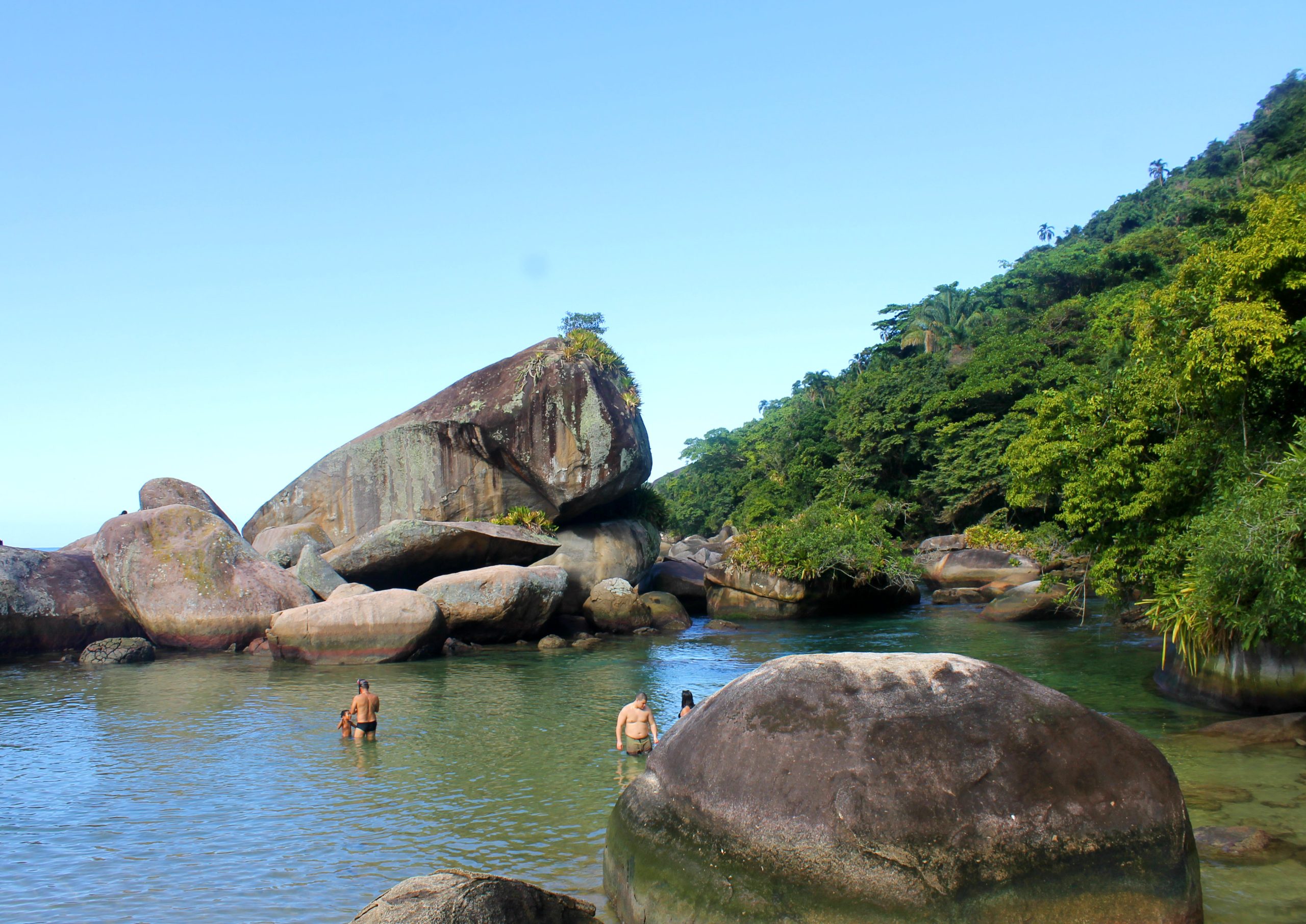
On the way back, instead of hiking the trail again, we decided to take one of the small boats that wait near the natural pool. The ride back to Praia do Meio took only about five minutes. It’s a nice alternative because the views from the boat are beautiful, and the time you save on the return journey can be spent at the beach instead.
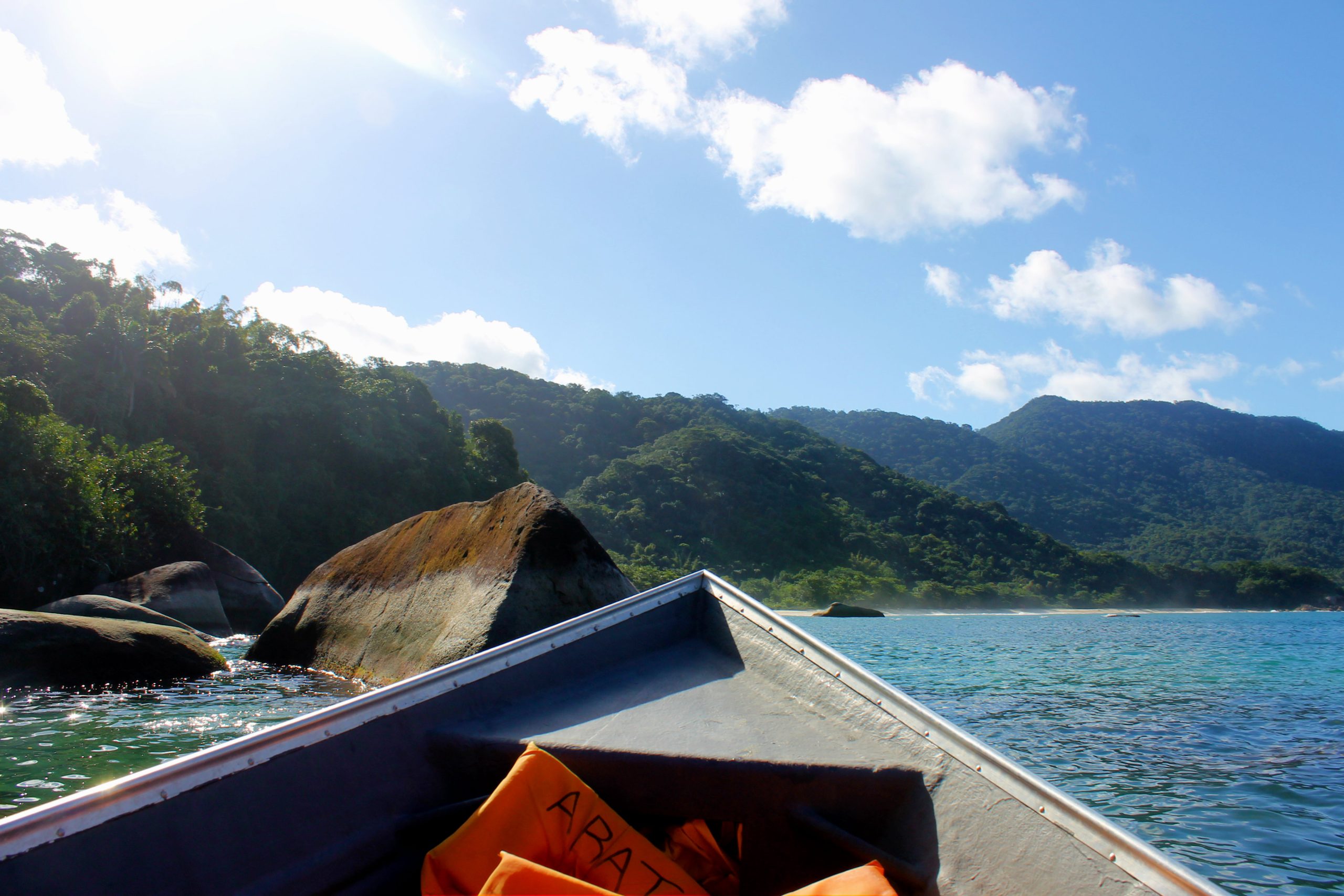
After spending some more time at Praia do Meio, the tour group went for lunch. Full and tired, we climbed back into the van and returned to Paraty in the late afternoon.
Other attractions in Trindade include Praia Brava, from where you can hike to Cachoeira da Praia Brava waterfall; Praia de Fora, which is easily reached on foot from Praia do Cepilho; and Cabeça do Índio, a beautiful viewpoint reached by a trail beyond Praia do Cachadaço.
Where to stay in Trindade
If you want to spend the night in Trindade, you can choose between campgrounds and pousadas, most of which are fairly simple.
Some well-regarded options include Pousada do Riacho, about 600 meters from Praia do Meio; Pousada do Marquinhos, which is close to the beaches but away from the busiest part of the village; and Solstício de Verão, less than a five-minute walk from Praia dos Ranchos.
Hiking to Praia do Sono
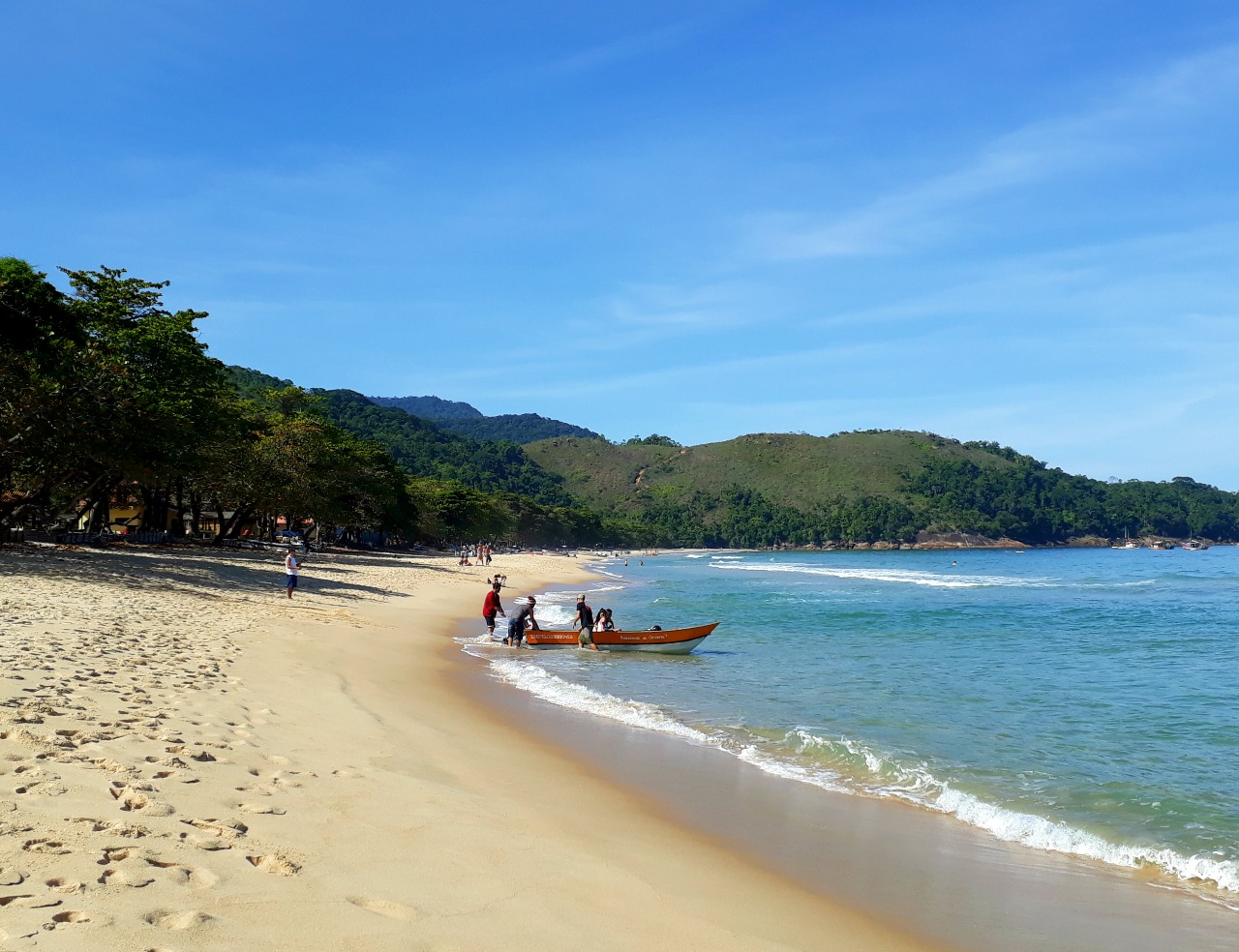
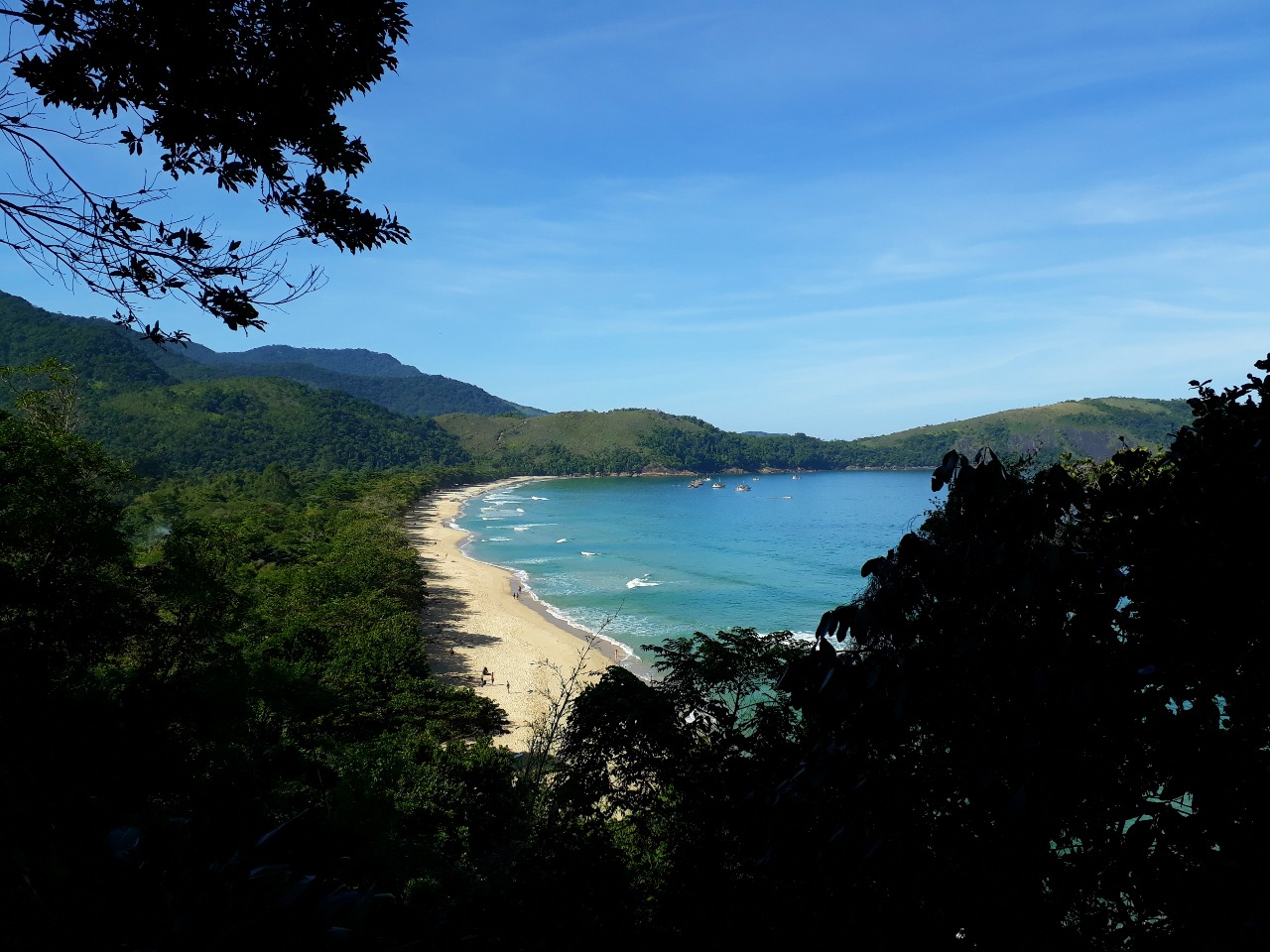
Another beautiful beach near Paraty is Praia do Sono, which sits in a bay surrounded by green hills, making for some gorgeous scenery. I spent a super relaxing afternoon walking along the shore, swimming in the clear turquoise sea and enjoying the peaceful atmosphere of this almost deserted beach (it can get quite crowded in high season, though).
How to get to Praia do Sono
Praia do Sono is about 260 km (160 miles) from Rio de Janeiro, close to Paraty and Trindade. You can travel there from Rio, São Paulo or elsewhere and stay overnight at the beach, but it’s also very common to visit Praia do Sono as a day trip from Paraty, which is what I did.
There are two ways to reach the beach: hiking or taking a van and a boat from the entrance to Laranjeiras, a gated community full of extremely luxurious homes. I traveled there alone by bus and found it very straightforward. I hiked to the beach and returned by boat + van.
From Paraty to the trailhead
If you’re driving, take the Rio-Santos highway toward Ubatuba, turn onto the road leading to Trindade and follow the signs for Condomínio Laranjeiras or Praia do Sono. Once you get there, you’ll need to find somewhere to park nearby.
I was staying in Paraty and didn’t have a car, so I took a bus from the bus station toward Vila Oratória. I stopped by the bus station the day before to check the departure times and took a photo of the return schedule so I wouldn’t have to spend too long waiting around later.
The journey takes around 40 minutes. If you want to hike, get off at the last stop. If you want to go by boat, ask to get off at Condomínio Laranjeiras; if I remember correctly, it’s one stop before the terminus.
Hiking to Praia do Sono
At first, I was a little apprehensive about hiking to Praia do Sono alone, but I soon realized there were lots of people on the bus doing the same thing. I struck up a conversation with a group and walked with them, and we also passed other hikers along the way. I was told that the trail tends to be quite busy on weekends.
Once you get off the bus, it’s easy to spot a sign marking the beginning of the trail, which is just over 3 km (1.9 miles) long. It took me a little over an hour to reach the beach, and I found the hike much easier than I’d expected.
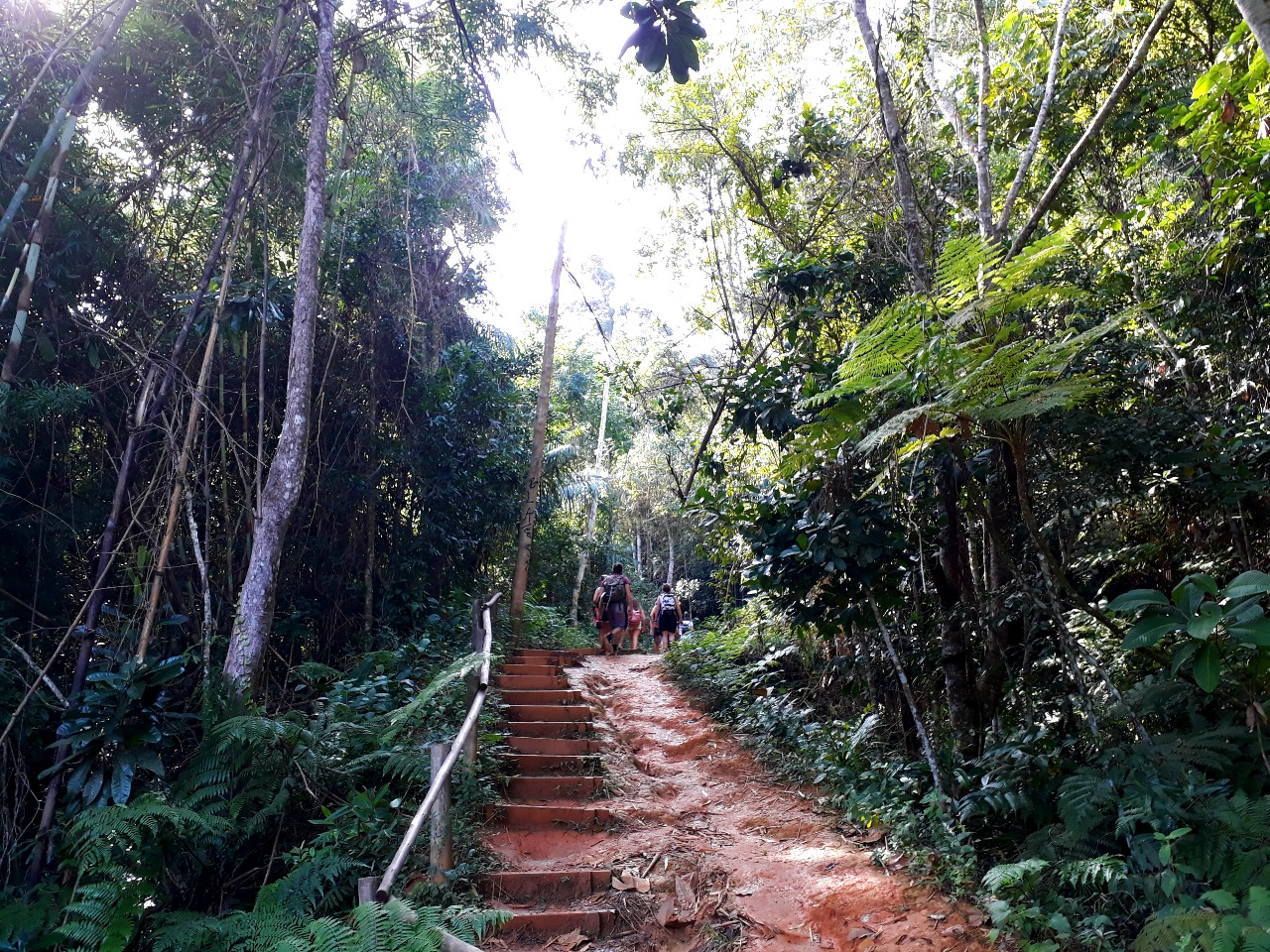
The beginning is all uphill and a little strenuous, but there are makeshift wooden steps and even handrails in some sections. After that, there are a few steep climbs and some slippery descents, but much of the trail is flat.
As you get closer to the beach, there’s a spot where you can see Praia do Sono from above—and that’s when you’ll know for sure that the effort was worth it.
I wore sneakers and carried flip-flops in my backpack. I don’t think hiking shoes or sneakers are absolutely essential, but since I’m a bit clumsy, I was glad I had them: some parts of the trail were slippery, and several steps near the end were covered in mud.
If you’re used to moderate or difficult hikes, you’ll probably find this one very easy. I saw children doing it without any trouble, and unless you’re carrying a lot of luggage, I think the trail is definitely worth it. After all, getting there is part of the fun.
Returning by boat + van
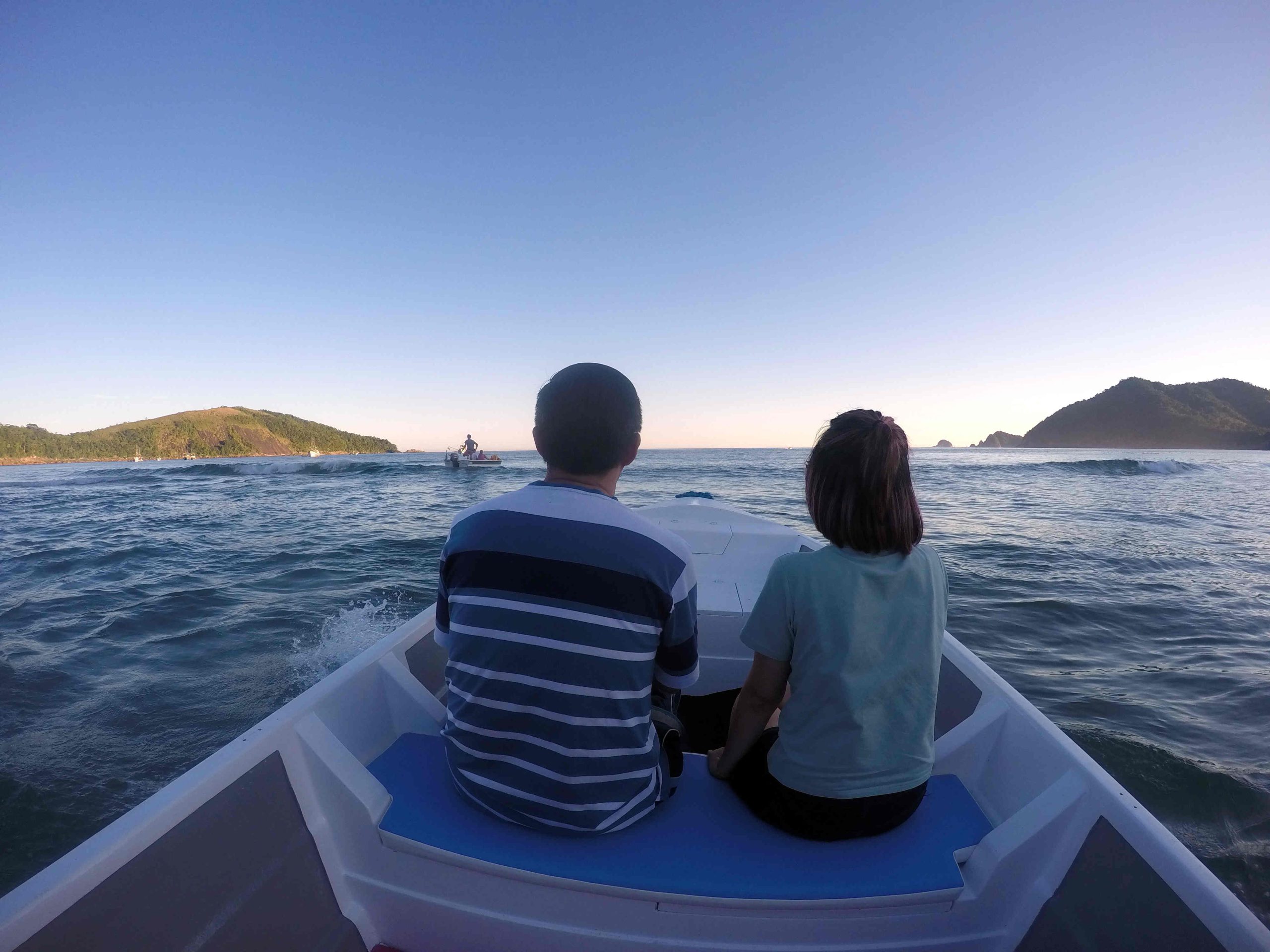
I had originally planned to hike back as well, but I preferred to stay at the beach until late afternoon and didn’t want to risk still being on the trail after dark, so I ended up taking the boat. You can also take this route on the way in, and it tends to be the preferred option for people carrying luggage to stay overnight.
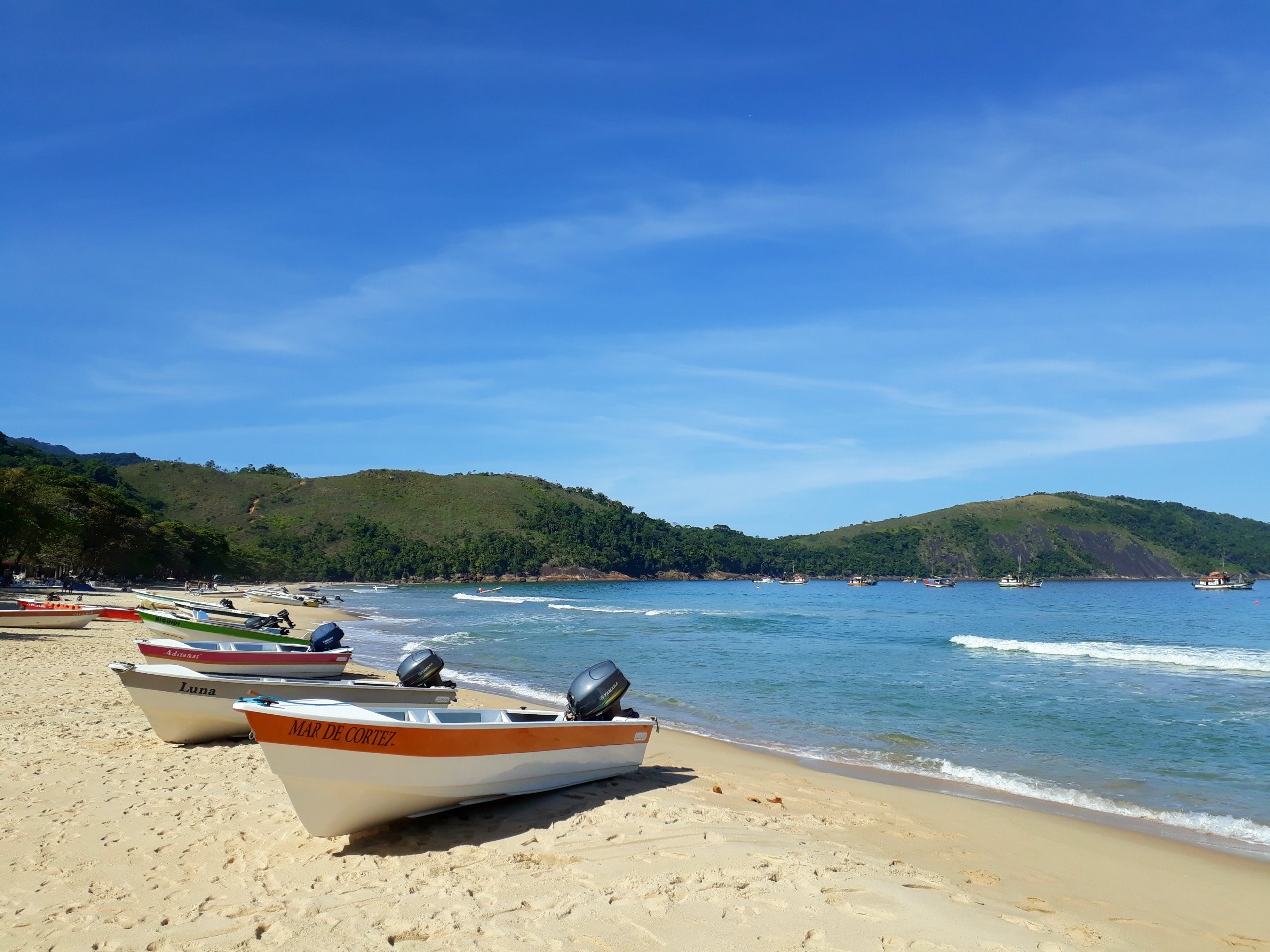
Several boats wait at the beach to take passengers to Laranjeiras, and the ride takes about 15 minutes. Once you reach the pier, you need to wait for a free van to take you to the entrance of the gated community, since visitors who aren’t staying there aren’t allowed to walk through it.
Since I went at the end of a long holiday weekend, I had to wait an hour for the van because lots of people who had been staying at the beach were leaving by boat at the same time. From there, it took another 10 minutes or so to reach the bus stop for the journey back to Paraty.
I managed to get a seat on the bus back to Paraty, but I was lucky. If you return via the hiking trail, you’re more likely to get a seat because you’ll board at the first stop.
Things to do at Praia do Sono
Since I only spent an afternoon there, I didn’t do much, but it was worth the trip anyway. I walked all along the beach and went for a swim in the gorgeous sea. Afterwards, I lazed around on the sand, read for a while and stopped for something to eat at one of the beachfront bars.
I also saw people stand-up paddleboarding, and if you’re staying longer, you can explore other beaches and waterfalls nearby.
From what I found, one of the most popular excursions is the roughly 2 km (1.2-mile) trail to Praia dos Antigos, a deserted beach that looks even more beautiful than Praia do Sono. From there, you can continue to Praia dos Antiguinhos, Cachoeira das Galhetas and Praia da Ponta Negra.
Waterfalls and cachaça distilleries in Paraty
Cachaça has been important in Paraty since the 16th century, and local production became so highly regarded during the Brazilian Empire that the word “Paraty” itself came to be used as a synonym for cachaça. To this day, the town remains well known for producing Brazil’s famous sugarcane spirit.
If that sounds like your kind of thing, one of the best things to do in Paraty is visiting some of the local alambiques (cachaça distilleries), such as Cachaça Paratiana, Cachaça Corisco, Pedra Branca, Engenho d’Ouro, Cachaça Coqueiro or Cachaça Maria Izabel. You can contact them directly to arrange a visit or join a tour through one of the local agencies.
I recommend combining the distilleries with a few waterfall stops. There are several relatively modest waterfalls in the area, with some lovely natural pools for swimming.
If you have a car, it’s easy to explore the area independently. If you don’t, you can get around by bus, but joining an organized tour is a convenient alternative. I was invited by Paraty Tours to join one of their tours combining waterfalls and cachaça distilleries, and despite a few rain showers, it turned out to be a lot of fun.
Poço da Usina
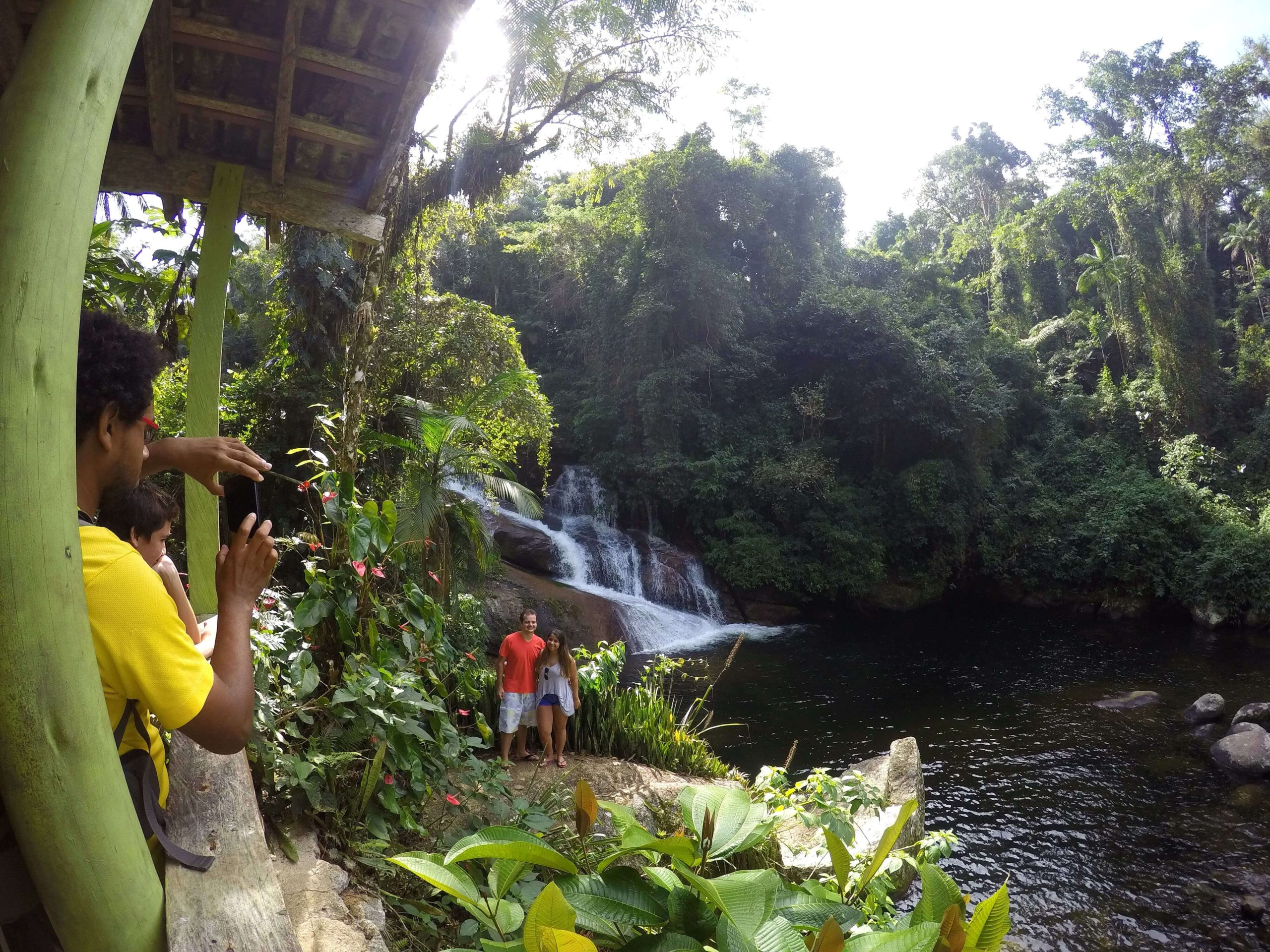
We left Paraty at around 10 am in a 4×4 Jeep and headed toward Serra da Bocaina National Park. Our first stop was Poço da Usina, located on private property in the middle of the Atlantic Forest.
A small hydroelectric plant once operated there to supply power to a farm. It has since been deactivated and the site has become a tourist attraction, but we didn’t go into the water because, according to our guide, there were lots of rocks and the access was quite slippery. It was basically a quick photo stop.
Cachoeira da Pedra Branca
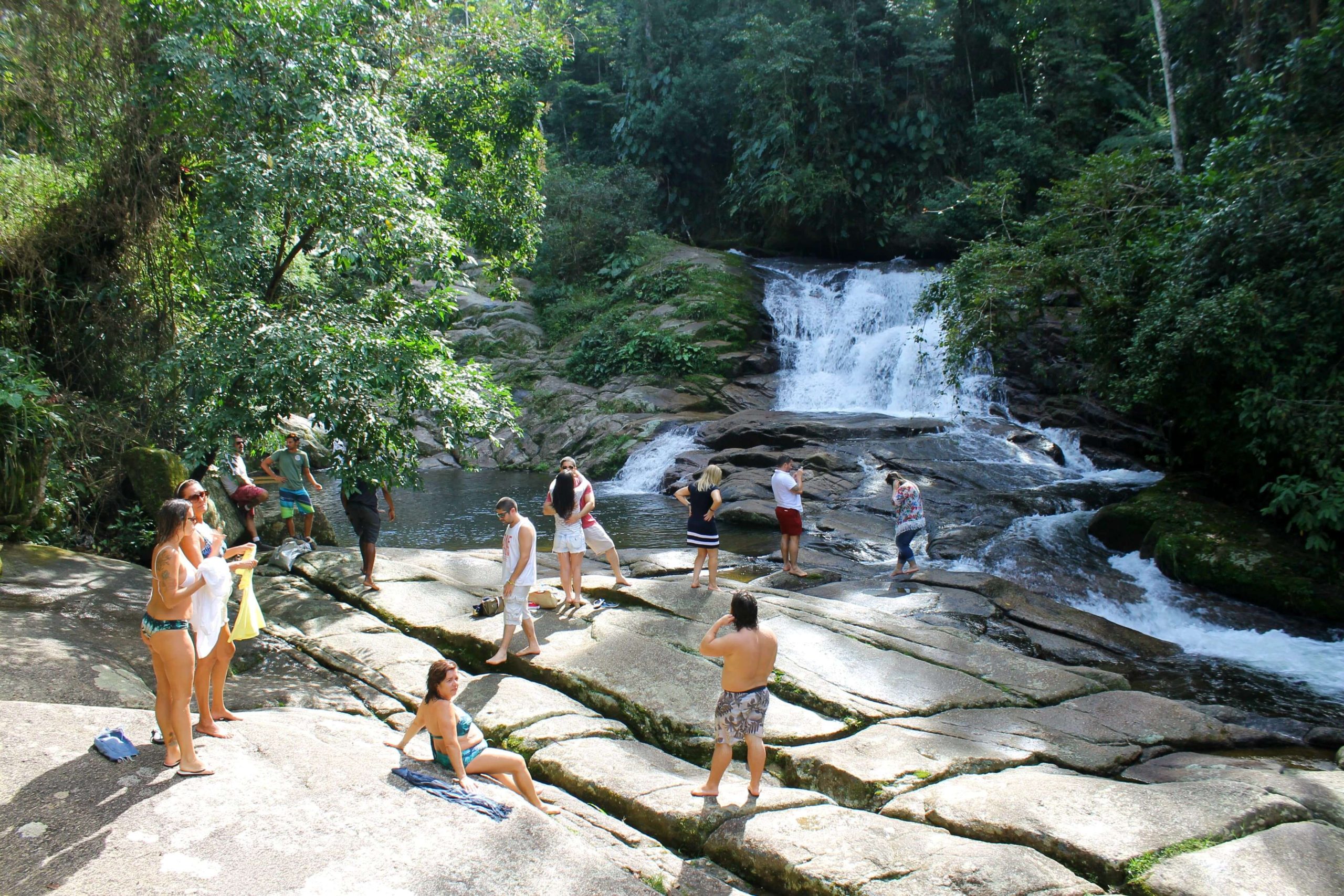
We then continued to Cachoeira da Pedra Branca, which we reached after a short hike. We spent around 40 minutes there, swimming in a natural pool that reaches depths of up to five meters (16 feet).
The water was freezing, but there’s nothing like swimming around for a bit to get used to it, right? Afterwards, just find a sunny spot on the rocks and warm yourself up.
Pedra Branca cachaça distillery
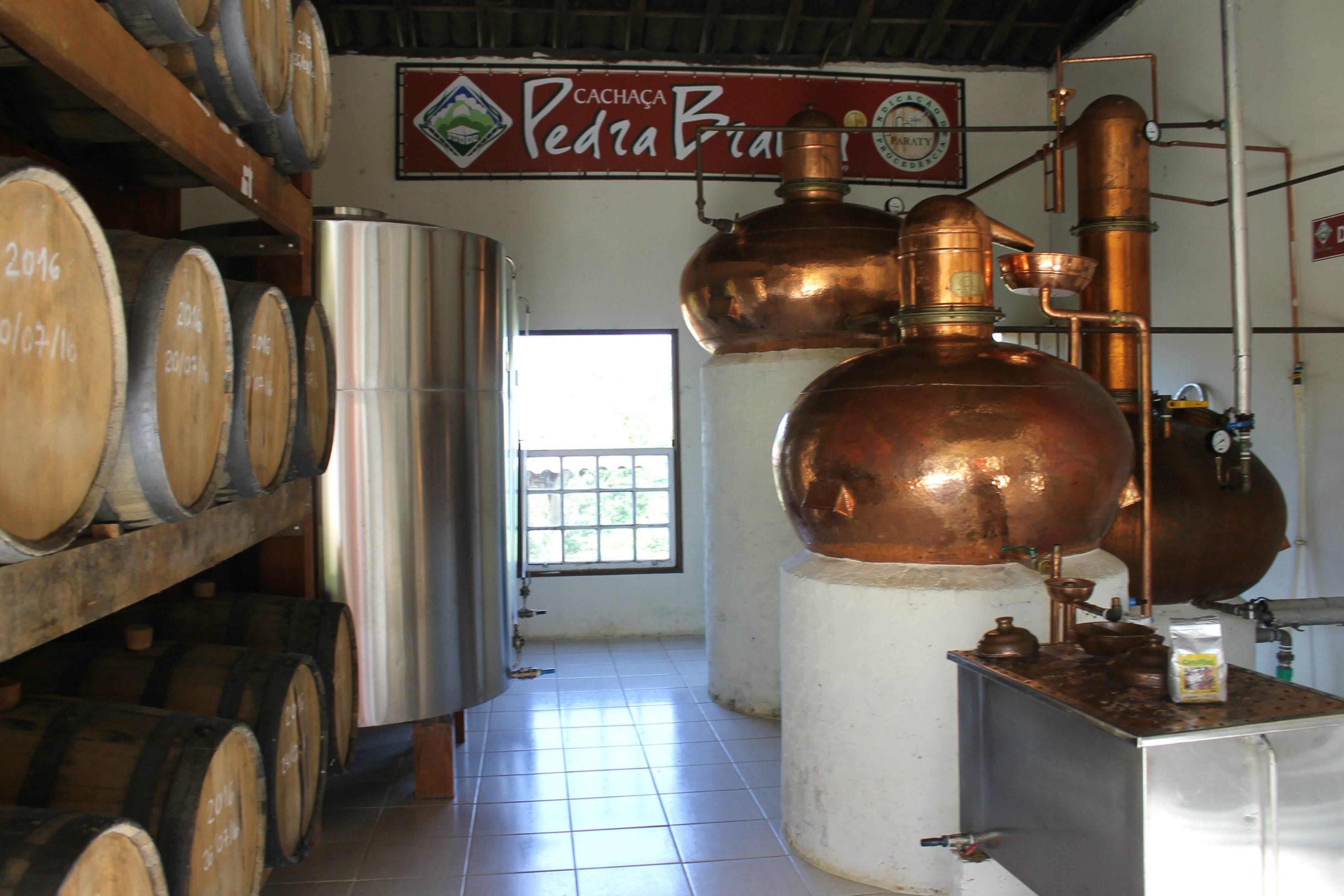
And if you really want to warm up, there’s nothing quite like a little cachaça. Our next stop was the nearby Alambique Pedra Branca.
One of the staff members explained how the distillery works and how all its waste is reused. For instance, one of the boilers uses sugarcane bagasse to generate energy, while ethanol produced on site is used as fuel and for cleaning.
Our guide answered all our questions, and there were also simple but informative panels explaining the entire production process, from preparing the soil, planting and harvesting the sugarcane to fermentation, distillation and aging.
The company also makes other sugarcane products, such as molasses, rapadura (unrefined cane sugar) and brown sugar, as well as flavored spirits made with cachaça and other ingredients.
After touring the distillery, we went to a little shop packed with sweets, cookies, liqueurs and, of course, all kinds of cachaça. I only bought a jar of doce de leite, but I sampled absolutely every type of cachaça, flavored spirit, liqueur, sweet, cheese and accompaniment they offered us.
Cachoeira do Tobogã and Poço do Tarzan
After lunch, our next stop was my favorite: Cachoeira do Tobogã and Poço do Tarzan, in Vila da Penha, are both great fun.
At Cachoeira do Tobogã, locals practice something known as “rock surfing,” sliding down a huge smooth rock while standing up. There are even competitions, but there are also plenty of stories about outsiders who arrive feeling a little too confident and end up learning the hard way that they don’t have the same skills as people who grew up playing there.
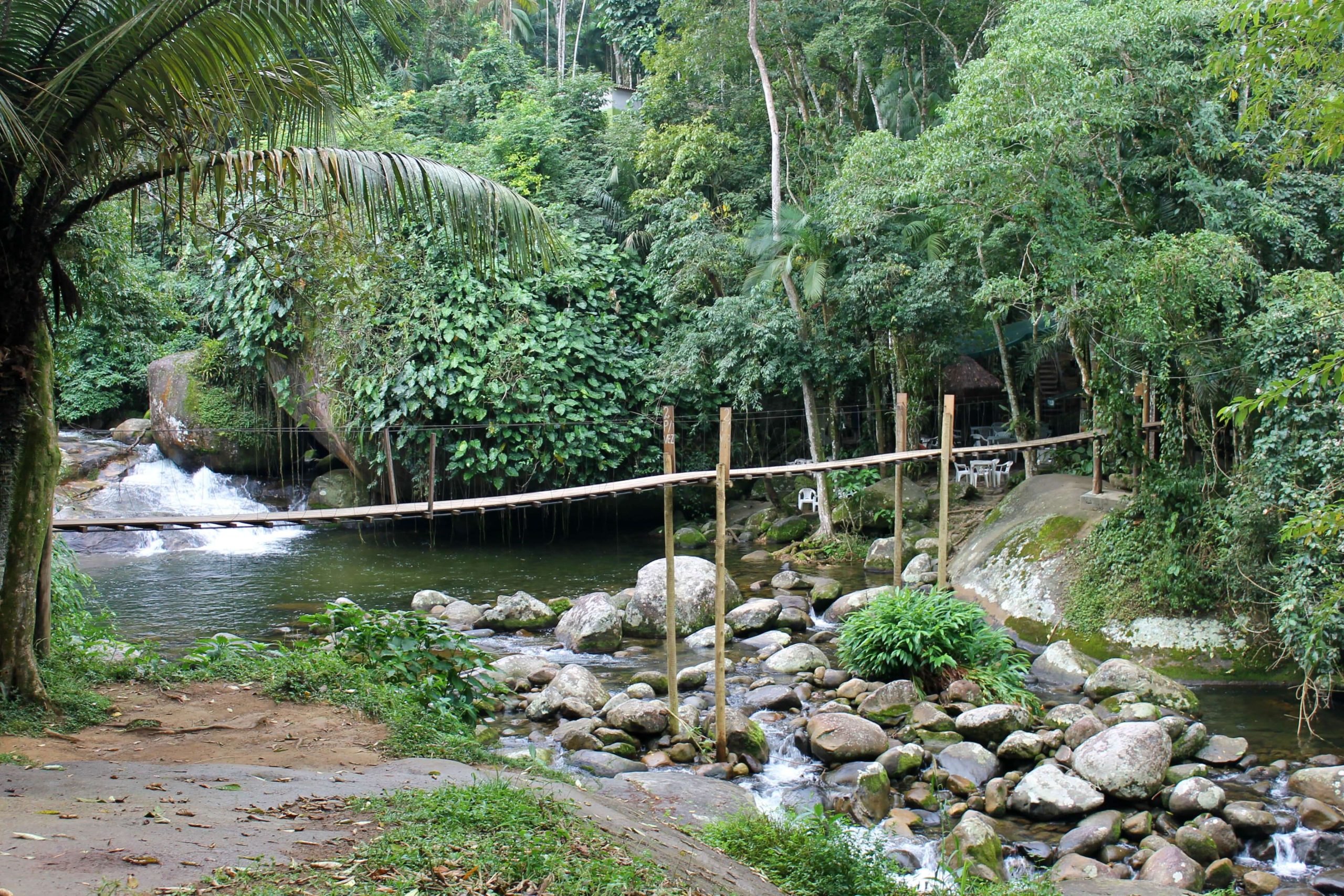
A little farther up, just beyond the rock, you’ll reach a shallow pool belonging to the same waterfall. But I recommend continuing until Poço do Tarzan, where you can either cross a narrow bridge—only two people are allowed on it at a time—to reach a bar, or keep walking and turn right a little farther ahead to get into the water.
I loved swimming there, despite the cold. In fact, part of my group walked from there to another distillery, but I stretched out my time at Poço do Tarzan for as long as I could.
If you have a car, it’s nice to be able to explore all these places at your own pace, but I thought the Paraty Tours itinerary was very well paced. Our guide also explained all sorts of things along the way, from the history of the region to the plants we saw on the trails.
For updated information about the tour and departure times, check the Paraty Tours website.
I hope you liked these tips on the best things to do in Paraty and the surrounding area. Have a great trip!
I joined some of the tours mentioned in this article as a guest of Paraty Tours. The opinions expressed here are my own and were not influenced by the company. Janelas Abertas values transparency and always discloses any complimentary services or sponsorships.













0 Comentários