
Best things to do in Ouro Preto, Minas Gerais
Not the museums. Not even the famous churches. I’d argue that the best things to do in Ouro Preto aren’t the obvious ones, but simply wandering through its charming streets lined with colorful colonial houses. Peek inside, and you’ll find cozy cafés, local restaurants, artisan shops, and even breweries.
Located in the mountains of Minas Gerais, in southeastern Brazil, Ouro Preto is a UNESCO-listed historic town known for its gold rush past and beautifully preserved architecture. It’s the kind of place where getting lost is part of the experience and where every uphill street comes with a view (and a bit of a workout).
Still, if you like having a plan, there are plenty of great things to do in Ouro Preto in between stops for hot chocolate. The city is full of history, culture, and small discoveries. In this post, I’ve gathered many ideas to help you explore it at your own pace.
To make the most of your visit, I’d recommend spending around three days there. I hope you have as much fun as I did!
You might also like to read:
Where to stay in Ouro Preto: A complete guide
How to learn Brazilian Portuguese
Brazil travel tips: Insider advice
41 free things to do in Rio de Janeiro
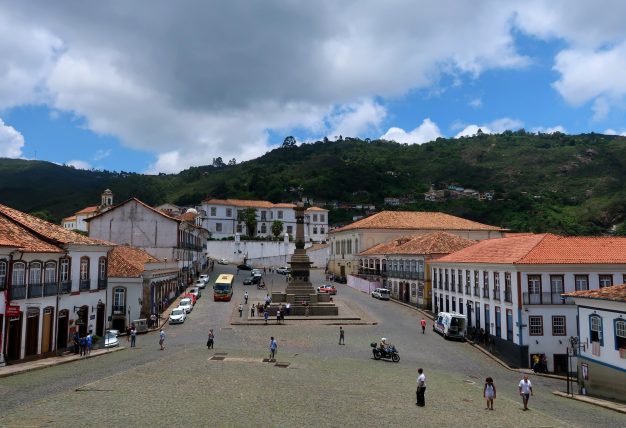
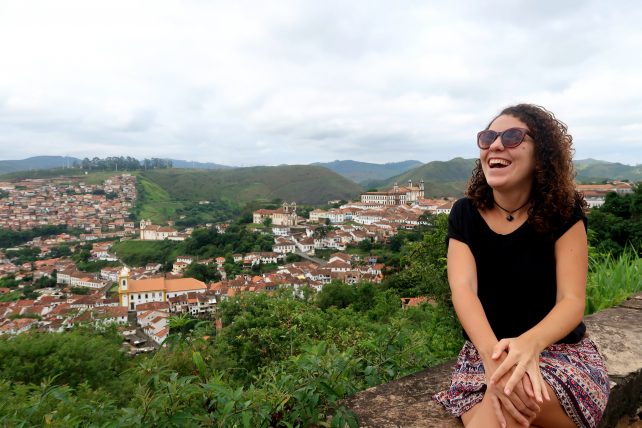
Things to do in Ouro Preto, Brazil
Founded in 1711 by the bandeirantes from São Paulo (men who decimated many Indigenous communities in the region while searching for gold), Ouro Preto was once called Vila Rica and served as the capital of the state of Minas Gerais until 1897.
Today, the city feels like an open-air museum, with beautifully preserved colonial architecture and countless churches showcasing works by renowned artists like Aleijadinho.
Beyond its beauty year-round, the city also hosts cultural events like the Winter Festival and Carnival, with fun parties organized by students from the traditional “Repúblicas” (student houses).
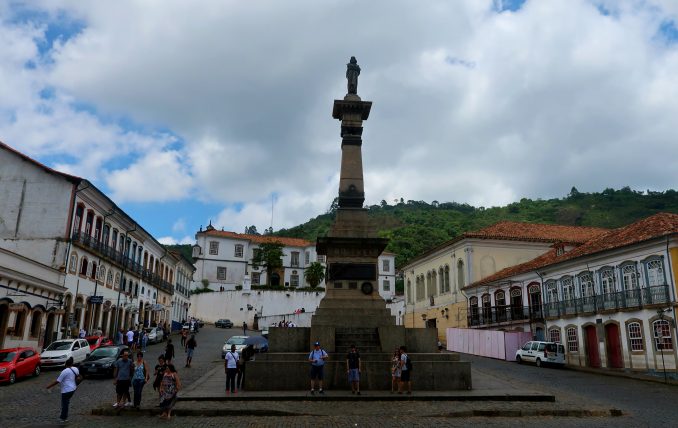
Tiradentes Square
The heart of Ouro Preto is Tiradentes Square, the city’s main plaza and one of its most historically significant landmarks. It is named after Tiradentes, a national hero who became a symbol of Brazil’s fight for independence.
Tiradentes was executed in 1792 for his involvement in the Inconfidência Mineira, an uprising organized by intellectuals and elites in Minas Gerais who sought independence from Portuguese colonial rule. After his execution, parts of his body were publicly displayed as a warning to others, and according to history, his head was exhibited in the area where the square now stands.
Today, you’ll find a monument honoring him in the center of the plaza. A curious detail is that the statue was positioned with its back turned to the building that used to house the governor’s official residence when it was installed. Bold choice, if you ask me.
Beyond its symbolic importance (and its beauty), the square deserves your attention because several key attractions are located around it. The main ones are the Inconfidência Museum and the Science and Technology Museum.
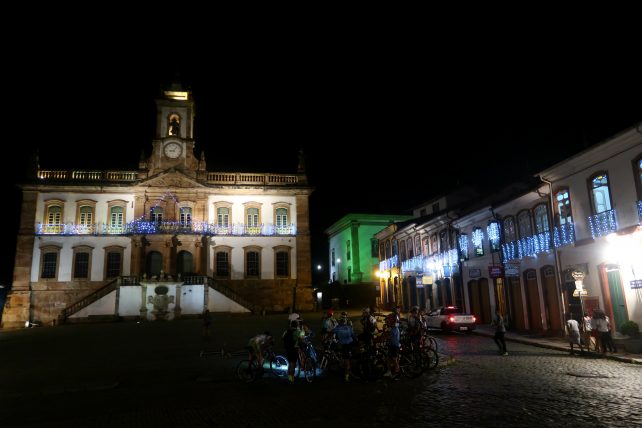
Inconfidência Museum
Set in a beautiful building that once served as both the town hall and a prison, the Inconfidência Museum is a great stop for anyone interested in history. Its collection ranges from old books and manuscripts to fine wooden furniture, mining tools, and a large amount of religious art.
On the first floor, for example, you’ll find intricately crafted oratories and several works by Aleijadinho, the nickname of Antônio Francisco Lisboa, one of Brazil’s most celebrated colonial artists. Famous for his Baroque sculptures and church designs, he helped shape much of the artistic identity of Minas Gerais in the 18th century and is considered one of the most important names in Brazilian art history.
One thing I appreciated is that the explanatory texts are available not only in Portuguese but also in English. That’s not always the case in tourist attractions across Brazil.
Beware that photography and filming are not allowed inside the museum, so cameras and bags need to be stored in the lockers available at the entrance.
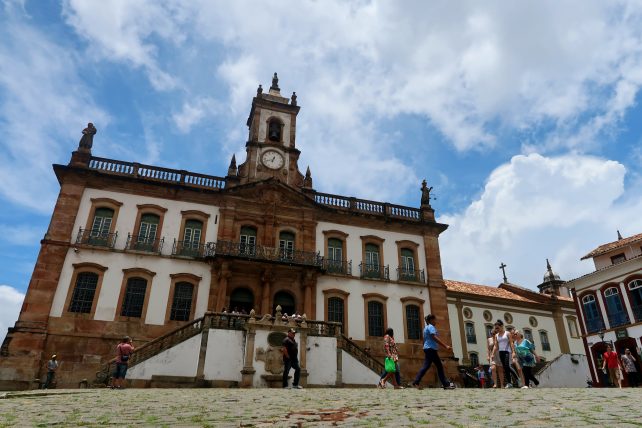
Science and Technology Museum
On the opposite side of Tiradentes Square, you’ll find the Science and Technology Museum of the School of Mines, housed in a building that used to be the Governor’s Palace. Even if you don’t plan to go inside, it’s worth walking up there for the view over the square, since the building sits at a higher point.
Originally created as a Mineralogy Museum in 1877, it now features exhibitions on different topics, including Natural History and Mining. The Natural History section is a bit underwhelming, in my opinion, although there are some interesting fossils and skeletons. The Mining section gives an overview of how mineral production works.
And then there’s the part that made me consider it my favorite museum in town: the Mineralogy section. It has an impressive collection of beautiful stones from Brazil and other parts of the world. In some displays, you can see the raw stones alongside their polished versions, which makes for a fascinating comparison. I spent quite a while trying to pick a favorite, without success. Unfortunately, photos are not allowed inside either.
Direita Street
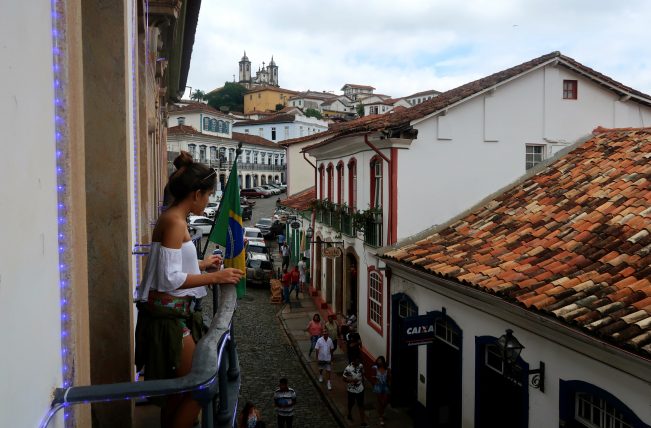
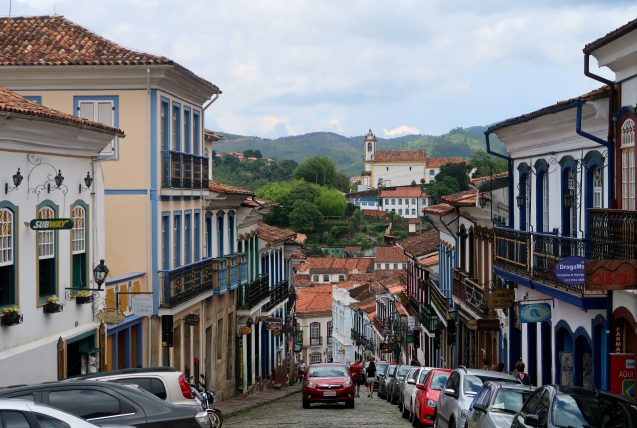
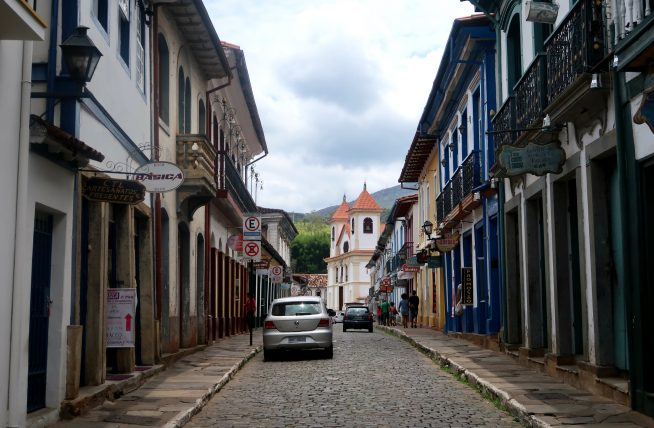
This is a place you don’t even need to plan to visit, because you’ll almost certainly end up here anyway. Rua Direita, also known as Conde de Bobadela Street, is one of the busiest streets in Ouro Preto and connects Tiradentes Square to other interesting parts of the city.
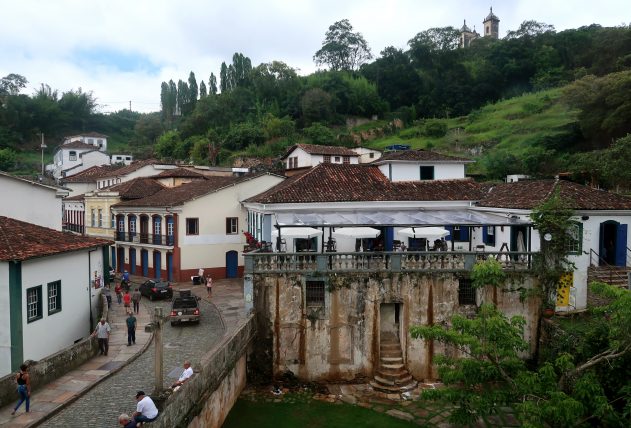
The street is lined with centuries-old houses, featuring charming balconies and colorful window frames. Inside, you’ll find shops, bars, cafés, and some excellent restaurants.
From morning to night, Rua Direita is always full of life. And honestly, just walking along it is one of the best things to do in Ouro Preto.
Casa dos Contos
Besides all the great places to eat, drink, and shop, Rua Direita also has some more “cultural” stops. One of them is the Casa dos Contos, a museum set in a beautiful mansion built between 1782 and 1787 as the residence of João Rodrigues de Macedo, who was responsible for collecting taxes in the Captaincy of Minas Gerais.
The building once served as the administrative headquarters for the region’s public finances. Over time, it also had other uses. It functioned as a foundry and even as a prison for those involved in the Inconfidência Mineira.
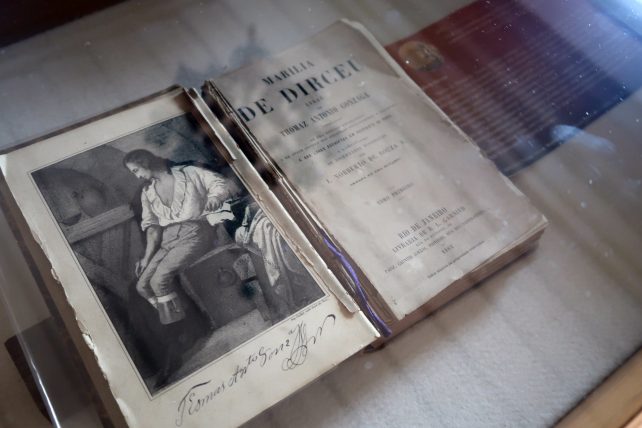
During your visit, you can explore a simple exhibition with replicas of old Brazilian coins and banknotes, along with explanations about the gold smelting process. There’s also a library with antique books, including editions of Marília de Dirceu (1862) and Cartas Chilenas (1863), both by Tomás Antônio Gonzaga, an 18th-century poet and intellectual who was also involved in the Inconfidência Mineira movement. His works are considered classics of Brazilian literature and help illustrate the intellectual atmosphere of the period.
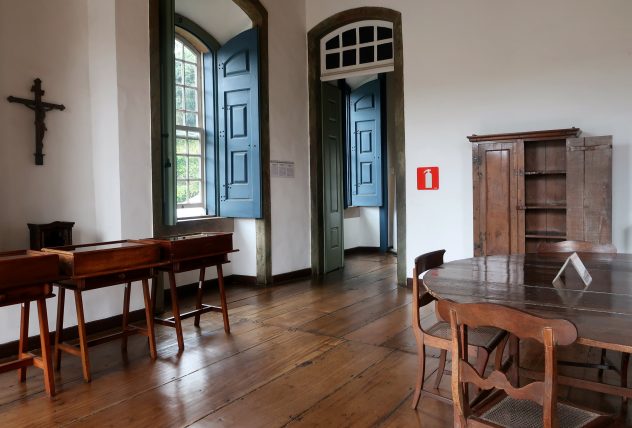
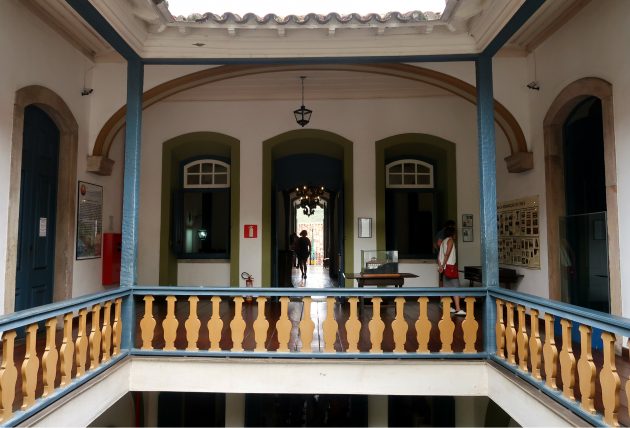
What I enjoyed the most, though, was observing the building itself. From the torch holders and pulley systems used for oil lamps to the stone flooring that once led to storage areas and slave quarters, the details make it easy to imagine what life was like back then. And not just for the owners, but also for the enslaved people who lived and worked there.
There’s also a room displaying everyday items used by Black people in Brazil, including instruments of torture that were used against them. Photography is not allowed in this section, as it belongs to a private collection. I found it very impactful and honestly think it deserved more attention in the museum.
The exhibitions include texts in Portuguese, English, and Spanish, and the staff are friendly and happy to provide additional explanations. Still not convinced? The house also offers a beautiful view, and entry is free. Definitely one of the most interesting things to do in Ouro Preto if you want to understand the city beyond its postcard views.
Churches in Ouro Preto
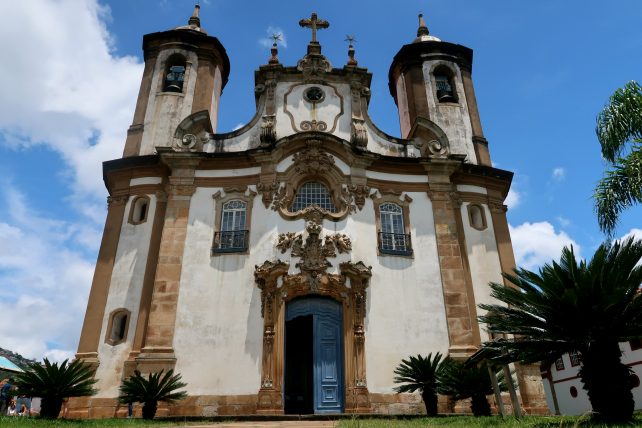
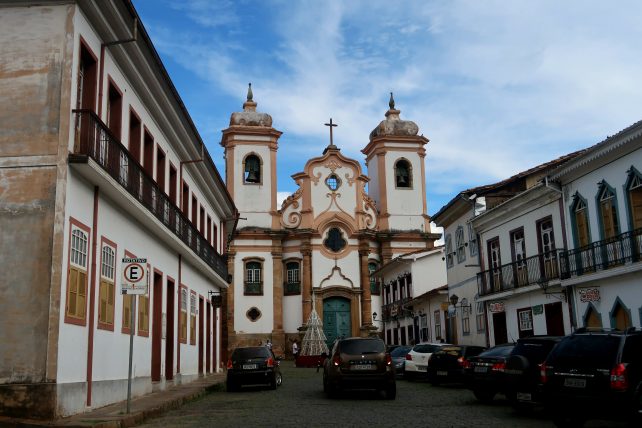
Ouro Preto has a surprising number of churches, sometimes standing just a few steps from one another. If you’re particularly interested in religious art, it’s worth building part of your itinerary around them. Many are known for their architectural styles and richly decorated interiors. Some are free to enter, while others charge a small fee.
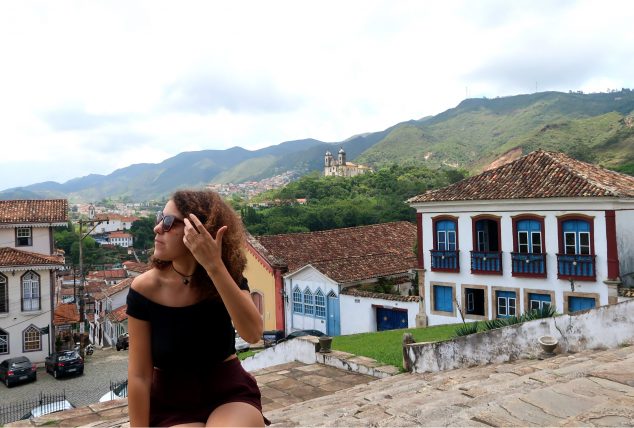
Among the highlights is the Igreja de Nossa Senhora do Carmo, located just behind the Inconfidência Museum. Built in the Rococo style, it’s worth walking up to the entrance even if you don’t plan to go inside. The view over the rooftops and surrounding mountains is one of my favorites in the city.
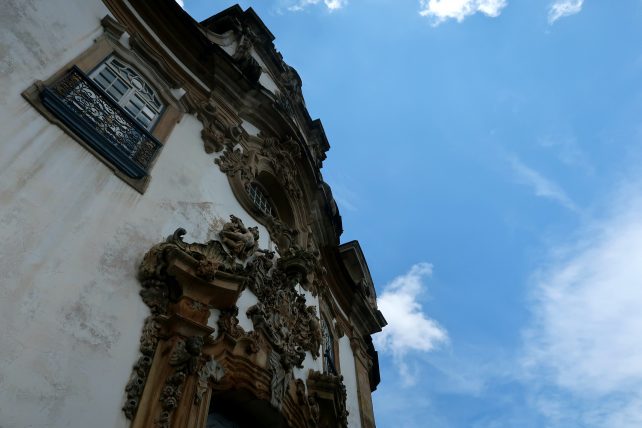
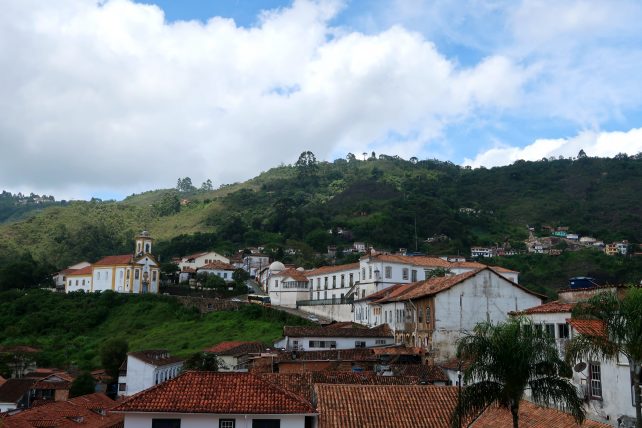
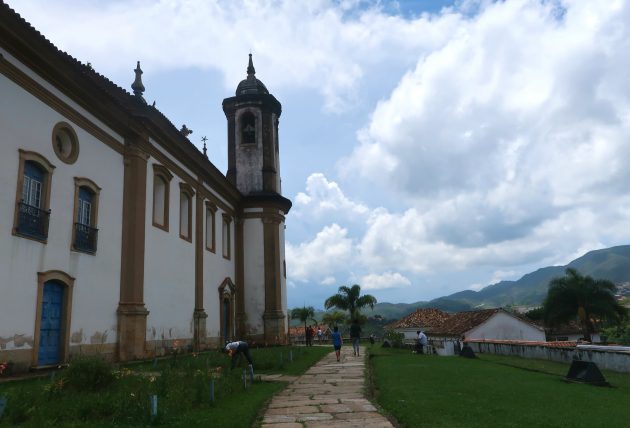
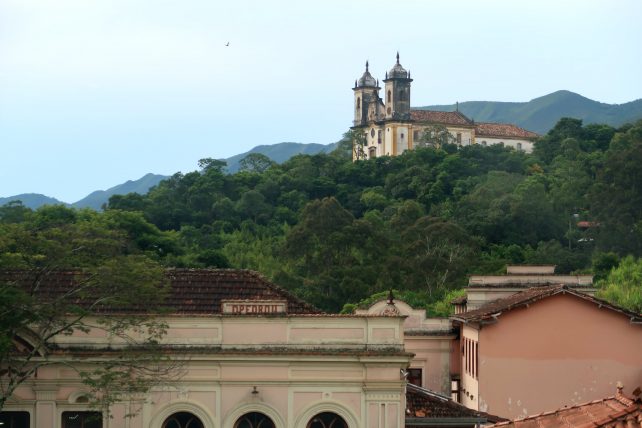
Further down Rua Direita, you’ll find the Matriz de Nossa Senhora do Pilar, famous for its lavish use of gold. This reflects the wealth of the parish during the days of Vila Rica. Admission includes access to the Museum of Sacred Art located inside.
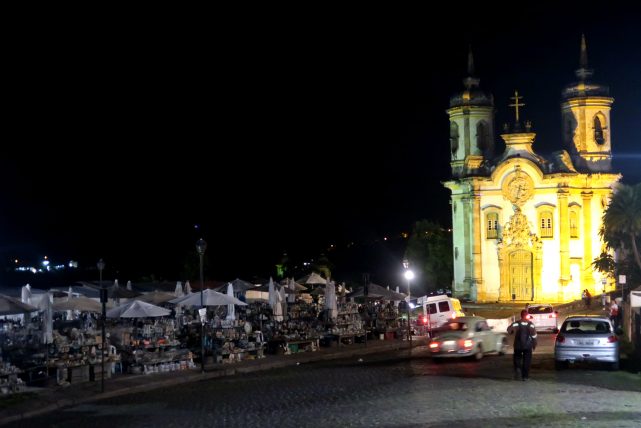
Another must-see is the Igreja de São Francisco de Assis, near Tiradentes Square. Built in the Baroque style with Rococo elements, it features works by Aleijadinho and Mestre Ataíde. It has even been listed as one of the Seven Wonders of Portuguese Origin in the World.
I’m not the biggest fan of church interiors, so my personal favorite was the Igreja de Nossa Senhora do Rosário dos Homens Pretos. I only saw it from the outside, but I loved it. Its rounded shape and unique façade make it stand out from the others, and it felt more original to me.
Soapstone Market
Right in front of the Igreja de São Francisco de Assis, in an area known as Largo de Coimbra, you’ll find the Soapstone Market. It’s a great spot to pick up souvenirs.
Most stalls sell similar items, but I still found some interesting pieces. Think decorative objects and chess sets made from soapstone, as well as jewelry crafted from other stones typical of the region (or their synthetic versions).
Chico Rei Mine
Since you’re in such an important place in Brazil’s mining history, why not visit a mine? One of the easiest ones to access in Ouro Preto is the Mina de Chico Rei.
According to legend, the mine was named after an enslaved man brought from Congo, where he was supposedly a tribal king (rei in Portuguese). In Ouro Preto, he became a respected leader.
After years of working in the mine, Chico Rei is said to have earned his freedom and eventually bought the mine himself, freeing others in the process. The story goes that he and other enslaved people would hide gold in their hair and wash it in churches, with the complicity of religious figures.
The mine was rediscovered in 1946, and its tunnels run beneath much of the historic center. Today, about 50 meters are open to visitors, daily from 8 am to 5 pm. I didn’t go myself, as I chose to visit another mine nearby, which I’ll mention below.
Where to eat in Ouro Preto
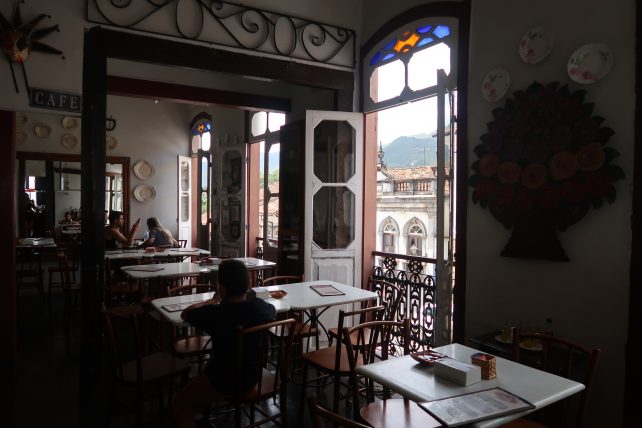
Honestly, one of my favorite things to do in Ouro Preto was eating. And eating very well. These were my highlights:
- For a more refined atmosphere and beautiful views: O Passo and Bené da Flauta
- For great sandwiches and desserts in a charming setting with an excellent playlist: Villa Koa
- To sit outside and enjoy a casual vibe: Chopp Real
- For budget-friendly eats and meeting locals: Satélite Bar e Lanchonete
- O Porão for delicious burgers and a selection of 80 craft beers
- Spaghetti for great lasagna and pizza
- Sótão for an excellent all-you-can-eat buffet at a reasonable price
- Mr. Cheff for another affordable buffet option
- Cervejaria Ouropretana to pair craft beer with local cheese
- Chocolates Ouro Preto to warm up on colder days
Day trips from Ouro Preto
Ouro Preto alone is already worth the trip, but the surrounding area has plenty to offer too.
Within the historic center, you don’t really need a car. In fact, it can be more of a hassle because the streets are narrow and parking is limited. For exploring nearby attractions, though, having a car makes things easier.
If you don’t want to drive, you can still get around by bus, but having your own vehicle makes it simpler to combine Ouro Preto with nearby towns like Mariana or even venture further along tourist routes such as the Gold Circuit (Circuito do Ouro) or the Royal Road (Estrada Real).
I traveled by car and combined three days in Ouro Preto with one day in Belo Horizonte, another in Inhotim, and a half-day in Mariana. It’s a charming town, though much simpler compared to Ouro Preto.
Passagem Mine
I also visited the Mina da Passagem, located between Ouro Preto and Mariana. You can get there by car or bus, and the experience is quite fun. You descend into the mine in a cart that reminded me of Gringotts from Harry Potter.
The whole visit takes about 45 minutes, including the descent and a guided tour through the tunnels.
Train to Mariana
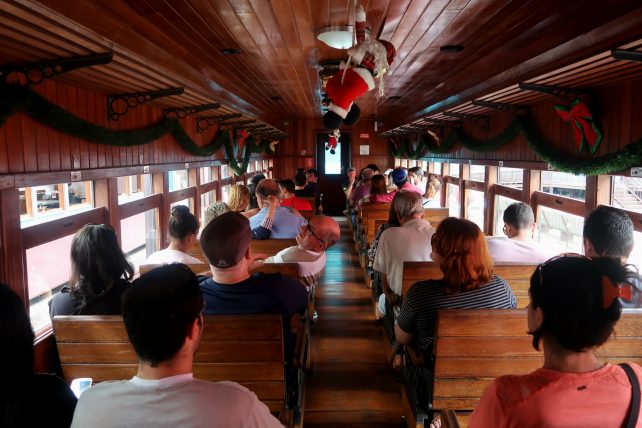
Another experience I tried was the tourist train to Mariana. The route covers 18 km and takes about an hour. I found it pleasant, though not extraordinary. It’s worth it if you’ve never taken a train ride like this before.
I recommend buying your tickets online in advance so you can sit with your group and choose seats on the right-hand side, where the views are better. Another tip is to save both time and money by taking the train one way and returning by bus. It departs from right in front of the train station, and gets you back to Tiradentes Square in under 40 minutes.
Nature around Ouro Preto
I left Ouro Preto wanting to come back not only to enjoy its charming historic center again, but also to explore the natural attractions nearby.
The region has several waterfalls, as well as places like the Parque Estadual do Itacolomi and other scenic spots that are perfect if you want to balance history with nature.
Where to stay in Ouro Preto
During my trip, I stayed in two different guesthouses in Ouro Preto.
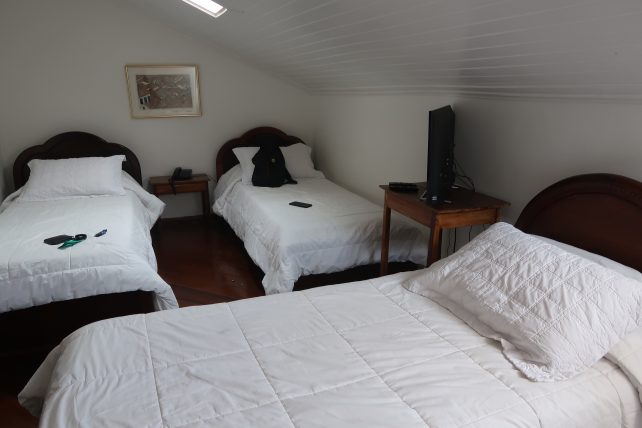
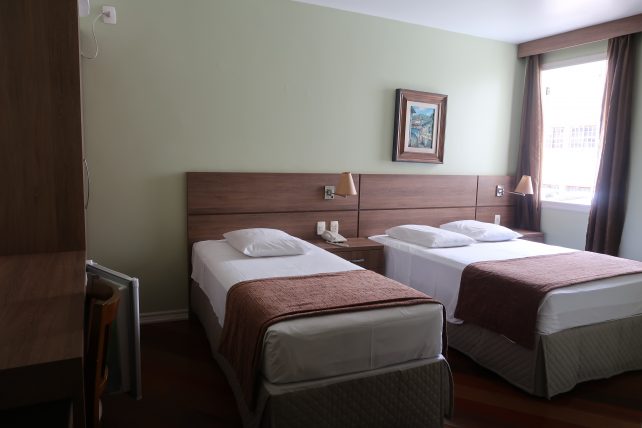
The first one was Hotel Colonial, located about a two-minute walk from Rua Direita. My room was in what felt like an attic, with a sloped and relatively low ceiling, so it was a bit tight, but totally manageable. The shower was good, the bathroom was clean, the breakfast was tasty, and the reception staff were excellent.
That said, it’s not the best option for travelers with mobility issues. There’s no elevator, some rooms are on upper floors, and breakfast is served on a lower level. Also, the private parking is about 400 meters away.
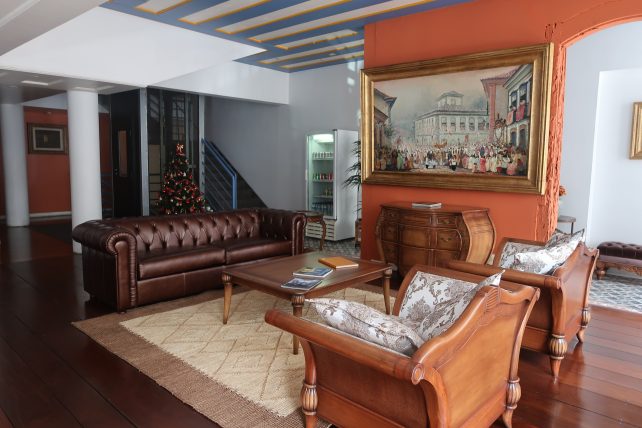
For the following days, I stayed at Hotel Pousada Clássica, which has an even better location, right in the middle of Rua Direita. The room felt newer and more modern, breakfast was very good, and they even offered an afternoon tea. They also have on-site parking with valet service. I’d definitely recommend it.
For more accommodation tips, check out my full guide on where to stay in Ouro Preto.
Free accommodation in Ouro Preto
Did you know it’s possible to stay in Ouro Preto for free? One of the best ways to do that is by volunteering through Worldpackers, a Brazilian platform that connects travelers with hosts in exchange for a few hours of help per week. In return, you receive accommodation and often extra perks like meals or local experiences.
There are some great volunteering opportunities in Ouro Preto. You might help at a hostel, teach yoga in a holistic center, plant trees in a nearby reserve, assist with guest reception, or contribute with skills like photography, social media, or general maintenance. You can check the full list of opportunities here.
Besides helping you save money, this type of travel offers a much deeper cultural experience. You’ll get to meet locals and travelers from around the world, while experiencing the destination in a more authentic way beyond the typical tourist itinerary.
Anyone can browse Worldpackers opportunities for free. If you decide to apply for positions (and get access to platform support and an insurance), there’s a small annual membership fee. However, if you click here or use the discount code JANELASABERTAS, you’ll get $10 off, making it an even better deal. The membership allows you to volunteer and travel as many times as you want, throughout Brazil and dozens of other countries, for one full year. If you’d like to learn more, check out our complete guide to work exchange programs.
Do you have any questions about things to do in Ouro Preto? Let me know in the comments!















0 Comentários