
Things to do in Santiago, Chile: tried-and-tested tips
If you’re planning a trip to Chile and wondering what to do in Santiago, you’ve come to the right place. The city is often the gateway for travelers exploring this beautiful Latin American country, and it has attractions for all kinds of visitors: historic buildings, interesting museums, parks and viewpoints, lively neighborhoods, local markets and, of course, the Andes providing a spectacular backdrop.
I’ve been to Santiago a few times, and in this article I’ve rounded up the best places I visited there, including both famous tourist attractions and experiences that give you a better understanding of the city’s history, culture and everyday life.
You’ll find everything from a walking tour around downtown Santiago, passing by Plaza de Armas and Palacio de La Moneda, to places like Cerro San Cristóbal, Pablo Neruda’s house, the Museum of Memory and Human Rights and markets where locals do their everyday shopping.
So, if you’re looking for the best things to do in Santiago, keep reading for practical tips and my personal impressions of each experience to help you decide what’s worth adding to your itinerary.
You might also like to read:
Where to stay in Santiago: Best neighborhoods and accommodation tips
Is it safe to travel to Brazil? An honest guide
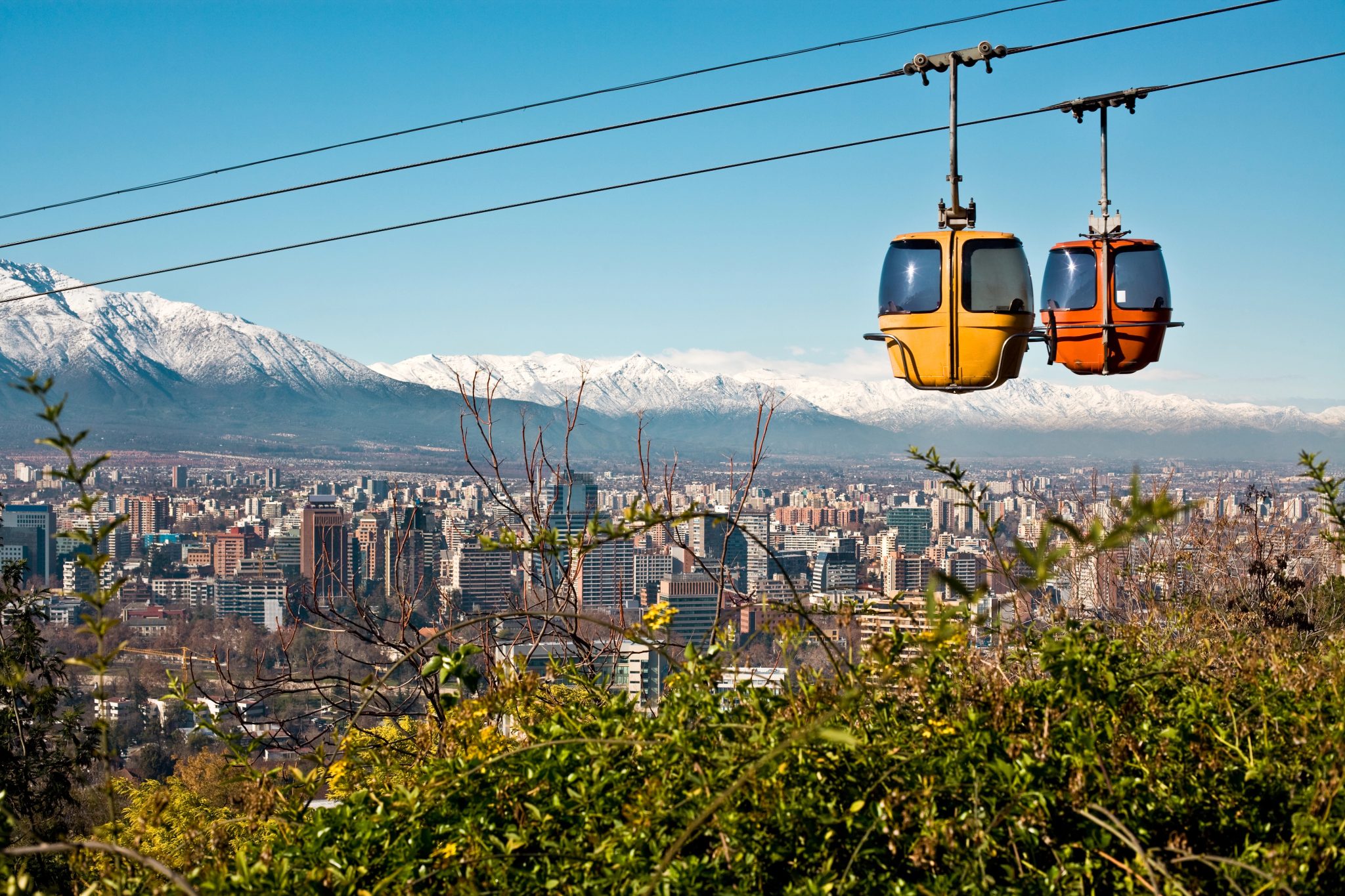
Things to do in Santiago: top attractions
Below, you’ll find plenty of ideas for things to see and do in Santiago. These are some of the main attractions I recommend visiting:
- Plaza de Armas
- Palacio de La Moneda
- Centro Cultural La Moneda
- Cerro Santa Lucía
- La Chascona (Pablo Neruda’s house)
- Cerro San Cristóbal
- Patio Bellavista
- Mercado Central and La Vega
- Museum of Memory and Human Rights
- Quinta Normal Park
- National Museum of Natural History
Things to do in Santiago: walking tour around downtown
How about exploring some of Santiago’s most traditional sights with a fun guide and paying whatever you think the tour was worth at the end? That’s exactly how a free walking tour works.
There are several options in the Chilean capital, but I chose the Santiago Highlights tour by Tour4Tips and loved it. I also did their tour dedicated to more “off the beaten path” attractions, which I’ll talk about later in this article.
The Santiago Highlights walking tour is a great introduction to the city from a more traditional perspective, focusing on the historic center and some of Santiago’s most iconic buildings. And if you can’t join the tour, just keep reading to follow roughly the same route on your own – this itinerary covers some of the top places to visit in Santiago.
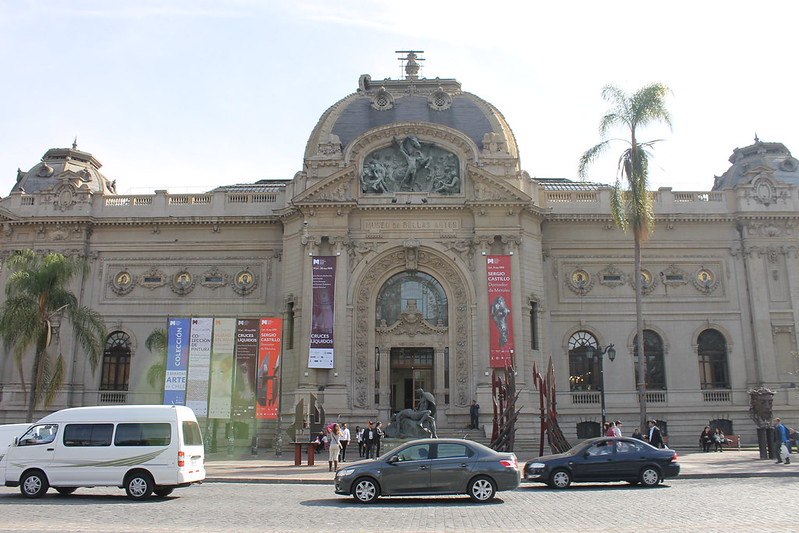
When I took the tour, the meeting point was the Museo Nacional de Bellas Artes (National Museum of Fine Arts). It’s worth checking what exhibitions are on and coming back to visit another time, since we don’t actually go inside during the tour. It’s not my favorite museum, but definitely worth a visit.
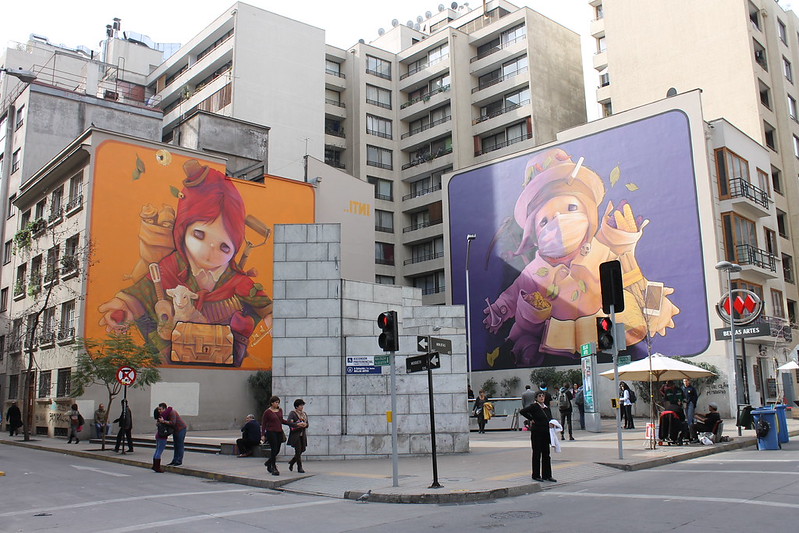
Our first stop was near Bellas Artes metro station, where you can see two beautiful murals by Inti, a street artist who also has amazing works scattered around Valparaíso, his hometown. Take a close look at the murals: they depict the Ekeko, the god of abundance, fertility and joy in the beliefs of Andean peoples, carrying objects related to the struggles of the Chilean people.
Plaza de Armas
Next, we headed to Plaza de Armas, the heart of Santiago. The square is surrounded by important landmarks such as the Central Post Office, the National History Museum and the Metropolitan Cathedral. Nearby you’ll also find Paseo Ahumada, one of downtown Santiago’s main shopping streets, and the Museo Chileno de Arte Precolombino (Chilean Museum of Pre-Columbian Art), which I’ve heard is very good.
We also passed by the Club de La Unión, created along the lines of traditional English private clubs as a meeting place for members of high society to socialize and discuss politics. I have to admit, though, that I was more intrigued by the legendary Bar de la Unión nearby – a haunt of Santiago’s literary bohemian scene, where the less privileged crowd used to gather.
Around this point, our guide told us about the cafés con piernas (“coffee shops with legs”), a rather peculiar Santiago institution. According to him, these establishments emerged as a sexist gimmick to get people interested in drinking coffee, which wasn’t very popular in Chile at the time. The name came from the fact that the waitresses wore very short skirts, and the cafés were designed to give customers a good view of their bodies. Of course it’s ridiculous, but I find it important to learn about the many faces of sexism across time.
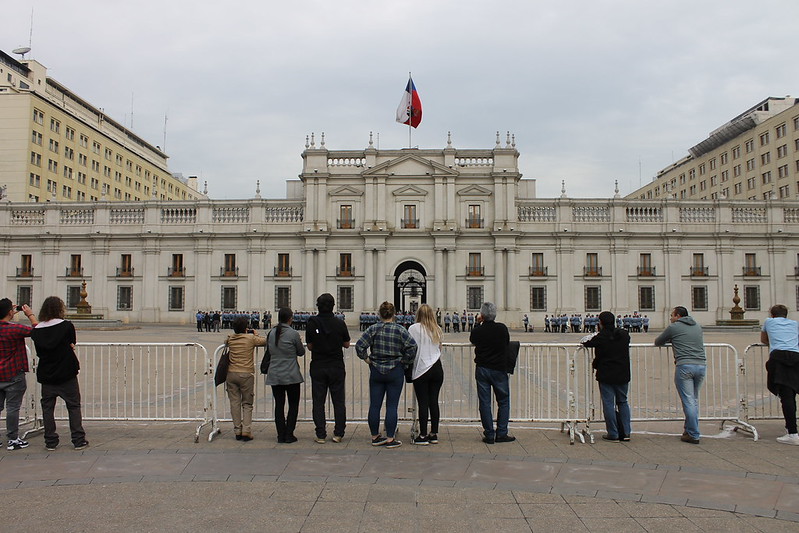
Palacio de La Moneda
We then headed to Palacio de La Moneda, the seat of Chile’s presidency, which gave our guide an opportunity to talk about the 1973 coup. The palace, where then-president Salvador Allende died during the coup, will almost certainly be part of your Santiago itinerary.
If you have time, consider visiting the Centro Cultural La Moneda as well, which is in the same square and hosts a variety of exhibitions. I went there later and saw a very good exhibition.
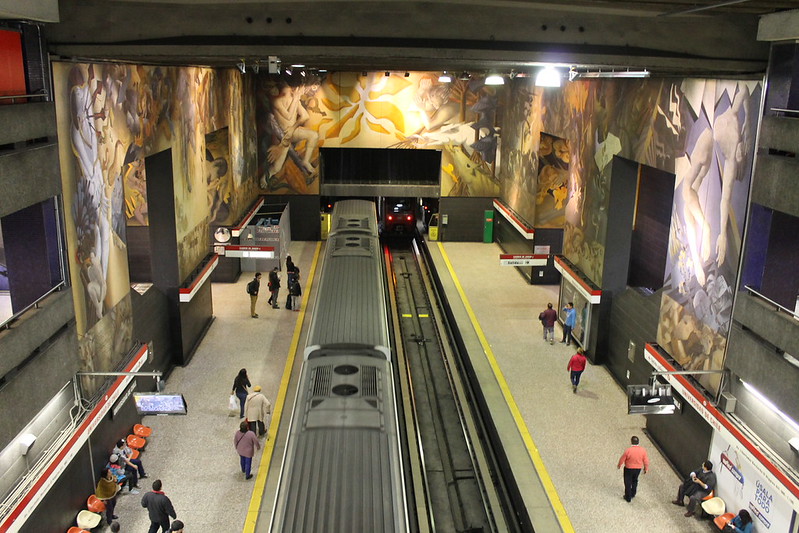
Afterwards, we went into Universidad de Chile metro station, where we saw Memoria Visual de una Nación, a mural by artist Mario Toral depicting some of the most significant events in the country’s history.
Centro Cultural Gabriela Mistral
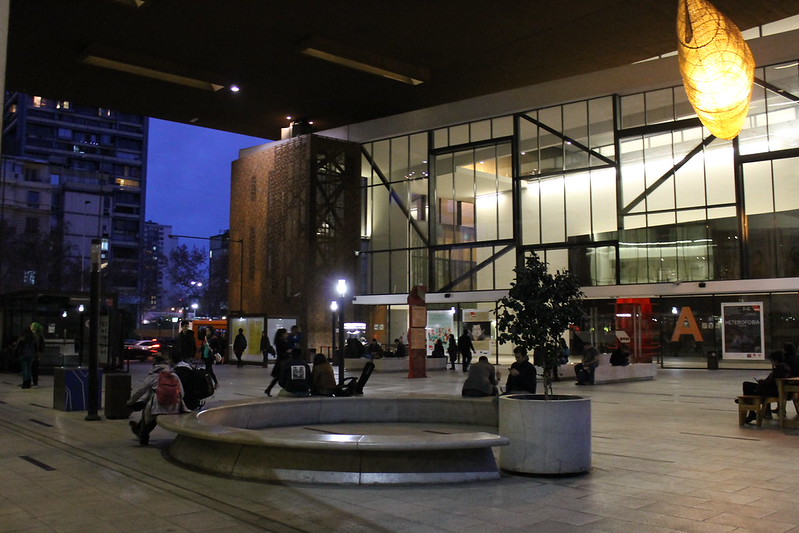
Finally, we took the metro to the Centro Cultural Gabriela Mistral (GAM), which hosts exhibitions and events related to theater, dance, music and more. The building also has a fascinating history that reflects the ideological polarization of Chile’s recent past. It was built during Salvador Allende’s government and, following the coup, was occupied by the military junta and housed the Ministry of Defense.
After being damaged by a fire in 2006, the building was reconstructed as a cultural center and named after Chilean writer and poet Gabriela Mistral, winner of the Nobel Prize in Literature. Since then, the space has taken on a new life and is now a really interesting place, full of people having coffee, checking out exhibitions and events, dancing or simply meeting up with friends. I saw some great exhibitions there on a more recent visit to Santiago.
Lastarria
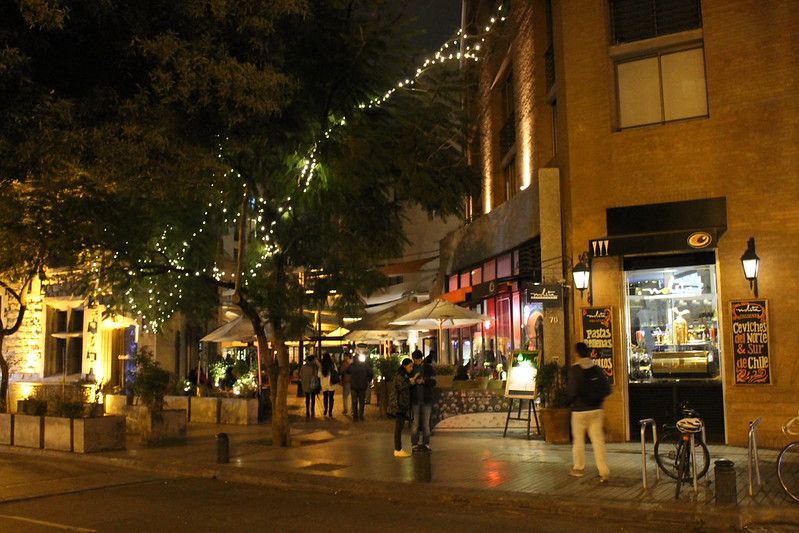
The tour ended with drinks at a nearby bar, and afterwards I spent the rest of the evening walking around Lastarria with a friend and falling in love with its streets.
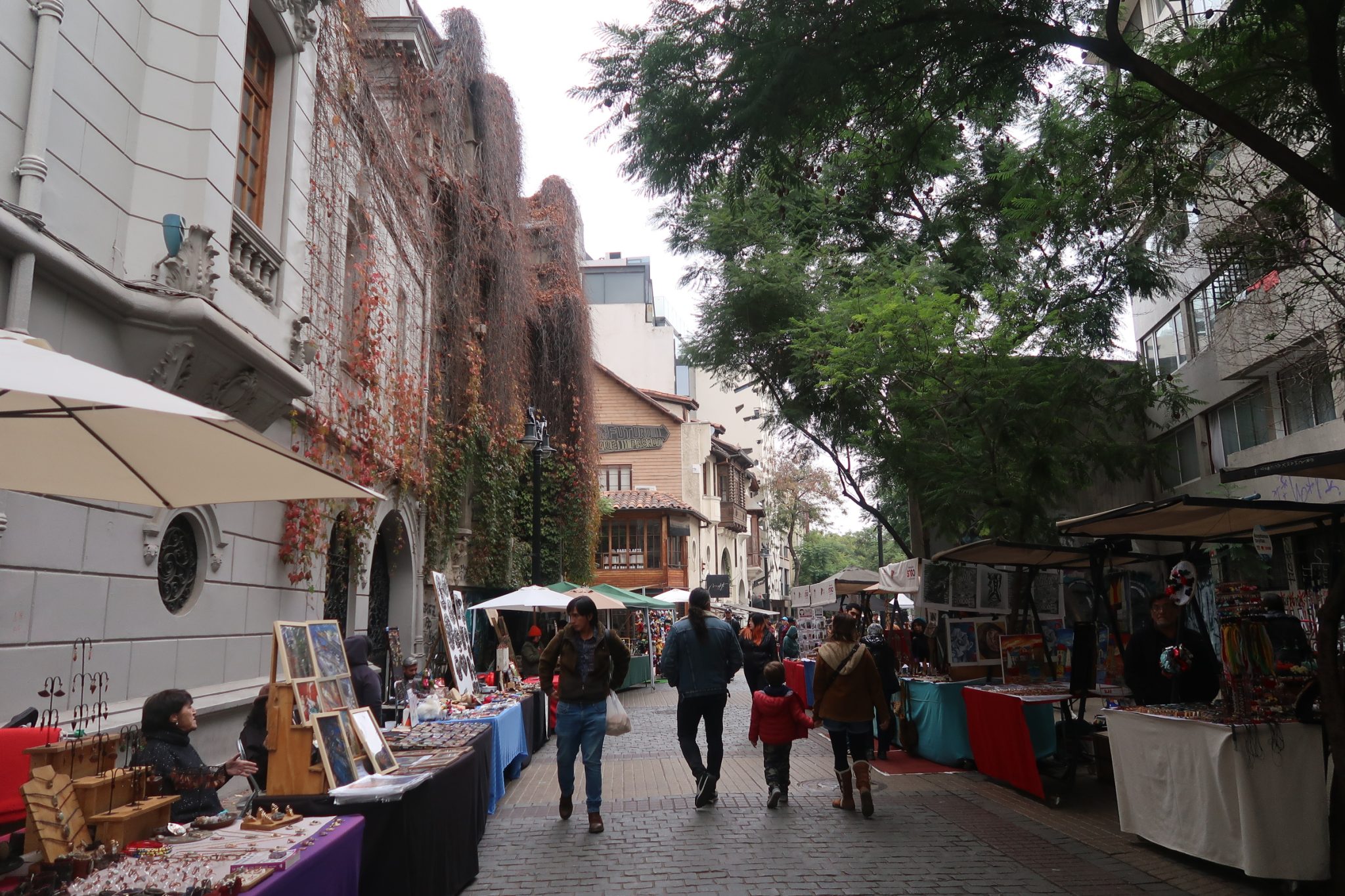
Lastarria is one of my favorite areas in Santiago for simply wandering around. It has a cultural, bohemian atmosphere, with plenty of cafés, restaurants, bars, bookstores, galleries and cultural venues.
There’s also a traditional antiques and book market, and you’ll often come across street performers and other cultural activities. For me, exploring Lastarria is definitely high on the list of things to do in Santiago.
Cerro Santa Lucía
Also in this area is Cerro Santa Lucía, which I climbed the following morning. The hill has been part of Santiago’s history since long before the arrival of the Spanish, and it was at its foot that Spanish conquistador Pedro de Valdivia officially founded Santiago in 1541. It later served as a military fort, and in the 19th century it was transformed into a public park.
Take your time as you make your way up the staircases and slopes, passing landmarks such as Terraza Neptuno and Castillo Hidalgo before reaching the higher viewpoints, where you’ll get a beautiful view over Santiago. It doesn’t take very long to visit and is easy to combine with a walking itinerary around downtown and Lastarria – but be prepared for the climb!
Admission is free, and there are entrances from Alameda, Merced Street and Agustinas Street. The nearest metro station is Santa Lucía on Line 1. Opening hours vary depending on the time of year, so I recommend checking Santiago’s official tourism website for up-to-date information before you go.
Looking for a place to stay in Santiago, Chile? Check out some of the best hotels and hostels in the city.
Walking tour of Santiago’s offbeat attractions
Another walking tour I really enjoyed, also with Tour4Tips, was Santiago Offbeat, which takes you through local markets and the country’s biggest cemetery. The idea is to show you places that most tourists don’t usually explore while revealing interesting aspects of Chilean society. Our guide talked, for instance, about class divisions, which he said are very noticeable there. I think it’s a great option if you’re looking for things to do in Santiago beyond the usual tourist attractions.
Public markets
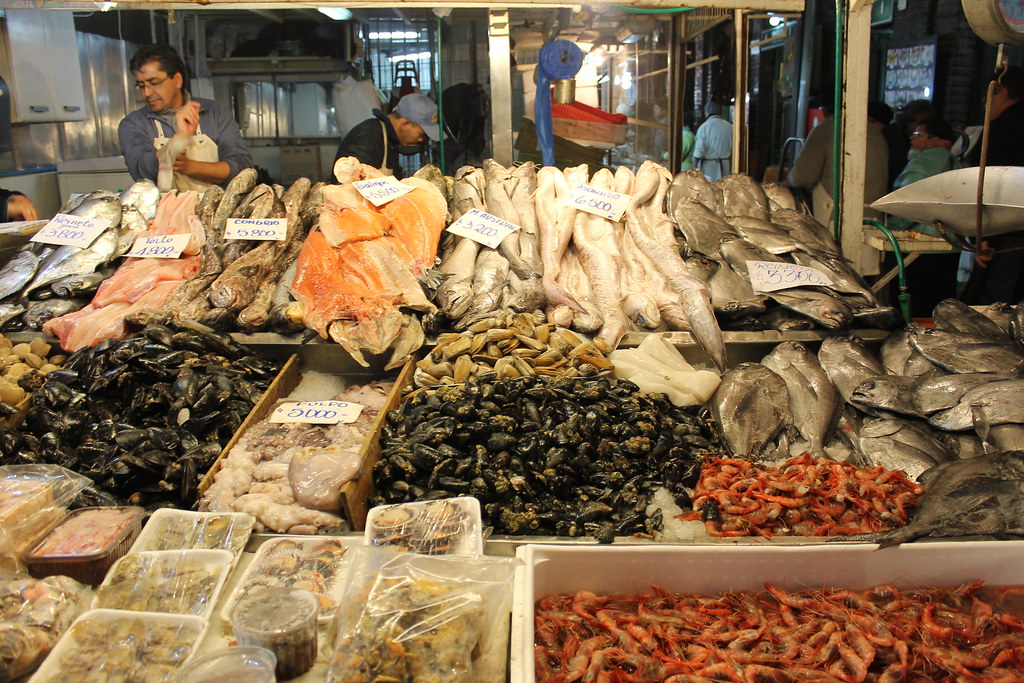
After a stop at Plaza Corregidor Zañartu, the main places we visited were Mercado Central (the more touristy market, specializing in fish and seafood), Tirso de Molina (a small market with Latin American restaurants upstairs), and La Vega Chica and La Vega Central, where you’ll find plenty of fruits and vegetables.
I imagine these places are especially interesting for travelers who aren’t from Latin America and aren’t as familiar with this kind of atmosphere, which is somewhat similar around the continent. But even as a Brazilian I loved getting a more local glimpse of Santiago and watching people go about their everyday shopping.
I also enjoyed learning about the importance of La Vega to the city: it’s a place where people from all social classes mix, and much of the produce used by Santiago’s restaurants comes from there. There’s even a popular saying: “Después de Dios está La Vega” (“After God comes La Vega”).
Besides Chilean products, you’ll find plenty of ingredients and foods from Peruvian cuisine, which is very popular in Chile. I suggest you take your time, grab a fresh juice from one of the colorful fruit stalls, discover some unfamiliar fruits and vegetables and simply watch the market bustle around you.
And if you eat at Mercado Central, try pastel de jaiba (a creamy baked crab dish) and machas a la parmesana (razor clams topped with Parmesan), two traditional Chilean seafood dishes.
Cementerio General
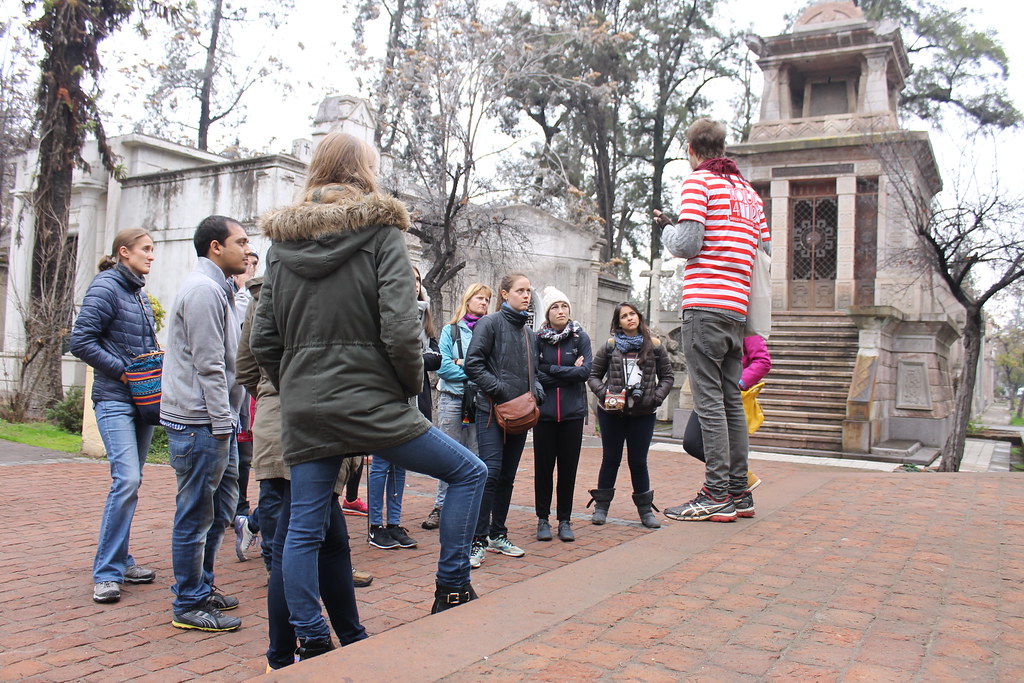
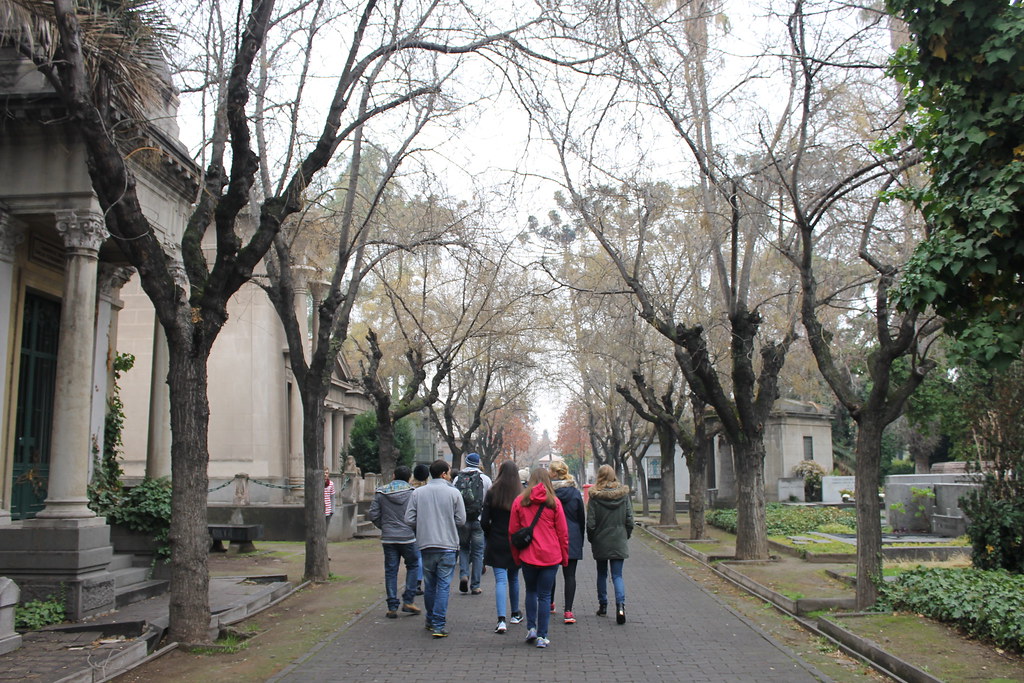
We then took the metro to Cementerio General, the country’s largest, oldest and most important cemetery. There, our guide talked about animism: many people believe that certain individuals who embodied “innocence” and died in tragic circumstances leave their souls wandering around the place where they died or were buried. People worship these figures, light candles for them and ask them for favors.
When a request is granted, they leave a plaque beside the animita as a sign of gratitude. When people see lots of plaques around one of these shrines, they start believing that particular animita really does work miracles, attracting even more devotees. One example is Romualdito.
We also saw plenty of over-the-top mausoleums inspired by Arab, Egyptian, Roman, Mayan and Aztec architecture, and pretty much anything else you can imagine.
Finally, we visited Salvador Allende’s mausoleum, where our guide talked about the 1973 coup, the main events leading up to it, its consequences and the divisions it created in Chilean society, some of which remain to this day.
The tour ended at a bar across from the cemetery, where we were treated to a dangerous complimentary drink: terremoto, one of Chile’s typical cocktails, which tastes deceptively sweet. It’s made with cheap white wine, pineapple ice cream, grenadine and sometimes other spirits such as fernet, tequila or rum. Consider yourself warned!
While we were there, we also tried a chorrillana, a decidedly non-light Chilean dish consisting of a big pile of fried goodness: French fries, meat, onions, eggs… Not exactly cardiologist-approved!
Tour4Tips also offers walking tours in Valparaíso, and I recommend exploring the city this way if you’re heading there.
Pablo Neruda’s house, Cerro San Cristóbal and Patio Bellavista
One of Santiago’s best-known neighborhoods, Bellavista has plenty of restaurants, theaters, shops and bars. Located between the Mapocho River and Cerro San Cristóbal, it’s also home to La Chascona, Pablo Neruda’s former house, and the Patio Bellavista dining and shopping complex.
There’s much more to discover just by wandering around its streets – which I definitely recommend doing – but these are some of the neighborhood’s main highlights:
La Chascona (Pablo Neruda’s house)
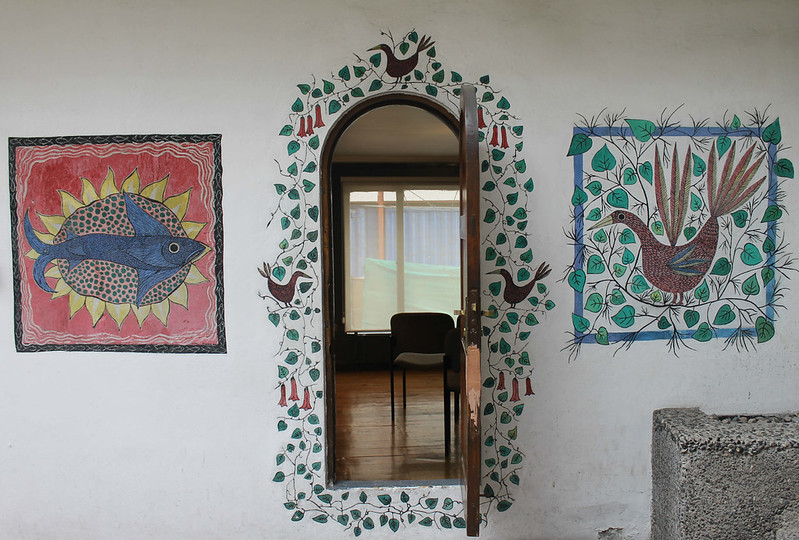
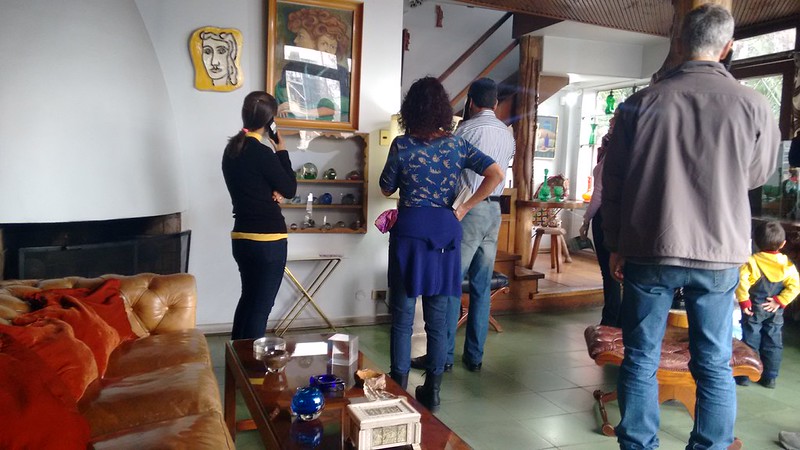
Three of Pablo Neruda’s houses have been turned into museums, but this is the only one in Santiago. I think his house in Valparaíso is even more beautiful, and Isla Negra – which I visited on another trip – was my favorite, but La Chascona is definitely worth visiting too.
The house got its name because it was built in 1953 for Matilde Urrutia, who was Neruda’s lover at the time. He called her La Chascona because of her unruly hair, which even inspired a portrait by Mexican artist Diego Rivera. After separating from his wife, Neruda moved into the house with Matilde.
The building itself is quite interesting. Neruda commissioned a Catalan architect to design it but had plenty of opinions about the project himself. The poet collected all sorts of things, and rather than designing functional rooms and then figuring out where to put his belongings, he would create an entire little corner specifically to accommodate a favorite item.
I loved seeing how much Neruda enjoyed intimate spaces and how he left his personality all over the house. As you walk through the rooms, an audio guide tells you stories and interesting facts about each one, so you can explore everything at your own pace.
Through the audio guide, I learned that 12 days after the military coup that marked the beginning of Pinochet’s dictatorship, Neruda died and the house was vandalized, but Matilde repaired the damage and continued living there until her death in 1985.
How to get there: Baquedano metro station (about a 10–15 minute walk)
Address: Fernando Márquez de la Plata 192
You can find more practical information on the Pablo Neruda Foundation website.
Cerro San Cristóbal
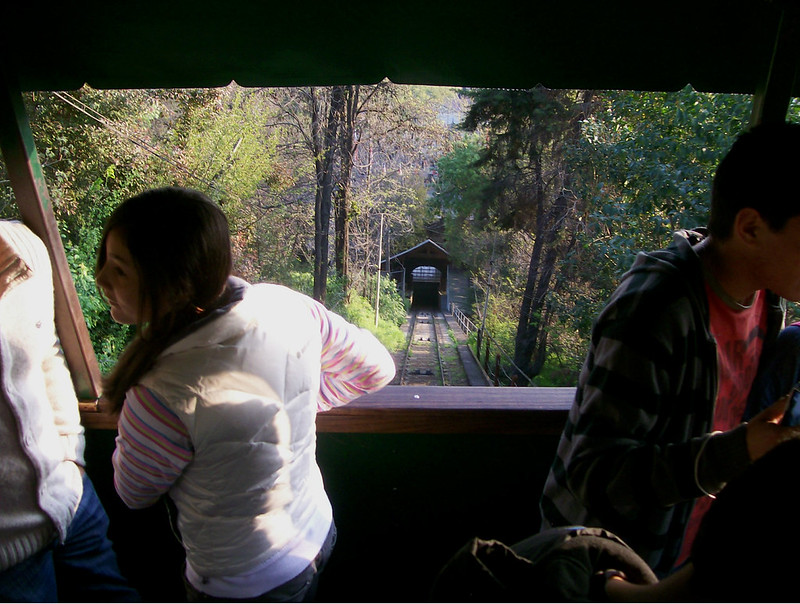
Just a short distance from La Chascona is Cerro San Cristóbal, one of the highest points in Santiago, as well as Chile’s National Zoo, which I didn’t visit because I’m not a fan of zoos. Going up the hill is a fun experience, and you can do it on foot, by bike, by car or by funicular – basically a railway designed to go up steep slopes. I chose the latter and it’s quite fun.
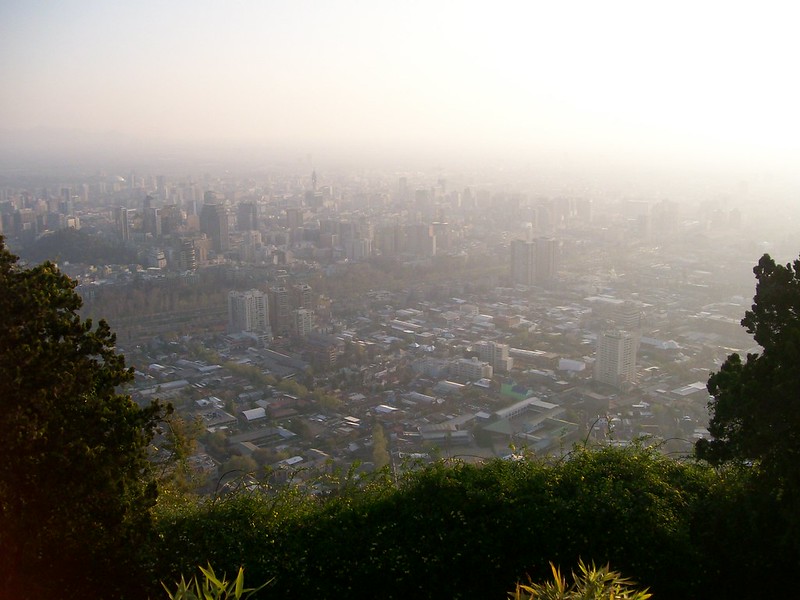
Once you reach the top, you’ll get a great view over the city, although Santiago’s frequent air pollution can make visibility a little hazy. You’ll also find a large statue of the Virgin of the Immaculate Conception. On weekends, the area gets quite busy with both locals and tourists; it’s one of the best-known Santiago attractions.
Patio Bellavista
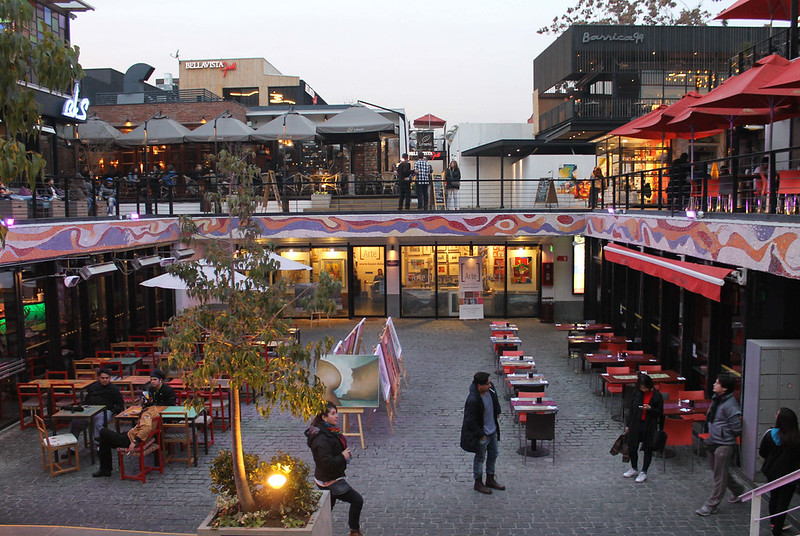
Another popular spot in the neighborhood is Patio Bellavista, a shopping and dining complex with plenty of stores, restaurants and bars. It’s very touristy, but there are some good places to eat and drink. If you have time, I recommend exploring the surrounding neighborhood too, including streets like Pío Nono and Constitución.
Museum of Memory and Human Rights
The attacks on the World Trade Center in 2001 in New York are etched into the memory of much of the world. But did you know that another September 11, back in 1973, was a tragic date in Chilean history?
The military coup that ushered in Augusto Pinochet’s dictatorship marked the beginning of a period of repression, exile, fear, torture, executions, censorship and many other human rights violations – unfortunately, not so different from what happened in several other countries, including Brazil.
To shed light on these abuses, encourage reflection and debate, and help prevent such events from happening again, the Museo de la Memoria y los Derechos Humanos (Museum of Memory and Human Rights) opened in Santiago in 2010.
Through documents, multimedia exhibits, photographs, letters and other materials, the museum takes visitors through an uncomfortable but essential journey into this period of Chilean history.
At the entrance, a world map shows the similarities between what happened in Chile and dictatorships, civil wars and other devastating events in countries around the world.
From there, the exhibition follows a chronological path. It begins with videos and audio recordings from the day of the coup, including a large projection showing the bombing of Palacio de La Moneda.
You can also listen to Allende’s final radio address before his death, as well as testimonies from people involved in the events. Along the way, you’ll come across artifacts from the period, such as a surveillance tower recovered from a former CNI (National Information Center) facility.
Still on the ground floor, there are records of horrific events such as the use of Estadio Nacional as a detention and torture center, alongside examples of international solidarity. You’ll also hear testimonies from people who were tortured during the regime and see letters and drawings made by children affected by the dictatorship – it’s hard not to get emotional.
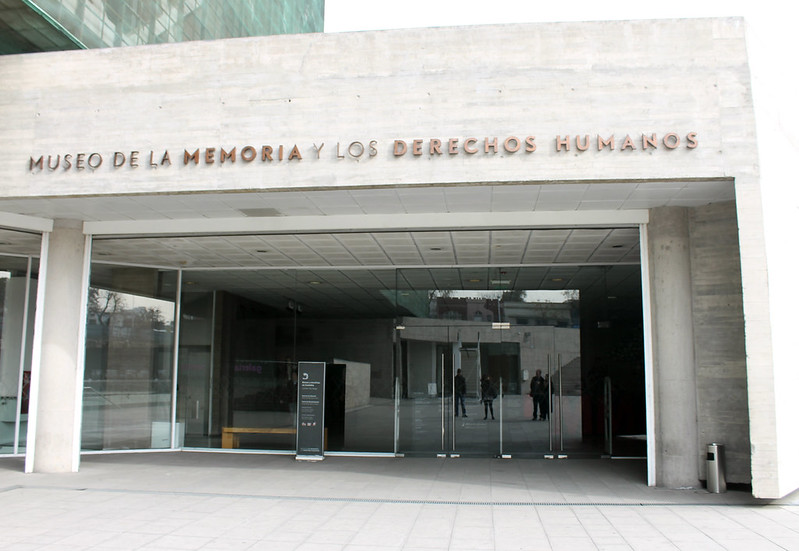
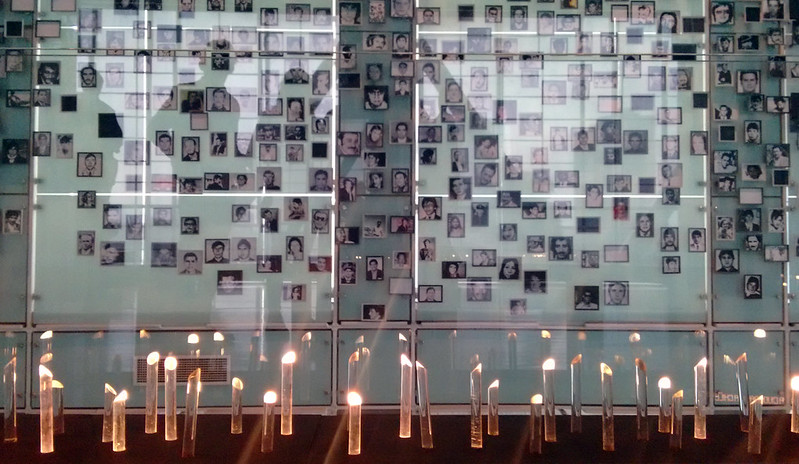
Upstairs, a small transparent room is surrounded by a wall of photographs of people who are still missing, accompanied by artificial candles that create something resembling a memorial shrine. In the center, a touchscreen allows you to look up information about individual victims. They are the faces of people who were taken away from their families. It’s heartbreaking.
The museum’s corridors contain information about the detention of pregnant women, disinformation campaigns, forced disappearances, bans on entering the country and censorship. Throughout the exhibition, you’ll also find representations of some of the hundreds or thousands of people who were killed and thrown into the sea during the dictatorship, as also happened in Argentina.
Toward the end of the visit, you’ll see posters and campaign materials from the 1988 referendum that determined whether Pinochet would remain in power. The “NO” side won with 55.99% of the valid votes, paving the way for Chile’s transition to democracy. The NO campaign, famous for its catchy “La alegría ya viene” jingle, became part of Chilean history – and later inspired a movie that’s well worth watching.
In my opinion, this is one of the best things to do in Santiago. It’s an essential visit if you’re interested in human rights and history, if you want to understand more about the darker sides of our world, or to get a deeper sense of Chilean society, which still bears many scars from this period. Give yourself plenty of time, as there’s a lot to take in.
How to get there: Quinta Normal metro station (Line 5)
Address: Avenida Matucana 501
Quinta Normal Park and the National Museum of Natural History
Quinta Normal Park wasn’t on my Santiago itinerary, but its entrance is right across from the Museum of Memory and Human Rights. I stumbled upon it almost by accident and ended up discovering a really nice place to visit, especially if you’re traveling with kids.
I went in winter, so it wasn’t crowded, but on a summer weekend the park can get busy. Besides being a pleasant place to walk, run, play with children or have a picnic, it also has several interesting attractions. While you’re there, try some of the street food usually sold around the park, such as cuchuflí, a tube-shaped sweet filled with dulce de leche, chocolate or other fillings.
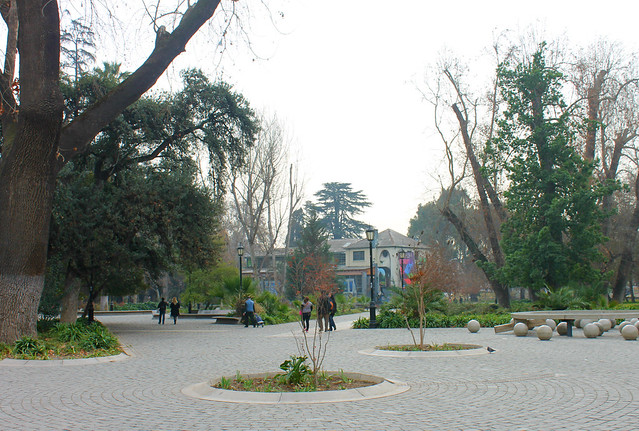
Created in 1841, Quinta Normal was Chile’s first public urban park. Across its 35 hectares, you’ll find more than 4,000 trees, an artificial lake with paddle boats, cultural centers, sports courts, playgrounds and several museums, including the Museum of Contemporary Art, the Museum of Science and Technology, the Railway Museum and the National Museum of Natural History.
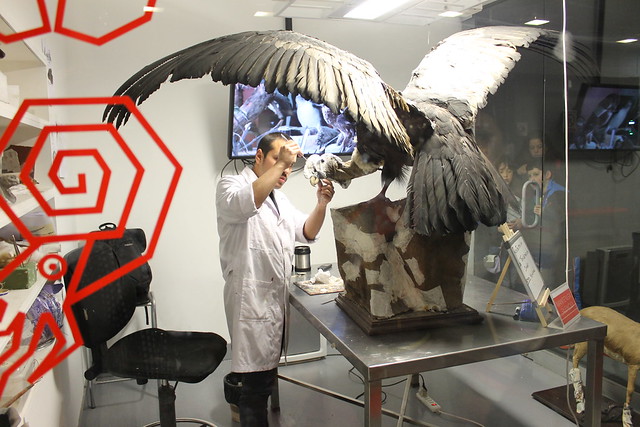
I visited the latter, which has free admission and is a good place to learn a little more about Chile’s biology and geography. Opened in 1876, the museum is housed in a beautiful neoclassical building and features the permanent Chile Biogeográfico exhibition, which showcases the country’s different environments through display cases accompanied by explanatory texts, photos and maps.
It’s not particularly innovative or interactive, but I found it a really interesting overview of Chile, especially if you’re planning to travel to other parts of the country. After all, the country packs an enormous variety of climates and ecosystems into its long, narrow territory.
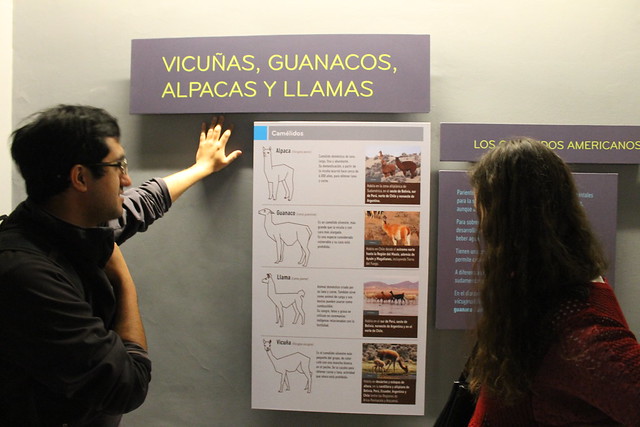
During your visit, you can learn about the Mapuche and their relationship with the land, discover the differences between Chile’s various biomes, and learn how to tell the adorable llamas apart from similar-looking guanacos, vicuñas and alpacas.
Another highlight is the enormous whale skeleton, around 15 meters long. It’s so popular that many people refer to the place as “el museo de la ballena” – the whale museum. More than a century ago, the poor whale died in Valparaíso and its skeleton was transported to Santiago piece by piece.
The museum also hosts temporary exhibitions on a variety of topics.
How to get there: Quinta Normal metro station (Line 5)
Address: Avenida Matucana 502, between Matucana, Santo Domingo, Autopista Central and Portales streets
How many days should you spend in Santiago?
To see Santiago’s main attractions without rushing too much, I recommend spending at least 3 days in the city. That gives you enough time to explore the historic center, wander around neighborhoods like Lastarria and Bellavista, go up Cerro San Cristóbal and visit some of the museums mentioned in this article.
With 2 days in Santiago, you can still see quite a lot, but you’ll need to be more selective and leave a few attractions out. If you have 4 or 5 days, you can take things at a more relaxed pace, include some less touristy places and spend more time enjoying the city’s parks, markets, restaurants and cultural scene.
If you’re planning to use Santiago as a base for day trips, such as visiting wineries, exploring Valparaíso and Viña del Mar, heading to Cajón del Maipo or seeing the snow in the mountains around the capital during winter, I recommend adding a few extra days to your itinerary.
Where to stay in Santiago
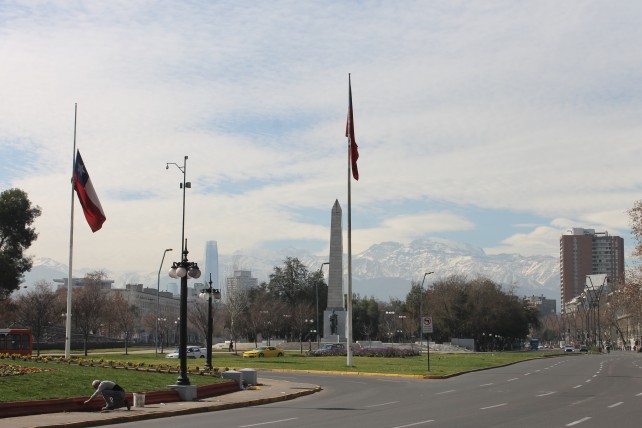
Once you’ve decided which things to do in Santiago you want to include in your itinerary, the next step is figuring out the best area to use as a base. Location makes a difference here, since Santiago is a big city.
I have a complete guide on the blog explaining the different areas of the city, with recommendations for well-rated places to stay. Check out my guide to where to stay in Santiago to find the best option for your trip.
And did you know you can also stay in Santiago – and elsewhere in Chile and around the world – for free? One way to do that is by volunteering through Worldpackers, a Brazilian work-exchange platform. You help your host for a few hours a week and receive accommodation in return, sometimes with other benefits such as meals and tours.
There are plenty of interesting volunteer opportunities in Chile. You could help out at a hostel reception or bar, work on painting and decorating, assist in the kitchen, offer digital marketing support and much more.
Besides being a great way to save money, this kind of travel allows for a deeper cultural immersion. It’s perfect if you want to make friends from around the world, practice other languages and experience Chile beyond its tourist attractions.
Anyone can browse Worldpackers opportunities for free. If you want to apply for a position and get access to the platform’s support, you’ll need to pay a yearly membership fee of USD 59. But if you sign up through this link or use the discount code JANELASABERTAS, you’ll pay just USD 49. Your membership allows you to travel through Worldpackers as many times as you want for one year. To learn more, check out my complete guide to work exchange.
I hope this guide to the best things to do in Santiago helps you put together an itinerary and make the most of your time in the Chilean capital.
Still have questions? Leave a comment below! And if you’ve already been to the city, I’d love to hear about your favorite things to do in Santiago too.
Photos featured in this article: Luísa Ferreira (Janelas Abertas blog). Featured image at the top of the article: Depositphotos.











0 Comentários